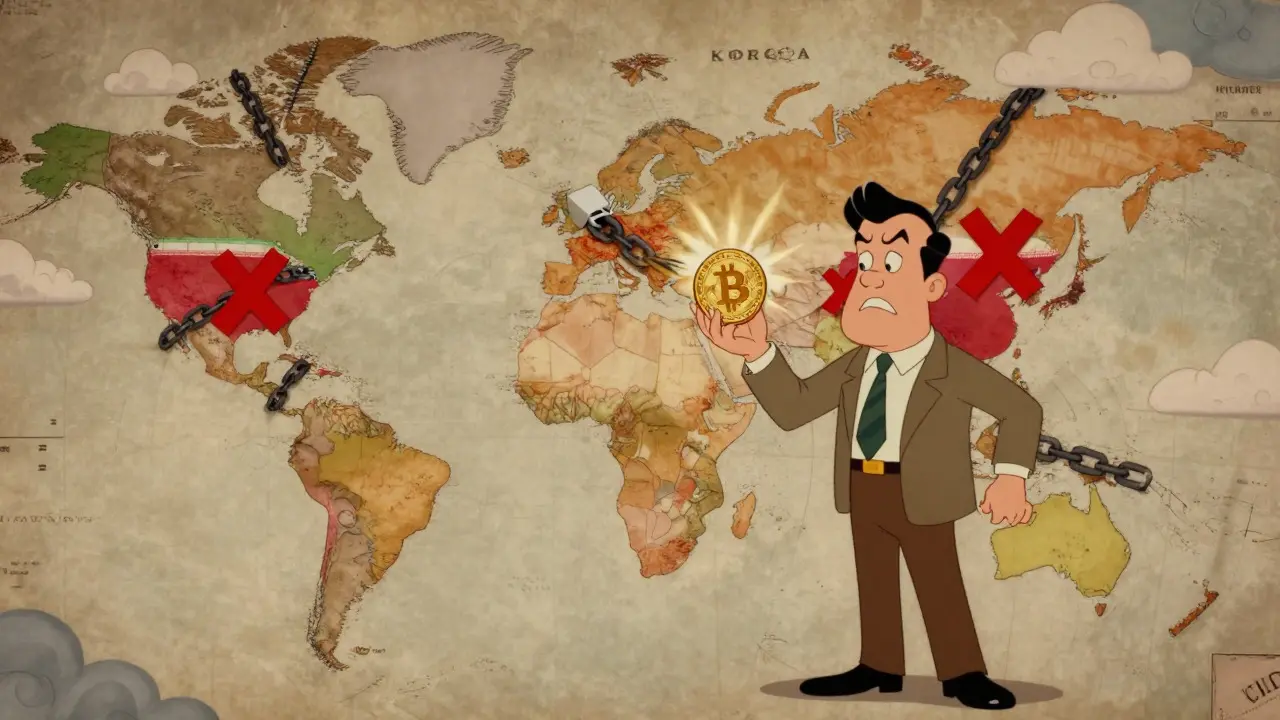
You finally saved up enough cash to buy some Bitcoin. You sign up for Kraken, one of the most trusted exchanges out there, ready to dive in. But then you hit a wall. Your account gets flagged, or you can't deposit funds, or your favorite token just isn't available. Why? Because Kraken doesn't play games with regulations. They block specific places and assets based on where you live.
It’s frustrating, sure. But it’s also what keeps your money safe from sudden shutdowns. As of August 2026, Kraken serves over 190 countries but strictly prohibits trading in about 14 major jurisdictions due to sanctions. Plus, they have a complex web of state-level and asset-level restrictions that catch even seasoned traders off guard. If you’re wondering whether you can trade XRP in Texas or if you still have access to USDT in Europe, this guide breaks down exactly who is blocked, why, and what alternatives exist.
The Big List: Countries Where Kraken Is Completely Banned
Let’s start with the hard no’s. If you live in these places, you generally cannot open an account or trade at all. These bans aren't random; they align closely with international sanctions regimes enforced by bodies like the US Treasury’s OFAC and the UN Security Council. Kraken takes compliance seriously because losing their banking licenses would be catastrophic.
The following nations face complete service prohibitions:
- Afghanistan
- Belarus
- Russia (including occupied territories like Crimea, Donetsk, and Luhansk)
- Iran
- Iraq
- North Korea
- Syria
- Libya
- Sudan and South Sudan
- Cuba
- Democratic Republic of the Congo
There are also several other regions where services are heavily restricted or unavailable, such as Central African Republic, Eritrea, Lebanon, Mali, Somalia, Tajikistan, and Yemen. The logic here is simple: anti-money laundering (AML) laws make it too risky or legally impossible for Kraken to operate there. If you try to use a VPN to bypass this, don’t bother. Kraken uses sophisticated IP geolocation combined with government ID verification. If your ID says you live in Minsk but your IP says Toronto, your account gets frozen. And "frozen" means you might not get your funds back anytime soon.
United States: A Patchwork of State-Level Restrictions
If you think country bans are annoying, wait until you look at the United States. Kraken operates in most states, but the rules change drastically depending on your zip code. This isn't Kraken being difficult; it's because each state has its own financial regulatory body.
New York and Washington residents face the strictest hurdles. For years, New York users were limited to Kraken Pro’s legacy interface or couldn't trade certain assets. As of 2026, New York residents often find themselves in a pre-verification limbo, waiting for specific regulatory approvals that lag behind other states. Washington State faces similar delays. If you live in Seattle or NYC, check the current status before depositing large sums, as your ability to withdraw fiat currency might be delayed.
Then there are the asset-specific bans that apply nationwide or regionally:
- XRP Trading: While the SEC lawsuit against Ripple has largely settled, Kraken maintains cautious policies. In some contexts, XRP trading remains restricted or requires specific disclosures.
- Euro Funding: Residents of New Hampshire and Texas cannot fund, trade, or hold Euro (EUR) balances directly. You’ll need to convert to USD first.
- Specific Tokens: US and Canadian residents are blocked from trading EWT (Energy Web Token) and GRT (The Graph). Japanese residents also cannot trade FLOW tokens.
- Margin Limits: US traders are capped at holding margin positions for 28 days max. Non-US traders can hold them for up to 365 days. This limits long-term leverage strategies for Americans.
Why does this matter? Imagine you’re in Texas trying to arbitrage EUR/USD pairs. You can’t. You have to pay conversion fees twice. It eats into profits fast.
Europe’s Stablecoin Shake-Up: The MiCA Impact
If you’re in the European Economic Area (EEA), things got weird in early 2025 and continue to evolve in 2026. The EU implemented the Markets in Crypto-Assets (MiCA) regulation, forcing exchanges to ensure their stablecoins meet strict reserve requirements. Kraken responded by delisting several popular stablecoins.
This was a shock to many. Mark Greenberg, Kraken’s Global Head of Asset Management, had previously stated no plans to delist USDT in Europe. Then, reality hit. Starting February 2025, Kraken began phasing out Tether (USDT), PayPal USD, TrueUSD, Tether EURt, and TerraClassic USD across 30+ countries including Austria, Spain, Portugal, and Sweden.
| Date | Action | User Impact |
|---|---|---|
| Feb 13, 2025 | Reduce-only mode enabled | Could only sell, not buy new positions. |
| Feb 27, 2025 | Sell-only mode | Buying completely disabled. |
| Mar 17, 2025 | Margin positions closed | Leveraged trades auto-liquidated. |
| Mar 24, 2025 | Spot trading terminated | No more direct buying/selling. |
| Mar 31, 2025 | Final conversion deadline | Remaining balances converted to EUR/USD. |
By mid-2026, if you’re in Europe, you’re likely using EURC (Euro Coin) or other MiCA-compliant stablecoins instead of USDT. It’s less liquid than USDT globally, but it keeps you compliant with local law. Don’t fight the system here; the fines for non-compliance are steep.
Privacy Coins and Regional Bans: Australia and Japan
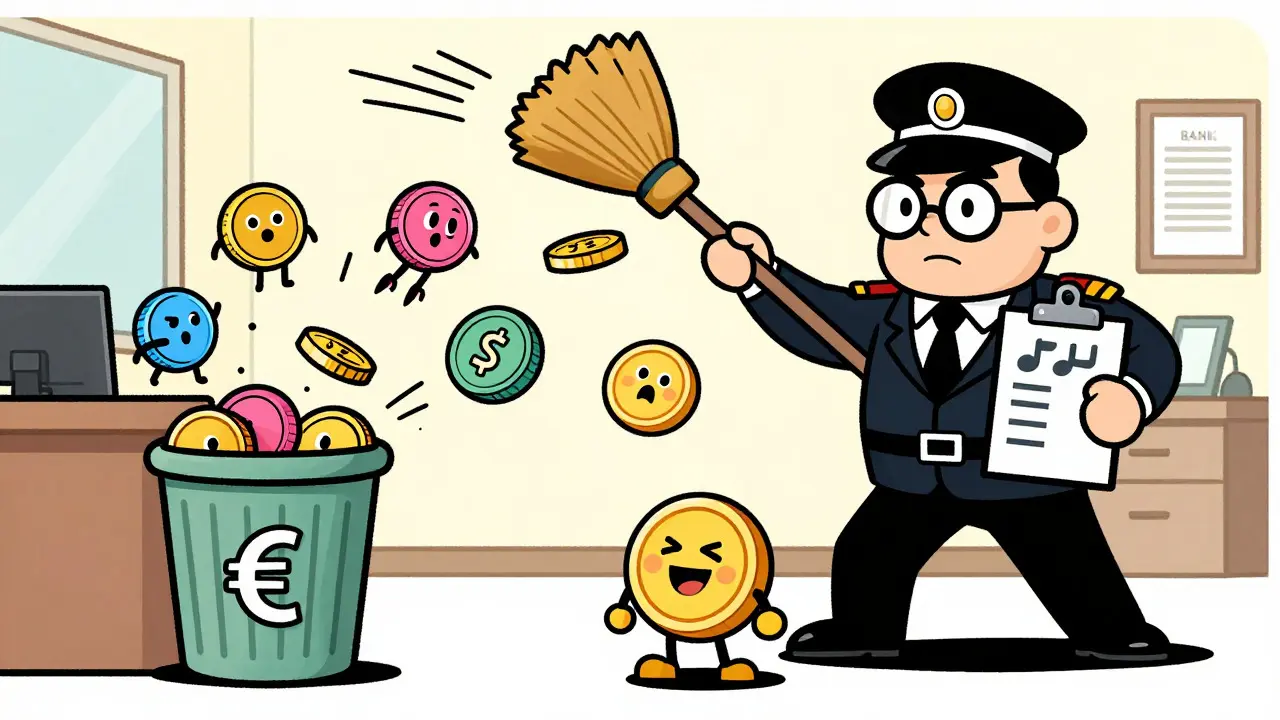
Not all restrictions are geographic boundaries on the map. Some are about the type of asset you want to buy. Privacy coins-like Monero (XMR), Dash, and Zcash (ZEC)-are designed to hide transaction details. Regulators hate this because it makes tracking illicit flows harder.
Australia: Australian residents cannot fund, trade, or hold privacy coins. If you try to buy XMR on Kraken Australia, you’ll get an error. This stems from AUSTRAC’s strict AML guidelines. You have to stick to transparent chains like Bitcoin or Ethereum.
Japan: Japan’s Financial Services Agency (FSA) is notoriously strict. Japanese residents face additional documentation hurdles for JPY trading. Furthermore, tokens like FLOW are banned entirely for Japanese users. If you’re trading from Tokyo, expect slower verification times and fewer altcoin options compared to someone in London or Toronto.
These bans reflect a global trend: regulators are pushing for transparency. If you love privacy coins, you might need to look at decentralized exchanges (DEXs) or offshore platforms, though those come with their own risks.
How Kraken Enforces These Rules (And How to Avoid Getting Banned)
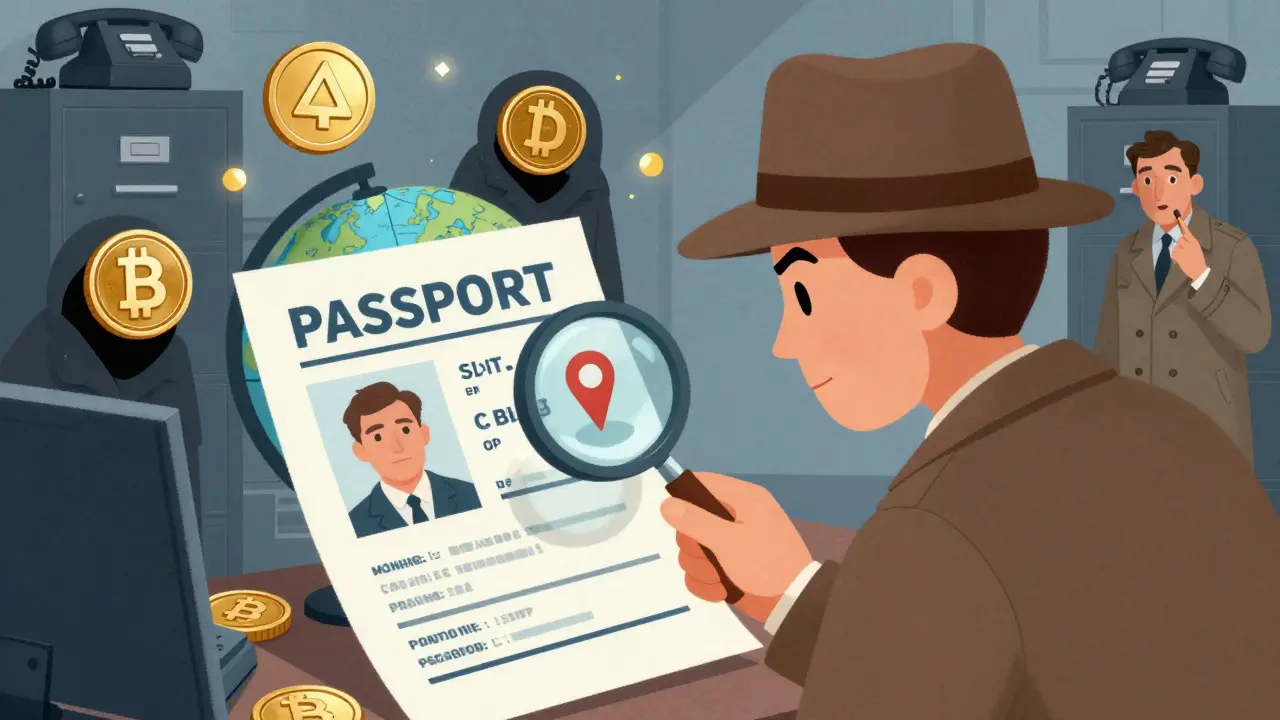
You might ask, "Can I just lie about my address?" Technically, yes. Practically, it’s a bad idea. Kraken employs a multi-layered verification system:
- IP Geolocation: They check where your device connects from. Consistent mismatches trigger reviews.
- Government ID: Passport or driver’s license must match your declared residence.
- Proof of Residence: Utility bills or bank statements dated within the last 3 months.
- Ongoing Monitoring: Even after approval, unusual activity from a different country can freeze accounts.
Verification usually takes 24-48 hours for standard accounts. Enhanced levels can take up to 7 days. If you’re moving abroad, update your profile immediately. If you travel, notify Kraken via support tickets to avoid temporary blocks.
What happens if you violate the terms? Account termination. Your assets remain yours, but withdrawing them becomes a bureaucratic nightmare. You might need to provide extensive legal proof to unlock funds. It’s not worth the hassle for a few percentage points of yield.
Alternatives and Workarounds for Restricted Users
So, you’re in a blocked jurisdiction or facing asset restrictions. What now?
If you’re in a fully banned country: Look for regional exchanges that specialize in your area. Sometimes, local P2P markets offer better liquidity despite higher spreads. Alternatively, consider self-custody wallets. Buy crypto through a peer-to-peer network and store it yourself, avoiding centralized exchange restrictions entirely.
If you’re in the US facing state limits: Check if Coinbase or Gemini supports your specific state needs better. For example, some users report smoother EUR handling on other platforms if Kraken’s Texas/New Hampshire ban is a dealbreaker.
If you’re in Europe missing USDT: Switch to EURC or USDC (if MiCA compliant versions are available). Or, use a DEX like Uniswap to trade USDT directly from your wallet, bypassing the exchange’s listing decisions. Just remember, you handle your own private keys.
If you want privacy coins in Australia/Japan: Use a DEX or a specialized privacy-focused exchange. Just be aware that withdrawing to a local bank might require converting back to fiat, which could raise flags with your bank.
Why Kraken Blocks So Much (And Why That’s Good for You)
It feels restrictive, right? But consider the alternative. Many smaller exchanges ignore these rules to attract volume. When regulators crack down, those exchanges often freeze withdrawals or shut down overnight. Remember Celsius? Remember FTX?
Kraken holds licenses in the US (FinCEN MSB), UK (FCA), Canada (FINTRAC), Australia (AUSTRAC), and Japan (FSA). They also secured Wyoming’s Special Purpose Depository Institution charter. This means they undergo regular audits. The "block list" is essentially the cost of doing business in regulated markets. By restricting high-risk jurisdictions and assets, Kraken ensures they can keep operating in the major economies where most institutional capital lives.
In 2026, as crypto matures, we see consolidation toward compliant platforms. Kraken’s approach might feel limiting today, but it provides stability tomorrow. If you plan to hold crypto for years, choosing a platform that won’t disappear due to a regulatory fine is smart.
Can I use a VPN to trade on Kraken if I live in a blocked country?
Technically, yes, you can mask your IP with a VPN. However, Kraken verifies identity using government-issued IDs and proof of residence. If your ID shows you live in Iran but your IP is in Germany, Kraken will flag your account. Most users who try this eventually face account freezes and difficulty withdrawing funds. It is not recommended for long-term trading.
Why can't I trade XRP on Kraken in the US?
While the legal status of XRP has improved since the SEC vs. Ripple lawsuits, Kraken maintains conservative policies regarding securities-like assets. Depending on the specific state and current regulatory guidance, XRP trading may be restricted or require specific disclosures. Always check the latest status page for your state, as these rules can change with new court rulings or SEC actions.
Is USDT still available on Kraken in Europe?
No, standard USDT (Tether) was delisted for spot trading in the EEA starting March 2025 due to MiCA regulations. European users must now use MiCA-compliant stablecoins like EURC or USDC (specifically the regulated version). You can still hold USDT in your wallet, but you cannot trade it directly on the Kraken EEA platform anymore.
Which US states have the most restrictions on Kraken?
New York and Washington State historically have the most significant barriers, often requiring special licensing or offering limited interfaces. Additionally, New Hampshire and Texas residents face specific currency restrictions, such as the inability to fund or hold Euro balances directly. Always verify your state's specific feature availability on Kraken's help center before signing up.
Can I buy privacy coins like Monero on Kraken in Australia?
No. Australian regulations under AUSTRAC prohibit the trading and holding of privacy coins such as Monero (XMR), Dash, and Zcash (ZEC) on licensed exchanges. If you want exposure to these assets, you typically need to use a decentralized exchange (DEX) or an international platform that accepts Australian customers but operates under different regulatory frameworks.
