
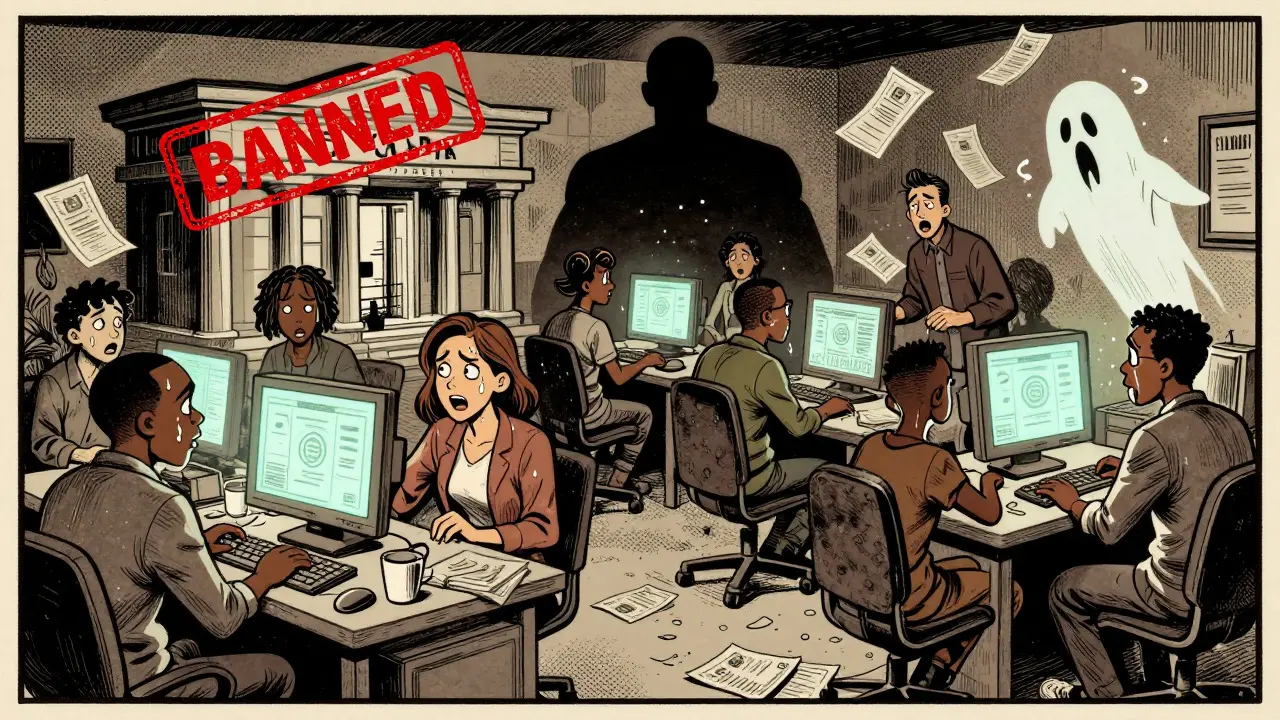
For years, the question of whether cryptocurrency was legal in Nigeria felt like a game of Russian roulette. You could trade, but your bank account might vanish overnight. That era of uncertainty is officially over. As of 2025, cryptocurrency regulation in Nigeria is not just a reality-it is a comprehensive, legally binding framework that transforms the country into one of Africa’s most structured digital asset markets.
If you are wondering if you can safely buy, sell, or build crypto products in Nigeria today, the short answer is yes. But "yes" comes with conditions. The landscape has shifted from a restrictive ban to a strategic calibration. Understanding this shift is crucial for anyone holding Nigerian assets or looking to enter the market. Let’s break down exactly how the rules work now, who is watching, and what it means for your wallet.
The Turning Point: From Ban to Blueprint
To understand where we are, we have to look at where we came from. Between 2017 and 2023, the Central Bank of Nigeria (CBN) effectively banned banks from facilitating cryptocurrency transactions. This didn’t stop Nigerians from trading; it just pushed everything underground. Peer-to-peer (P2P) markets exploded, and users risked frozen accounts every time they moved money. It was chaotic, risky, and inefficient.
The tide began to turn in December 2023 when the CBN lifted its circular banning banks from dealing with crypto firms. They introduced Virtual Asset Service Provider (VASP) Guidelines, allowing licensed businesses to open bank accounts again. But the real game-changer arrived in March 2025.
President Bola Ahmed Tinubu signed the Investments and Securities Act (ISA) 2025. This legislation replaced the outdated 2007 law and officially recognized digital assets-including cryptocurrencies-as securities under Nigerian law. This wasn’t just a policy tweak; it was a structural overhaul. It established the Securities and Exchange Commission (SEC) as the primary regulator for the industry, ending years of ambiguity.
Who Watches the Watchers? The Regulatory Agencies
Nigeria’s approach isn’t managed by a single entity. Instead, it relies on a multi-agency coordination model that covers different aspects of the crypto ecosystem. Knowing which agency handles what is key to compliance.
- Securities and Exchange Commission (SEC): The primary regulator for crypto exchanges, token offerings, and investment-focused NFTs. They issue licenses and enforce the Digital Assets Rules.
- Central Bank of Nigeria (CBN): Oversees the financial plumbing. They regulate how banks interact with crypto businesses and handle currency-related aspects through their VASP Guidelines.
- Economic and Financial Crimes Commission (EFCC): Focuses on criminal investigations, fraud, and Ponzi schemes involving crypto.
- Nigerian Financial Intelligence Unit (NFIU): Handles anti-money laundering (AML) and counter-terrorist financing (CFT) reporting for virtual assets.
This structure provides comprehensive coverage but adds complexity. For example, if you run an exchange, you answer to the SEC for your operations but must comply with CBN rules for your banking relationships. It’s a robust system designed to protect investors while fostering innovation, though it requires serious attention to detail.

Licensing Requirements: How to Operate Legally
You can no longer just launch a website and start trading. To operate as a Virtual Asset Service Provider (VASP) in Nigeria, you need a license from the SEC. The process is rigorous and designed to filter out fly-by-night operators.
Here is what you need to know about the licensing framework:
- Corporate Registration: Your company must be incorporated in Nigeria with a minimum paid-up capital requirement. This ensures the business has skin in the game.
- Local Presence: Foreign companies cannot operate remotely. You must maintain a physical office in Nigeria and appoint Nigerian management personnel.
- Fidelity Bonds: Operators must secure fidelity bonds to protect client funds against employee fraud or mismanagement.
- Technical Compliance: Exchanges must meet specific technical standards set by the SEC, including cybersecurity protocols and audit trails.
By late 2024, the SEC had awarded its first provisional licenses to two major players: Busha and Quidax. These platforms serve as benchmarks for what compliant operations look like. Dozens of other companies have applied, but the vetting process is thorough. Expect delays. The SEC is prioritizing quality over speed, conducting deep dives into applicant backgrounds and technical infrastructure before granting approval.
Taxation and Penalties: The Cost of Non-Compliance
Regulation brings clarity, but it also brings costs. One of the biggest changes in 2025 is the introduction of explicit tax obligations and penalties for non-compliance.
The Nigeria Tax Administration Act (NTAA) 2025, signed into law in June 2025 and effective in 2026, introduces crypto-specific taxation. This means profits from trading, staking, and mining are taxable events. While individual user tax rates depend on broader income tax laws, businesses face strict reporting requirements.
What happens if you ignore the rules? The penalties are steep. Under the new framework, VASPs that default on regulatory requirements face an initial penalty of ₦10 million (approximately $6,693) in the first month of non-compliance. For every additional month of delay, another ₦1 million ($669) is added. Beyond fines, the SEC has the authority to suspend or revoke licenses entirely. Recent enforcement actions against non-compliant platforms show that regulators are serious about cleaning up the market.
| Aspect | Pre-2025 (Restrictive Era) | Post-2025 (Regulated Era) |
|---|---|---|
| Banking Access | Banned; accounts frequently frozen | Allowed for licensed VASPs via CBN guidelines |
| Legal Status | Ambiguous; treated as high-risk | Recognized as securities under ISA 2025 |
| Primary Regulator | CBN (de facto ban) | SEC (licensing) + CBN (banking) |
| Taxation | Unclear; informal payments common | Defined under NTAA 2025; strict penalties |
| Market Volume | High but fragmented P2P | $92.1B received (Jul 2024-Jun 2025); consolidated |
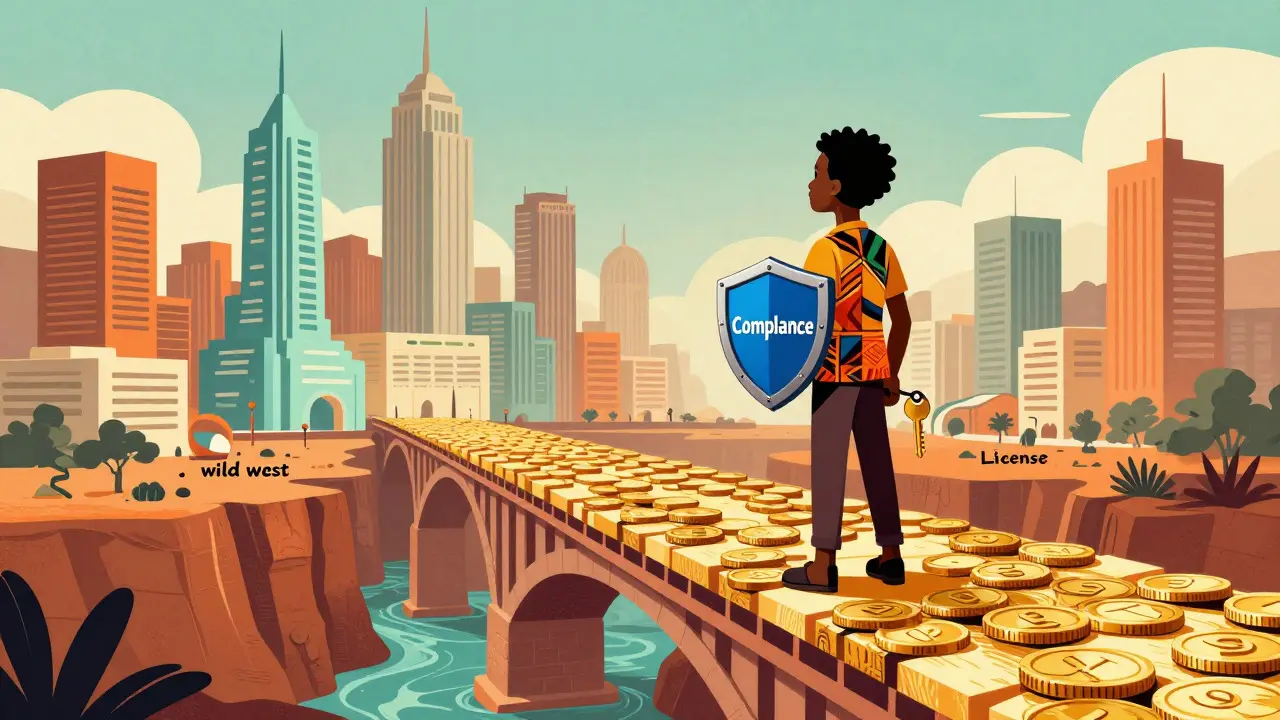
User Experience: What Changes for Everyday Traders?
If you are a retail trader, the changes are mostly positive, though some habits may need adjusting. The biggest win is safety. With licensed exchanges like Busha and Qudix operating under strict oversight, the risk of losing funds to a scam platform is significantly reduced. The SEC’s enhanced powers allow them to access telecom records and investigate fraud more effectively, which is a strong deterrent for bad actors.
However, convenience might take a slight hit. The days of anonymous, frictionless P2P trades are fading. Licensed platforms will enforce Know Your Customer (KYC) and Anti-Money Laundering (AML) checks rigorously. You will need to verify your identity thoroughly. Some users worry about government surveillance, and there is truth to that-the transparency required for compliance means less privacy than the wild west days of 2021.
Despite these hurdles, adoption remains incredibly high. Nigeria received an estimated $92.1 billion in crypto value between July 2024 and June 2025, nearly double South Africa’s activity. Users are resilient. They appreciate the legal certainty even if it means jumping through a few more hoops to prove who they are.
Looking Ahead: Challenges and Opportunities
Nigeria’s regulatory stance is progressive compared to many African peers. Kenya and South Africa have focused heavily on taxation, while Nigeria built a licensing foundation first. This positions the country as a potential hub for fintech innovation. Foreign investment is likely to increase as the legal risks diminish.
But challenges remain. The learning curve for compliance is steep. Many local startups struggle with the cost of legal consultation and the time required for license applications. There is also the risk of bureaucratic bottlenecks. If the SEC moves too slowly in approving licenses, it could stifle innovation or push entrepreneurs toward offshore jurisdictions.
Furthermore, the intersection of traditional finance and crypto is still being mapped. How will stablecoins be treated long-term? Will central bank digital currencies (CBDCs) compete with private tokens? These questions are yet to be fully answered. The National Blockchain Policy 2023 drives technology adoption broadly, but specific crypto market dynamics evolve faster than policy can keep up.
For now, the message is clear: Crypto is regulated, respected, and ready for business in Nigeria-if you play by the rules. The era of hiding is over. The era of building is here.
Is cryptocurrency legal in Nigeria in 2025?
Yes, cryptocurrency is legal and regulated in Nigeria as of 2025. The Investments and Securities Act (ISA) 2025 officially recognizes digital assets as securities, providing a clear legal framework for trading and business operations.
Which agency regulates crypto in Nigeria?
The Securities and Exchange Commission (SEC) is the primary regulator for crypto exchanges and token offerings. The Central Bank of Nigeria (CBN) oversees banking relationships with crypto firms, while the EFCC and NFIU handle crime and money laundering issues.
Do I need a license to run a crypto exchange in Nigeria?
Yes. All Virtual Asset Service Providers (VASPs) must obtain a license from the SEC. Requirements include Nigerian corporate registration, paid-up capital, local offices, and adherence to technical security standards.
Are crypto gains taxed in Nigeria?
Yes. The Nigeria Tax Administration Act (NTAA) 2025, effective in 2026, introduces specific tax obligations for crypto activities. Businesses face strict reporting requirements and penalties for non-compliance.
Can Nigerian banks facilitate crypto transactions?
Yes, since December 2023. The CBN lifted its ban and issued VASP Guidelines allowing banks to offer services to licensed crypto businesses. However, banks must ensure their clients are compliant with SEC regulations.
What are the penalties for non-compliance?
Non-compliant VASPs face an initial fine of ₦10 million ($6,693) plus ₦1 million ($669) for each subsequent month of delay. The SEC can also suspend or revoke licenses.
Which exchanges are currently licensed in Nigeria?
As of late 2024, Busha and Quidax were the first to receive provisional licenses from the SEC. Other platforms are in the application and vetting process.
