

You might think that buying a top-tier Hardware Security Module (HSM) is enough to secure your cryptographic keys. But in the world of enterprise security and blockchain infrastructure, hardware alone doesn't cut it. The real trust comes from the paper trail-the certifications. If you are building a payment system, managing digital identities, or securing blockchain private keys, you need to know which badges matter and which ones are just marketing fluff.
HSM compliance isn't optional for regulated industries. It’s a legal and operational requirement. But navigating the alphabet soup of standards like PCI PTS, FIPS, and Common Criteria can feel like decoding a cipher without the key. Let’s break down what these certifications actually mean for your security posture, your budget, and your ability to operate legally in different regions.
The Big Three: PCI PTS, FIPS, and Common Criteria
When evaluating an HSM, you will almost always encounter three major certification frameworks. Each serves a different master. Understanding who sets the rules helps you understand why they exist.
- PCI PTS HSM: Set by the Payment Card Industry Security Standards Council. This is mandatory if you handle credit card data, PINs, or tokenization services. It focuses heavily on physical tamper resistance and logical security for payment environments.
- FIPS 140-2 / 140-3: Established by NIST (National Institute of Standards and Technology). This is the gold standard for U.S. government agencies and many financial institutions globally. It validates the cryptographic algorithms and physical security levels of the module.
- Common Criteria (CC): An international standard (ISO/IEC 15408). In Europe, this is critical for complying with eIDAS regulations regarding qualified electronic signatures and trust services.
Most enterprise-grade HSMs today aim for dual or triple certification. For example, a device like the Thales payShield 9000 or Microsoft Azure Payment HSM often holds both PCI and FIPS certifications. This allows Qualified Security Assessors (QSAs) to check multiple compliance boxes during audits. However, holding the certificate is only half the battle; maintaining it is where most organizations stumble.
Deep Dive: PCI PTS HSM v3.0 Requirements
If you are in payments, PCI PTS HSM is non-negotiable. The current version, v3.0 (published in June 2016), defines strict logical and physical security requirements. It covers the entire lifecycle of the device, from manufacturing to decommissioning.
The physical security demands are brutal. Requirement A1 states that any attempt to physically penetrate the device must trigger immediate inoperability and automatic erasure of sensitive data. There should be no demonstrable way to disable this mechanism without an attack potential of at least 26 hours per device for identification and initial exploitation. That means a determined attacker would spend over a day just figuring out how to start the attack, and another day executing it, all while the device self-destructs its secrets.
Beyond brute force, the standard protects against environmental attacks. Requirement A2 ensures that subjecting the device to extreme temperatures or voltage fluctuations outside normal operating ranges cannot compromise its security. This prevents attackers from using heat or cold to force the HSM into a state where it leaks keys.
FIPS 140-2 vs. FIPS 140-3: What Changed?
For years, FIPS 140-2 was the default. Level 3 and Level 4 certifications were common among high-end HSMs like the IBM 4769-001. However, NIST released FIPS 140-3 to modernize the standard. Why does this matter to you?
FIPS 140-3 addresses emerging threats that 140-2 didn’t fully cover, such as side-channel attacks and fault injection techniques that have become more sophisticated. It also incorporates support for post-quantum cryptography algorithms, preparing your infrastructure for the future when quantum computers might break current encryption methods. While 140-2 is still widely accepted, new deployments-especially those involving government contracts or long-term blockchain anchors-are increasingly requiring 140-3 validation. Make sure your vendor has a clear roadmap for 140-3 migration if you are buying hardware today.

The Certification Trap: Firmware and Custom Software
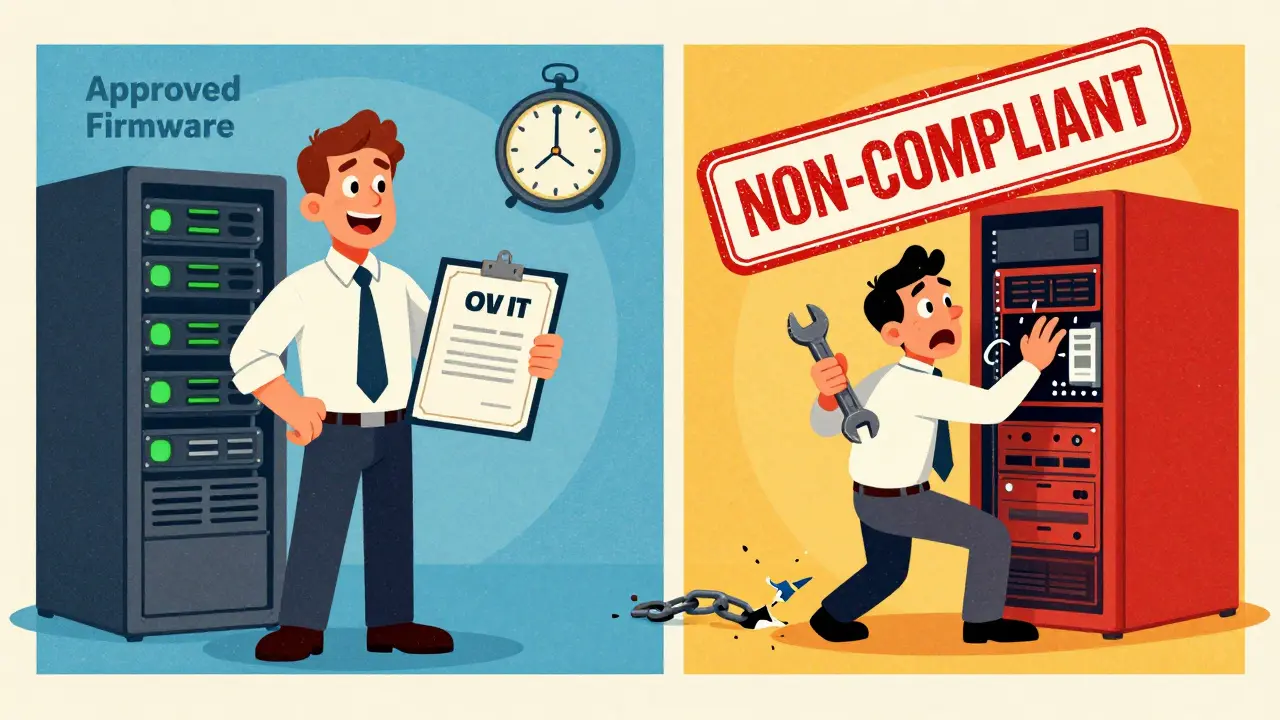
Here is the part that catches most CTOs off guard. Your HSM is not certified forever. It is certified for specific versions of firmware and software. According to the PCI PTS HSM Evaluation FAQs (November 2018), compliance ceases immediately if you install non-approved firmware. You regain compliance only when approved software is reinstalled.
This creates a significant operational risk. Vendors may release urgent security patches before they get formal approval from the PCI council. If you patch immediately to fix a vulnerability, you technically lose your PCI compliance status until the patch is approved. You must verify that every installed version appears in the online approval listing. Keep a log. Audit it regularly.
Custom software is another minefield. If your development team writes custom code to run on the HSM-or if you use vendor-provided customization services-that HSM is no longer approved unless that specific custom software goes through the full certification process. Most organizations don’t have the budget or time for that. The result? You either stick to the vendor’s standard, certified applications (which limits flexibility) or you accept the compliance gap. Plan accordingly.
| Certification | Governing Body | Primary Use Case | Key Focus Area |
|---|---|---|---|
| PCI PTS HSM v3.0 | PCI SSC | Payments, PIN Processing, Tokenization | Physical tamper resistance, logical security, lifecycle management |
| FIPS 140-3 | NIST | Government, Finance, Blockchain Roots of Trust | Cryptographic algorithm validation, physical security levels (1-4) |
| Common Criteria EAL4+ | International ISO/IEC | eIDAS Electronic Signatures, EU Trust Services | Functional assurance, protection profiles (e.g., EN 419221-5) |
Cloud HSMs: Same Rules, Different Deployment
Many organizations are moving HSM workloads to the cloud. Services like Microsoft Azure Payment HSM or AWS CloudHSM offer managed hardware security modules. Does this change the compliance landscape? Not really. The underlying hardware still needs to meet the same standards.
Azure Payment HSM, for instance, lists compliance with PCI DSS, PCI PIN, PCI 3DS, CSA STAR, and ISO 20000-1. This multi-standard approach is crucial for cloud providers because their customers span multiple verticals. When you rent an HSM in the cloud, you are relying on the provider’s audit reports. Ensure they provide regular attestation documents. Don’t just take their word for it; ask for the latest CSA STAR Attestation or SOC 2 Type II report that explicitly mentions HSM controls.
Blockchain and Decentralized Identity Implications
In blockchain contexts, HSMs are often used to secure the private keys of validators or to sign transactions for decentralized identity (DID) systems. While blockchain itself is permissionless, the entities interacting with it are often regulated. If your blockchain application handles financial assets or personal data, you likely fall under existing regulatory frameworks.
Using a FIPS 140-3 certified HSM for key generation in a blockchain network adds a layer of institutional trust. It proves that the keys were generated in a validated environment, reducing the risk of key leakage during creation. For enterprises adopting blockchain for supply chain or healthcare, this certification bridges the gap between decentralized technology and centralized compliance requirements.
Practical Steps for Maintaining Compliance
To keep your HSM compliant, follow these actionable steps:
- Inventory Your Versions: Maintain a strict inventory of all HSM hardware serial numbers and their corresponding firmware/software versions. Cross-reference this list with the vendor’s approved certification list monthly.
- Freeze Non-Critical Updates: Do not apply non-security-critical updates until they are certified. For critical security patches, assess the risk of running unpatched versus the risk of losing compliance temporarily. Document this decision.
- Avoid Custom Code: Resist the urge to write custom applications for the HSM unless you have a dedicated budget for certification. Use the vendor’s pre-certified SDKs and APIs whenever possible.
- Verify Chain of Custody: Ensure that from manufacturing to deployment, the chain of custody is documented. Any break in this chain can invalidate the physical security assumptions of the certification.
- Review Annual Attestations: For cloud HSMs, request annual compliance attestations from your provider. Check for any lapses or scope reductions.
Choosing the Right HSM Vendor
Not all vendors are created equal. Look for companies with a history of successful validations. Thales, Utimaco, IBM, and Microsoft are leaders here. Ask them specific questions:
- "Which specific firmware versions are currently PCI PTS HSM v3.0 approved?"
- "What is your timeline for FIPS 140-3 validation?"
- "Do you support Common Criteria EAL4+ for eIDAS compliance?"
- "How do you handle emergency patches that haven't been certified yet?"
A vendor who hesitates on these questions is a red flag. You need transparency, not just sales promises.
Is FIPS 140-2 still valid if FIPS 140-3 exists?
Yes, FIPS 140-2 is still widely accepted and used, especially in legacy systems. However, NIST encourages migration to FIPS 140-3 for new deployments due to enhanced security features and support for modern cryptographic algorithms. Check your specific regulatory requirements; some government contracts now mandate 140-3.
Can I use a certified HSM for custom blockchain applications?
You can use the hardware, but if you write custom software to interact with it or run custom code on it, you may void the certification. Stick to the vendor's pre-certified APIs and libraries to maintain compliance status. If you need custom functionality, consult with your vendor about the certification process for custom modules.
What happens if I update my HSM firmware with an unapproved version?
Your HSM immediately loses its PCI PTS HSM compliance status. You remain non-compliant until you reinstall approved firmware or the new version receives official approval. This can put you at risk during audits. Always check the vendor's approved version list before applying any updates.
Do cloud HSMs require separate compliance checks?
Cloud HSMs are still bound by the same hardware standards, but the responsibility model shifts. You rely on the cloud provider's shared responsibility model. You must verify their compliance attestations (like SOC 2 or CSA STAR) and ensure your configuration of the HSM service adheres to best practices. The hardware is certified, but your usage must be secure.
Why is Common Criteria important for European businesses?
Common Criteria (specifically EAL4+) is required for compliance with the EU's eIDAS regulation. If you offer qualified electronic signatures or trust services in Europe, your HSM must meet specific Protection Profiles (like EN 419221-5). Without CC certification, you cannot legally provide these services in the EU market.

Charles Pawlikowski
June 10, 2026 AT 17:34typical corporate speak trying to scare you into buying more hardware lol. the real issue is that most of these certs are just rubber stamps for vendors who pay the fees anyway. nobody actually cares about the physical tamper resistance unless they are a government agency or some big bank with too much money to lose. for the rest of us its just marketing fluff designed to justify massive budget increases. :P
Akeem Whittaker
June 12, 2026 AT 17:17I have to push back on the idea that certifications are meaningless, but I agree that the implementation is often where things fall apart. The point about firmware versions voiding compliance is critical and often overlooked by IT teams who just want to patch vulnerabilities quickly without reading the fine print. It creates a false sense of security if you think the sticker on the box does all the work.
Mekz Wheoki
June 12, 2026 AT 23:56Oh look, another article pretending that FIPS 140-3 is some holy grail. Spoiler alert: it’s not. You can have a certified HSM and still be completely insecure because your key management process is garbage. People treat these certs like magic shields against hackers, but they’re really just checklists for auditors. If your team doesn’t understand why they need them, you’re wasting your time.
Amit Thakur
June 13, 2026 AT 22:57The side-channel attack mitigation in FIPS 140-3 is a game changer for high-frequency trading environments where latency matters but so does security integrity. Most legacy systems running 140-2 are sitting ducks for sophisticated fault injection attacks now. We saw this firsthand during our migration project last year when we realized our old IBM modules couldn't handle the new threat landscape effectively. It's not just about compliance; it's about staying ahead of the attackers who are already using quantum-resistant techniques in their toolkits.
Eric Scheinberg
June 15, 2026 AT 15:35It is imperative that organizations maintain rigorous documentation of their HSM configurations. The transition from FIPS 140-2 to 140-3 requires careful planning and execution to avoid any gaps in security coverage. Many enterprises fail to consider the operational impact of such transitions leading to unnecessary downtime and potential compliance violations during audits.
Andrea Burd
June 16, 2026 AT 23:16another boring tech post no one asked for. i mean sure maybe if you work at a bank this stuff matters but for the rest of us its just noise. also there are typos in the original post which makes me question the authors expertise right off the bat. who has time to read all this jargon anyway?
Kenneth Riley
June 17, 2026 AT 20:40THIS IS EXACTLY WHY COMPANIES GET HACKED!!! They buy the shiny box and think they are safe but then some intern installs an unapproved update and BOOM compliance is gone! It is tragic really. I have seen this happen so many times and it always ends in tears and expensive lawsuits. Stop ignoring the basics people!
Abby Sivertsen
June 18, 2026 AT 05:30I’ve been working in fintech for years and the PCI PTS requirements are brutal but necessary. The part about environmental attacks is wild-actually thinking someone would freeze an HSM to steal keys sounds like something out of a movie but apparently it happens. Makes you appreciate the engineering behind these devices even if the paperwork is a nightmare.
Benjamin Eisen
June 19, 2026 AT 16:43Great breakdown here. I think the section on cloud HSMs is particularly important since so many companies are moving away from on-prem solutions. Just make sure you are getting those attestation docs regularly because providers can change their scope without telling you explicitly. Had a friend get burned by that recently.
Jessica Lane
June 20, 2026 AT 12:57This is such a comprehensive overview! It is incredibly helpful to see the distinctions between PCI, FIPS, and Common Criteria laid out clearly. I was always confused about why we needed multiple certifications for different regions and use cases. The explanation about eIDAS and Common Criteria for European businesses really clarifies things for our global team. Thank you for sharing this valuable information!
Filbert Reeves
June 20, 2026 AT 23:37you know what i bet these certifications are just a way for the big corps to keep the little guys out. they make the rules so complex that only companies with huge legal departments can navigate them. its basically a protection racket disguised as security. and dont get me started on how NIST changes the standards every few years just to sell more consulting services. its all connected trust me.
Nick Rice
June 22, 2026 AT 15:07Let’s talk about the reality of maintaining these certs. It’s not just about buying the hardware; it’s about the culture of compliance within your organization. If your developers are bypassing checks to ship faster, no amount of HSM certification will save you. You need buy-in from the top down. I’ve seen CTOs ignore these guidelines until an audit fails, and then the panic sets in. Don’t let that be you. Stay proactive.
Manish Prajapat
June 23, 2026 AT 16:19The philosophical implication of trusting a piece of hardware with your digital identity is profound. We are essentially outsourcing our sovereignty to a black box that claims to be secure based on a certificate issued by another entity. It raises questions about the nature of trust in a decentralized world. Are we truly securing our keys or just creating a single point of failure that looks secure on paper?
John Doe
June 24, 2026 AT 06:25I feel like everyone misses the point about custom software. If you write your own code for the HSM, you break the cert. This is huge for blockchain projects that want to do custom signing logic. You either stick to the vendor SDKs or you accept the risk. There is no middle ground here and it’s a tough pill to swallow for dev teams used to having full control.
Skm Shubham
June 24, 2026 AT 23:02Most people commenting here don’t understand the depth of the PCI PTS v3.0 requirements. The 26-hour attack potential isn’t just a number; it’s a benchmark for physical security engineering. If your vendor can’t explain how they meet that, run. I’ve reviewed dozens of HSM implementations and the majority fail basic lifecycle management checks. Compliance is not a destination; it’s a continuous struggle against entropy.
Rob Aronson
June 26, 2026 AT 20:57As a security architect, I rely heavily on these frameworks to design our infrastructure. The distinction between FIPS 140-2 and 140-3 is crucial for future-proofing. 🛡️ Make sure your procurement team asks about the roadmap for 140-3 validation. If they hesitate, that’s a major red flag. Also, keep an eye on Common Criteria EAL4+ if you’re operating in the EU. It’s non-negotiable for eIDAS compliance. 🔐
Kwon Bill
June 27, 2026 AT 16:01In the Asian market, we see a lot of confusion regarding Common Criteria versus local standards. While CC is international, some countries have their own specific requirements that overlay on top of it. It’s important to verify the local regulatory landscape before assuming CC EAL4+ covers everything. For example, China has its own crypto regulations that may require additional certifications beyond the standard Western ones.
Danna Charris
June 28, 2026 AT 08:33Precise and concise. The table comparing the certifications is particularly useful for quick reference. However, I would add that the cost of maintaining these certifications should not be underestimated. It’s not just the hardware cost; it’s the ongoing audit fees and the labor required to manage the compliance lifecycle. Budget accordingly.
Fede Faith
June 29, 2026 AT 10:44I love how this post breaks down the 'Certification Trap'. So many teams assume that once they pass an audit, they are set forever. But as mentioned, firmware updates can void compliance instantly. I recommend setting up automated alerts for any changes in the approved firmware lists from your vendor. It saves so much headache during surprise audits.
Sonya O'Brien
June 29, 2026 AT 21:11I have been following the evolution of HSM standards for over a decade and it is fascinating to see how the focus has shifted from purely physical security to include logical security and cryptographic agility. The inclusion of post-quantum cryptography in FIPS 140-3 is a testament to the forward-thinking nature of NIST, although the transition period will be challenging for many organizations that are still struggling with legacy system migrations.
ravi mahla
June 30, 2026 AT 13:03Haha, yeah, good luck getting your boss to approve the budget for triple-certified HSMs when he thinks antivirus software is enough. 😂 But seriously, the point about cloud HSMs relying on provider attestations is spot on. Don’t just trust the dashboard; ask for the SOC 2 reports. Better yet, hire a consultant to review them for you.
Mark Brunschwiler
June 30, 2026 AT 15:20We are living in a time where trust is currency. These HSMs are the vaults of our digital souls. When we sign a transaction or verify an identity, we are placing our faith in these machines. But what happens when the machine fails? Who do we blame? The vendor? The auditor? Or ourselves for believing that a piece of metal could ever truly protect us from the chaos of the internet? It is a existential crisis wrapped in a technical specification.
pankaj chawla
June 30, 2026 AT 16:11Agreed with the points on vendor transparency. We had a similar experience where the vendor delayed providing the latest approval list for their new firmware version. It caused a significant delay in our deployment schedule. Always insist on clear timelines and documentation from your vendor before signing the contract. Collaboration is key here.