
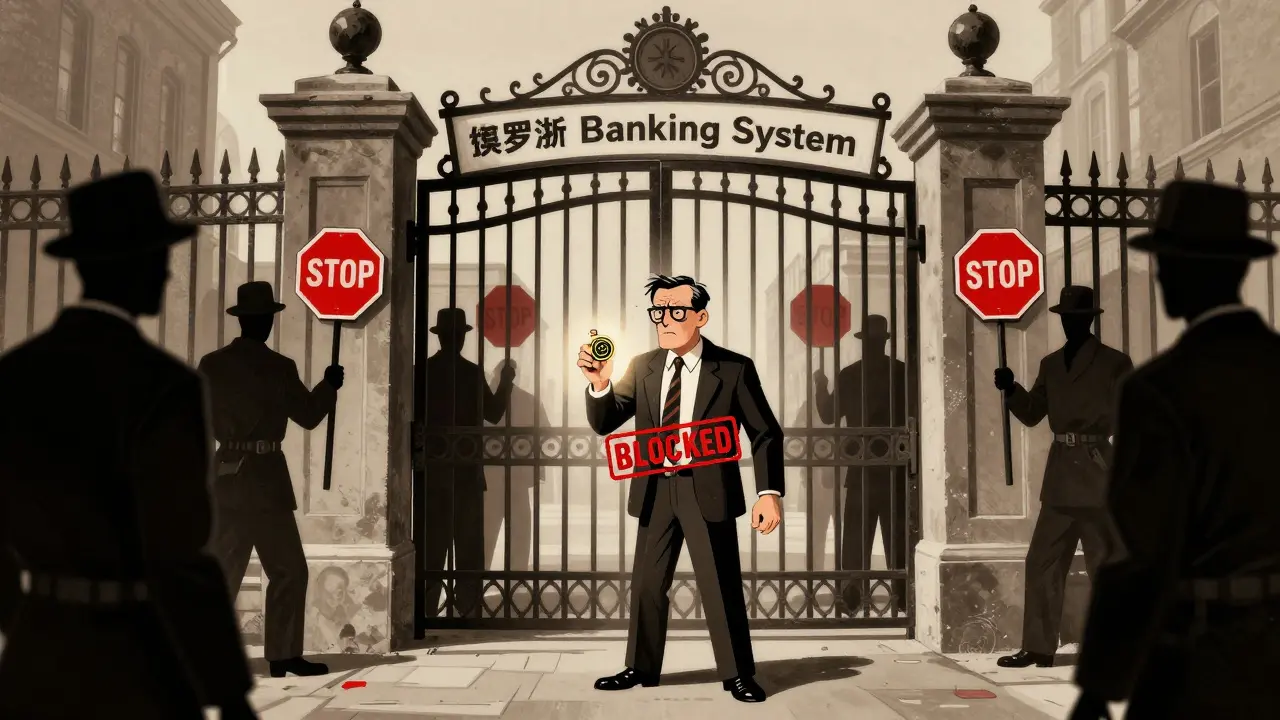
Trying to move money or trade cryptocurrency is a complex financial activity in Russia that faces strict regulatory scrutiny and banking blocks right now. If you are looking for a loophole to bypass sanctions or hide assets, stop reading. That path leads to frozen accounts, heavy fines, and potentially criminal charges. The landscape has shifted dramatically by 2026. The days of wild west mining and unchecked peer-to-peer (P2P) transfers are over. Instead, the Russian government has built a tight cage around digital assets, allowing them only where they serve state interests-like evading Western sanctions-and banning them everywhere else.
The core problem isn't just about "avoiding" restrictions; it's about understanding which activities are legally permissible and which are strictly prohibited. With the launch of the digital ruble is the Central Bank's official CBDC designed to replace cash and control all domestic transactions in 2026, the window for informal crypto usage is closing fast. This guide breaks down how to stay compliant, protect your assets, and navigate the dual-track system that separates retail users from corporate players.
Understanding the 2026 Regulatory Landscape
To survive in this environment, you first need to understand the rules of the game. Russia operates under a bifurcated model. On one side, there is a near-total ban on retail cryptocurrency usage. On the other, there is a state-sanctioned framework for international settlements. This split exists because the government wants to prevent capital flight while simultaneously using crypto to bypass Western sanctions.
The foundation of this policy is the Digital Financial Assets Law passed in 2020. It explicitly bans the use of cryptocurrencies as a means of payment within Russia. You cannot buy coffee with Bitcoin. You cannot pay rent with Ethereum. Any attempt to do so triggers immediate alerts from the Central Bank of Russia acts as the primary regulator enforcing strict monitoring and freezing of suspicious crypto-related accounts.
For ordinary citizens, this means that owning crypto is not illegal, but using it is highly restricted. The law does not prohibit possession, but it makes the act of transacting with fiat currency (rubles) for crypto extremely difficult. Banks are mandated to monitor accounts for any signs of crypto involvement. If they detect it, they will block your account. There is no appeal process that works consistently. The goal is deterrence.
The Danger of Peer-to-Peer (P2P) Trading
Most people think P2P trading is the safest way to get crypto in Russia. They are wrong. In 2025 and 2026, P2P platforms have become the primary target for enforcement. Why? Because these platforms rely on bank transfers between individuals. When you send rubles to a seller to receive USDT, that transfer looks like money laundering to the banking system.
The Central Bank has implemented sophisticated monitoring tools. They track patterns such as:
- Transfers to new recipients with no prior history.
- Rapid movement of funds immediately after receipt.
- Transactions occurring at unusual hours.
- Use of QR codes instead of standard card details.
If your behavior matches these indicators, your account will be frozen for 48 hours. During this time, you cannot access your money. Worse, if the transaction is deemed suspicious, the freeze can become permanent. In 2025, the Central Bank introduced stricter cash withdrawal limits. If you withdraw more than ₽50,000 per day via ATM after a flagged transaction, you trigger additional alerts. This creates a bottleneck for anyone trying to move significant amounts of value.
Furthermore, the risk extends beyond just losing access to your bank account. The Federal Tax Service monitors large-scale crypto transactions for potential tax evasion and illegal income reporting closely. Unreported gains can lead to audits and fines. The penalty for illegal mining operations alone is up to 200,000 rubles. For trading, the penalties are less defined but equally severe in practice.
The Experimental Legal Regime (ELR): A Corporate Loophole
If P2P is dangerous, what is the alternative? For most people, there is none. However, for large corporations and "highly qualified investors," there is the Experimental Legal Regime (ELR) provides a limited legal framework for cross-border crypto settlements sanctioned by the state. This is not for you unless you run a multinational corporation.
The ELR allows companies to use cryptocurrencies for international settlements. This was created specifically to help Russian businesses bypass SWIFT sanctions. Under this regime, companies can trade in sanctioned stablecoins and decentralized assets, but only within a closed ecosystem. They must register as participants and follow strict reporting requirements.
In 2025, crypto-facilitated trade under this regime reached 1 trillion rubles. The most notable example is the stablecoin A7A5 recorded $41.2 billion in transaction volume in July 2025 as a state-backed settlement tool. This coin is backed by rubles and used exclusively for B2B transactions. It highlights the state's strategy: allow crypto where it helps the economy evade sanctions, ban it where it threatens financial stability.
For individual investors, the ELR is inaccessible. You cannot join as a "highly qualified investor" without meeting stringent criteria that exclude the average citizen. Attempts to mimic this structure through shell companies are risky and often fail due to lack of proper licensing and oversight.
Banking Surveillance and Account Freezing
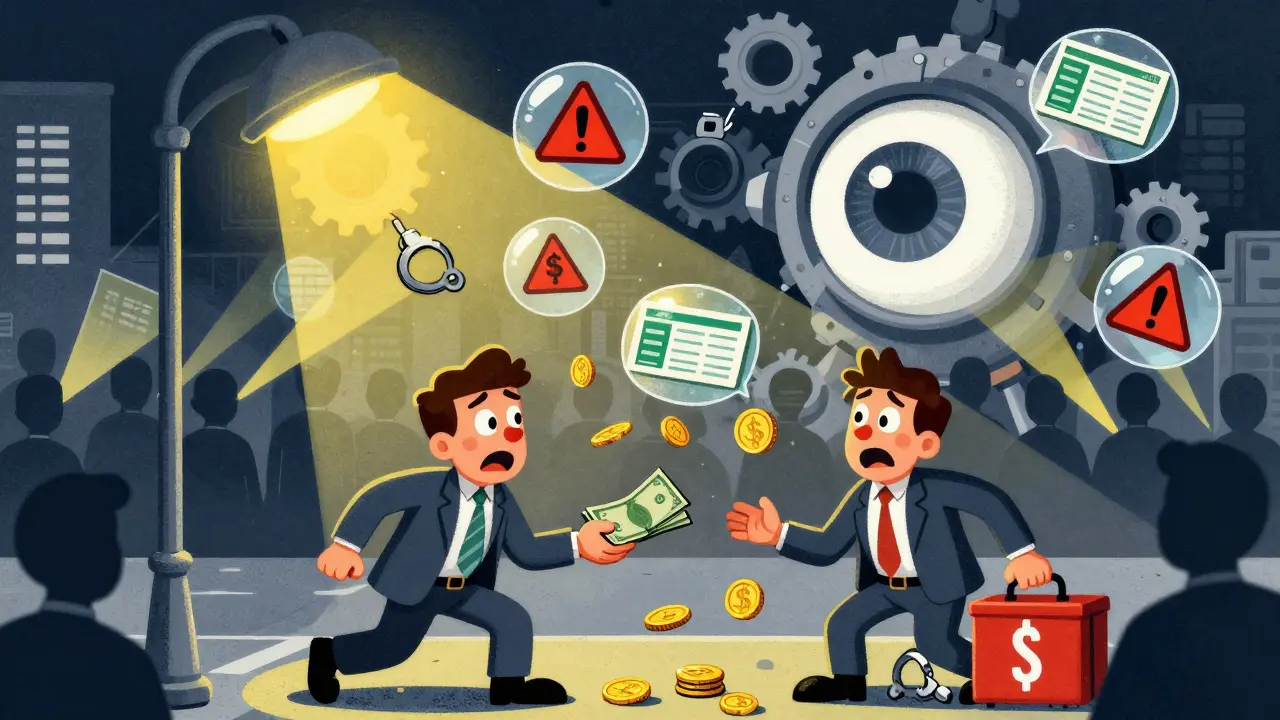
Your bank is your biggest enemy in this context. Since September 2025, banks have been required to implement real-time fraud detection systems that flag crypto-related activities. These systems are not perfect, but they are aggressive. False positives are common, and resolving them takes weeks, during which your money is inaccessible.
Here are the specific triggers that banks look for:
| Trigger Indicator | Consequence | Mitigation Strategy |
|---|---|---|
| Withdrawals at unusual times | Immediate 48-hour freeze | Avoid late-night transactions |
| Uncommon transaction amounts | Manual review by compliance team | Keep transactions consistent |
| QR code payments for large sums | Flagged as high-risk | Use traditional card details |
| Sudden change in phone activity | Linked to identity theft checks | Maintain consistent device usage |
| Cash withdrawals after loan approval | High suspicion of fraud | Delay withdrawals by several days |
The key takeaway here is consistency. If your account suddenly starts behaving differently, the algorithms will notice. Do not mix personal finances with crypto-related activities. Use separate accounts if possible, though even this is risky if the source of funds is traced back to crypto exchanges.
The Rise of the Digital Ruble
The introduction of the digital ruble represents the ultimate tool for state control over digital transactions, eliminating anonymity is the final nail in the coffin for informal crypto usage. Launching in 2026, this central bank digital currency (CBDC) is designed to replace cash and provide total transparency for the government. Unlike Bitcoin or Ethereum, the digital ruble is not anonymous. Every transaction is recorded and visible to the Central Bank.
This creates a paradox. While the state promotes the digital ruble for convenience, it also uses it to enforce compliance. If you try to convert digital rubles into crypto, the system will likely flag the transaction. The goal is to create a closed loop where all money stays within the state-controlled system. This makes it harder to move wealth out of the country or hide it from authorities.
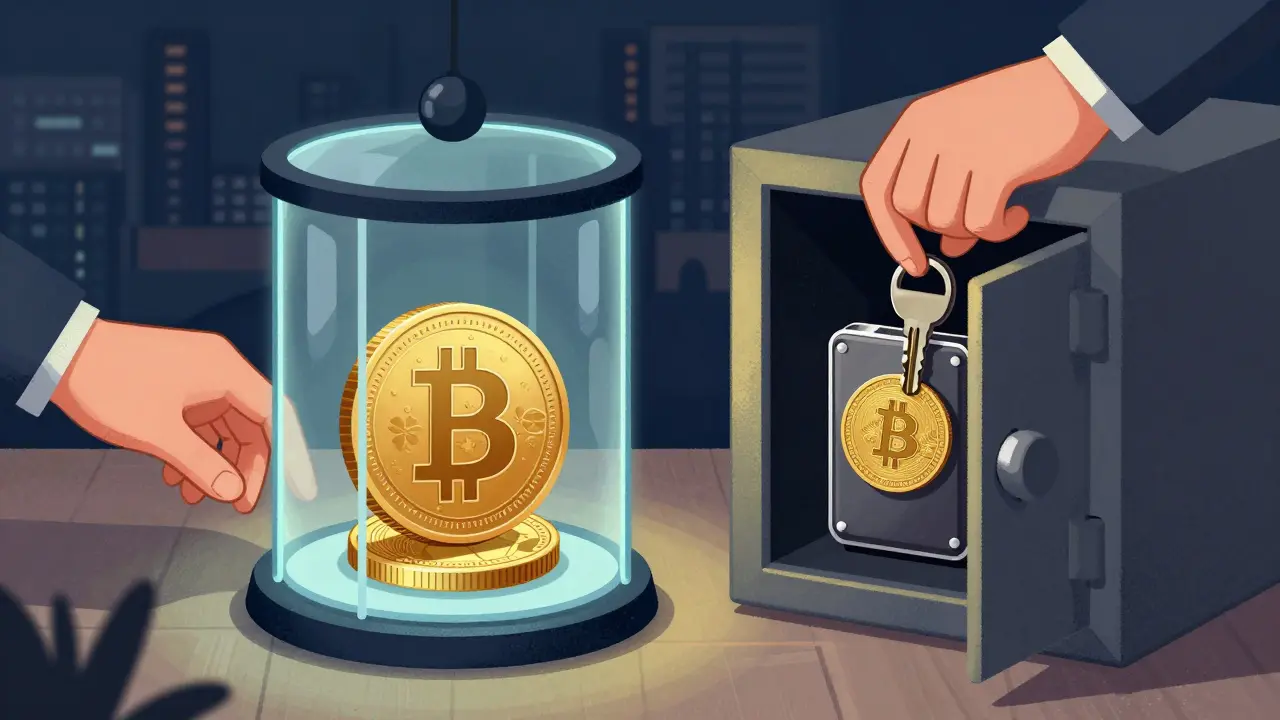
For users who still want to hold crypto, the advice is simple: keep it offline. Use hardware wallets. Do not connect your crypto holdings to any Russian bank account. Treat your crypto portfolio as a separate entity from your daily life. This isolation reduces the risk of triggering banking alerts.
International Sanctions and Exchange Risks
You might think using foreign exchanges solves the problem. It doesn't. The U.S. Treasury has actively targeted exchanges that facilitate Russian transactions. In March 2025, the Garantex exchange was sanctioned by the US Treasury for processing ransomware-linked transactions was shut down, and its successor, Grinex, faced similar pressure. Executives were arrested, and millions in assets were frozen.
This trend is accelerating. Global regulators are cracking down on no-KYC (Know Your Customer) exchanges. Platforms that previously allowed anonymous trading are now implementing strict identity verification. If you are a Russian resident, many major global exchanges will block you based on IP address or KYC documents. Trying to bypass these blocks using VPNs is risky and often results in permanent account bans.
The Department of Justice has offered rewards of up to $5 million for information leading to the arrest of key figures in sanctioned exchanges. This shows the level of international cooperation against Russian crypto operators. Using these platforms is not just a legal risk in Russia; it's a global security concern.
Practical Steps for Compliance
If you must engage with cryptocurrency in Russia, follow these steps to minimize risk:
- Separate Finances: Never link your primary bank account to a crypto exchange. Use a secondary account with minimal funds.
- Avoid P2P: Peer-to-peer trading is the highest risk activity. If you must trade, use non-custodial methods that do not involve direct bank transfers.
- Stay Offline: Store your crypto in hardware wallets. Do not leave funds on exchanges, especially those known to interact with Russian users.
- Monitor News: Regulations change frequently. Stay updated on announcements from the Central Bank and Ministry of Finance.
- Consult a Lawyer: If you are dealing with large sums, seek professional legal advice. The line between legal and illegal is thin and constantly shifting.
Remember, the goal is not to trick the system but to operate within the narrow boundaries allowed by law. Anything outside those boundaries is a gamble with your financial freedom.
Is it illegal to own cryptocurrency in Russia?
No, owning cryptocurrency is not explicitly illegal for individuals. However, using it as a means of payment or engaging in unlicensed trading activities is prohibited. The law focuses on restricting circulation rather than possession.
Can I use P2P exchanges safely in Russia?
P2P exchanges carry high risk. Banks monitor P2P transactions closely and may freeze your account if they suspect illegal activity. Many users have reported permanent blocks after using P2P services.
What is the Experimental Legal Regime (ELR)?
The ELR is a state-sanctioned framework that allows companies to use cryptocurrency for international settlements. It is not available to individual retail investors and requires strict compliance with reporting standards.
How does the digital ruble affect crypto users?
The digital ruble increases state surveillance over transactions. It makes it harder to convert fiat to crypto anonymously and reinforces the ban on using crypto for domestic payments.
Are foreign exchanges safe for Russian residents?
Many foreign exchanges block Russian users due to sanctions. Using VPNs to bypass these blocks is risky and can lead to account closures. International enforcement actions are increasing.
