
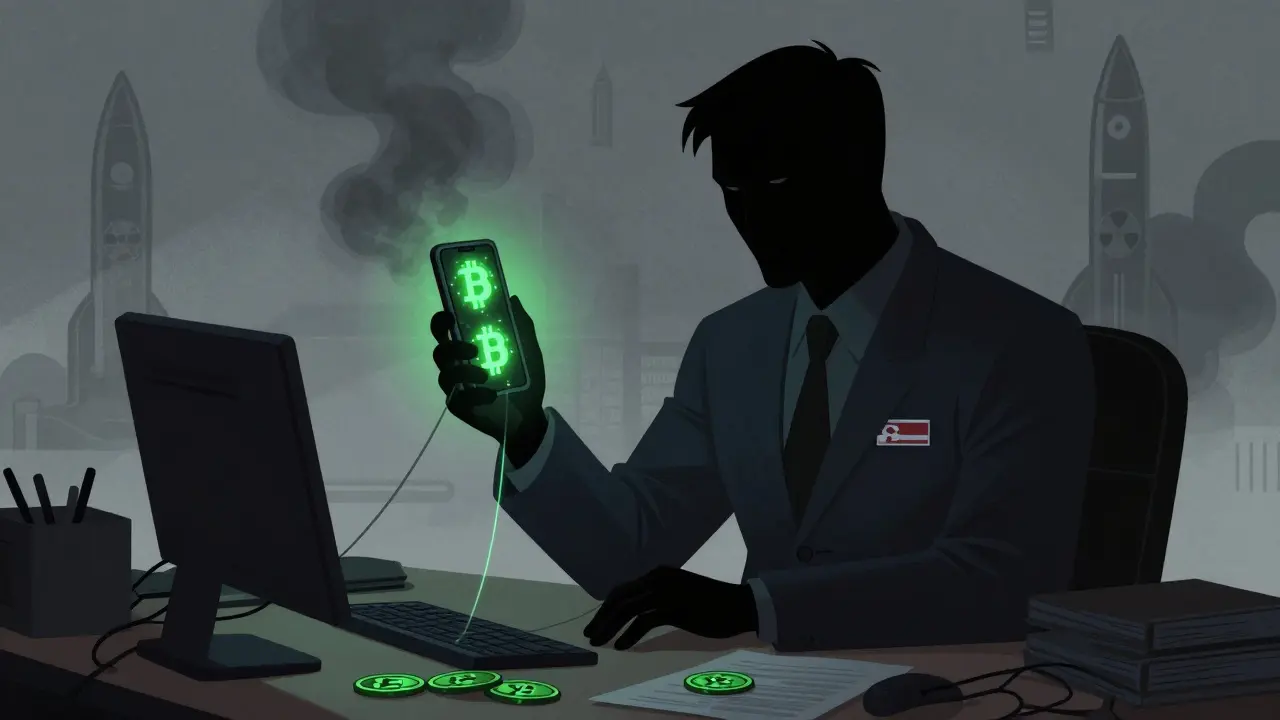
Imagine hiring a brilliant developer for half the market rate. They are polite, efficient, and eager to start immediately. But there is a catch: they only accept payment in cryptocurrency. This isn’t just a red flag; it might be a direct pipeline funding nuclear weapons programs. In 2025 and into 2026, North Korean IT workers engaged in state-sponsored schemes to launder cryptocurrency through fraudulent remote employment have become one of the most sophisticated threats to global financial security.
The Democratic People's Republic of Korea (DPRK) has shifted its strategy. Instead of relying solely on high-profile heists against exchanges, the regime now uses a steady stream of 'legitimate' remote jobs to generate foreign currency. According to the Multilateral Sanctions Monitoring Team (MSMT), these operations generated at least $1.65 billion between January and September 2025 alone. This money doesn't vanish; it funds the development of ballistic missiles and weapons of mass destruction. If you are a business owner or HR manager hiring remotely, understanding this threat is no longer optional-it is critical.
The Mechanics of the Scheme
So, how does a worker from a heavily isolated country like North Korea land a job at a tech startup in Canada or Europe? It starts with deception. The DPRK deploys IT professionals overseas using false identities. These operatives often use facilitators like Chinyong Information Technology Cooperation Company, which was designated by the U.S. Treasury’s Office of Foreign Assets Control (OFAC) in July 2025.
The process follows a predictable pattern:
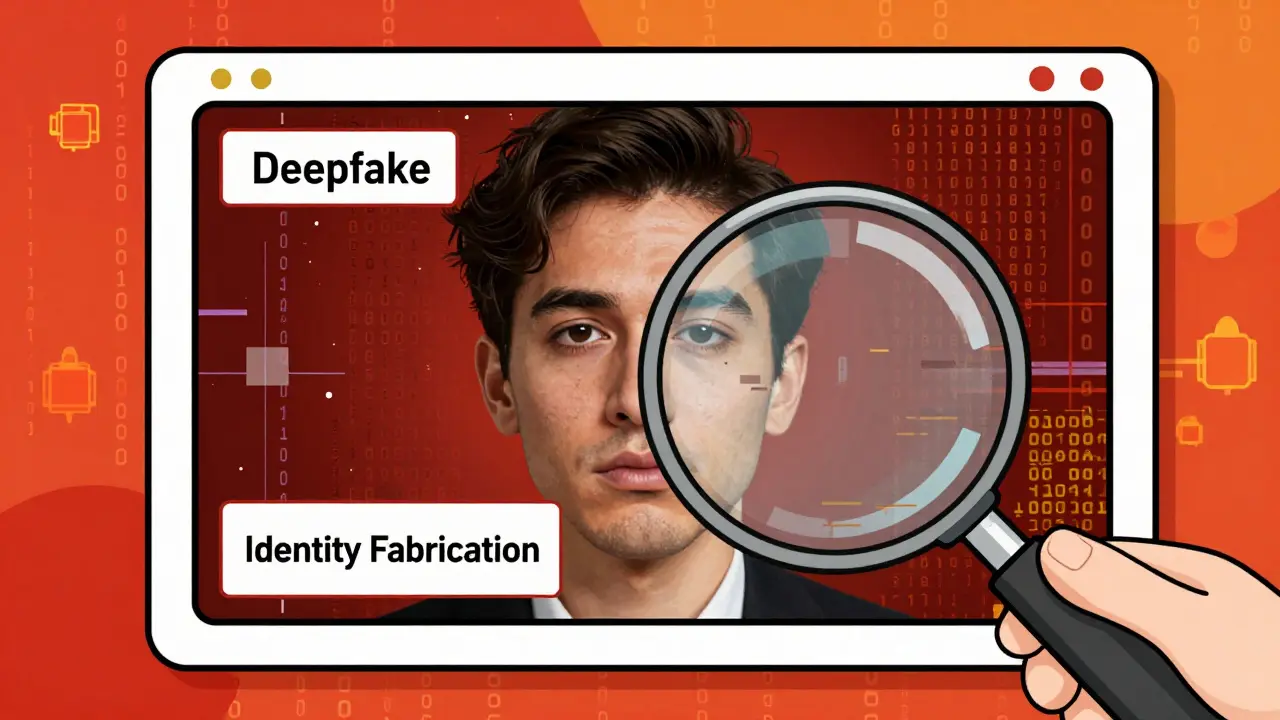
- Identity Fabrication: Operatives use stolen or forged documents. They employ AI-powered voice and face software to create convincing deepfakes during video interviews. Chainalysis reported in June 2025 that these tools allow them to mask their true location and identity effectively.
- The Pitch: They apply for remote positions globally, often bidding 20-30% below market rates. They are willing to start without signed contracts, creating a sense of urgency and ease for the employer.
- Crypto Payment Demand: Once hired, they insist on being paid in stablecoins like USDC or USDT. This is crucial because stablecoins maintain consistent value and can be easily moved across borders.
- Laundering: The funds are fragmented across numerous blockchain addresses before being consolidated and transferred to senior DPRK operatives. From there, they are converted to fiat currency via over-the-counter (OTC) traders or fictitious accounts on mainstream exchanges.
This method is distinct from traditional cybercrime. While groups like the Lazarus Group focus on massive, risky hacks-such as the $1.4 billion Bybit heist in February 2025-the IT worker scheme provides a steady, lower-risk income stream. It looks like normal business activity, making it harder for automated systems to detect.
Red Flags You Cannot Ignore
You don’t need to be a cybersecurity expert to spot these scams, but you do need to be vigilant. The Royal Canadian Mounted Police (RCMP) issued an advisory on July 16, 2025, outlining specific warning signs. If you see these patterns, stop the hiring process immediately.
| Indicator | What to Look For | Why It Matters |
|---|---|---|
| Cryptocurrency Payments | Insistence on USDT, USDC, or Bitcoin | Allows bypassing banking sanctions and easy laundering |
| IP Address Inconsistencies | Logins from Russia, UAE, or multiple countries simultaneously | DPRK operatives use infrastructure in third-party nations to hide origins |
| Deepfake Artifacts | Stiff facial movements, audio lag, or inconsistent lighting | AI tools used to simulate presence; fails under multi-platform scrutiny |
| Forged Credentials | Universities or employers that cannot be verified directly | 92% of verified applications contained fake educational backgrounds |
| Urgency & Low Rates | Bids 20-30% below market; refusal to sign standard contracts | Designed to bypass due diligence and secure quick access |
A cybersecurity firm reported losing $280,000 over six months to a single operative who used AI deepfakes during every video call. The company didn’t realize the person on screen wasn’t real until the payments stopped and the contact vanished. The average loss per incident is around $47,000, according to the Canadian Anti-Fraud Centre. That is a steep price for skipping basic verification.
Global Impact and Government Response
The scale of this issue has forced governments to act. The MSMT report from October 2025 highlighted that these funds are explicitly used for procurement-related transactions, including military equipment and raw materials like copper for munitions. This connects your potential hire directly to geopolitical instability.
In response, the U.S., Japan, and South Korea issued a joint statement in July 2025 warning businesses about these threats. The U.S. State Department announced rewards of up to $15 million for actionable information. Furthermore, the Financial Action Task Force (FATF) updated its guidance for virtual asset service providers in June 2025 to specifically address the DPRK IT worker threat.
Law enforcement is also stepping up. On June 5, 2025, the Department of Justice filed a civil forfeiture complaint seeking over $7.7 million in digital assets tied to a laundering network using aliases like 'Joshua Palmer' and 'Alex Hong.' The FBI successfully seized USDC, ETH, and NFTs linked to these operations. In July 2025, four North Korean nationals were indicted for wire fraud and money laundering after stealing nearly $1 million through this scheme.

How to Protect Your Business
If you are hiring remote talent, you must adapt your vetting process. The days of trusting a LinkedIn profile and a Zoom interview are over. Here is what you need to implement:
- Reject Crypto Payments: Never agree to pay employees in cryptocurrency. Use established banking channels or reputable payroll services that comply with local regulations. This single step eliminates the primary vector for laundering.
- Multi-Platform Verification: Conduct video interviews using two different communication platforms simultaneously (e.g., Zoom and Microsoft Teams). AI deepfakes often struggle to maintain consistency across different codecs and networks. Ask candidates to perform specific physical actions, like turning their head or holding up an ID card, in real-time.
- Direct Background Checks: Do not rely on provided references. Contact educational institutions and previous employers directly using official contact information found independently, not in the candidate’s resume. Verify degrees and employment dates meticulously.
- Blockchain Analytics: If you must deal with crypto for other reasons, use tools from firms like Chainalysis or Elliptic to monitor wallet addresses. Look for fragmentation patterns where small amounts are sent to many wallets before consolidation.
- Legal Contracts: Insist on signed contracts before any work begins. Legitimate freelancers understand the need for legal protection. Refusal to sign is a major warning sign.
Implementing these measures takes time. Mandiant’s assessment in September 2025 suggests that effective countermeasures require 4-6 weeks of specialized training for HR and security teams. However, companies that adopted these protocols saw a 63% reduction in infiltration attempts. The investment pays off by protecting your reputation and avoiding complicity in sanctions evasion.
The Future of Detection
As we move through 2026, the battle lines are shifting. The Treasury Department’s Financial Crimes Enforcement Network (FinCEN) is developing advanced blockchain analytics capable of identifying DPRK-linked wallet clusters with 89% accuracy. A prototype system is expected to launch in Q1 2026.
Industry analysts predict a 25-30% decrease in successful infiltrations by late 2026 due to improved international coordination and AI detection technologies. However, North Korea remains adaptable. They will likely evolve their tactics, perhaps targeting new sectors or using more sophisticated AI to mimic human behavior even better.
The key takeaway is simple: vigilance is your best defense. By understanding the mechanics of these schemes and implementing robust verification processes, you can protect your business and contribute to the global effort to curb illicit finance. Don’t let a cheap rate compromise your integrity or your bottom line.
Is it illegal to hire a North Korean IT worker?
Yes, if the worker is operating under false pretenses or if the payment facilitates sanctions evasion. UN Security Council resolutions prohibit providing resources that benefit the DPRK government. Hiring through sanctioned entities or paying in ways that circumvent financial restrictions can lead to severe legal penalties for businesses and individuals.
Why do they prefer stablecoins like USDT or USDC?
Stablecoins offer the volatility protection of fiat currency with the borderless transfer capabilities of cryptocurrency. They are widely accepted by over-the-counter (OTC) traders who can convert them into cash quickly, allowing the funds to enter the legitimate financial system or be used for procurement of materials like copper for munitions.
Can I detect a deepfake during a video interview?
It is challenging but possible. Look for unnatural eye blinking, stiff facial expressions, or audio-video sync issues. The most effective method is to use multiple communication platforms simultaneously and ask the candidate to perform unpredictable physical actions, such as waving a hand near the camera or showing a handwritten note.
What should I do if I suspect I’ve been scammed?
Immediately cease all payments and communications. Preserve all evidence, including chat logs, transaction hashes, and video recordings. Report the incident to your local law enforcement and relevant financial authorities, such as FinCEN in the U.S. or FINTRAC in Canada. You may also report it to the FBI’s Internet Crime Complaint Center (IC3).
Are all remote workers from Eastern Europe suspicious?
No. Many legitimate developers live in Eastern Europe. The suspicion arises from specific behaviors, not geography. Key indicators include demands for crypto-only payment, inability to verify credentials, IP address inconsistencies linking to known DPRK infrastructure proxies, and the use of deepfake technology. Focus on behavior and verification, not nationality.
