
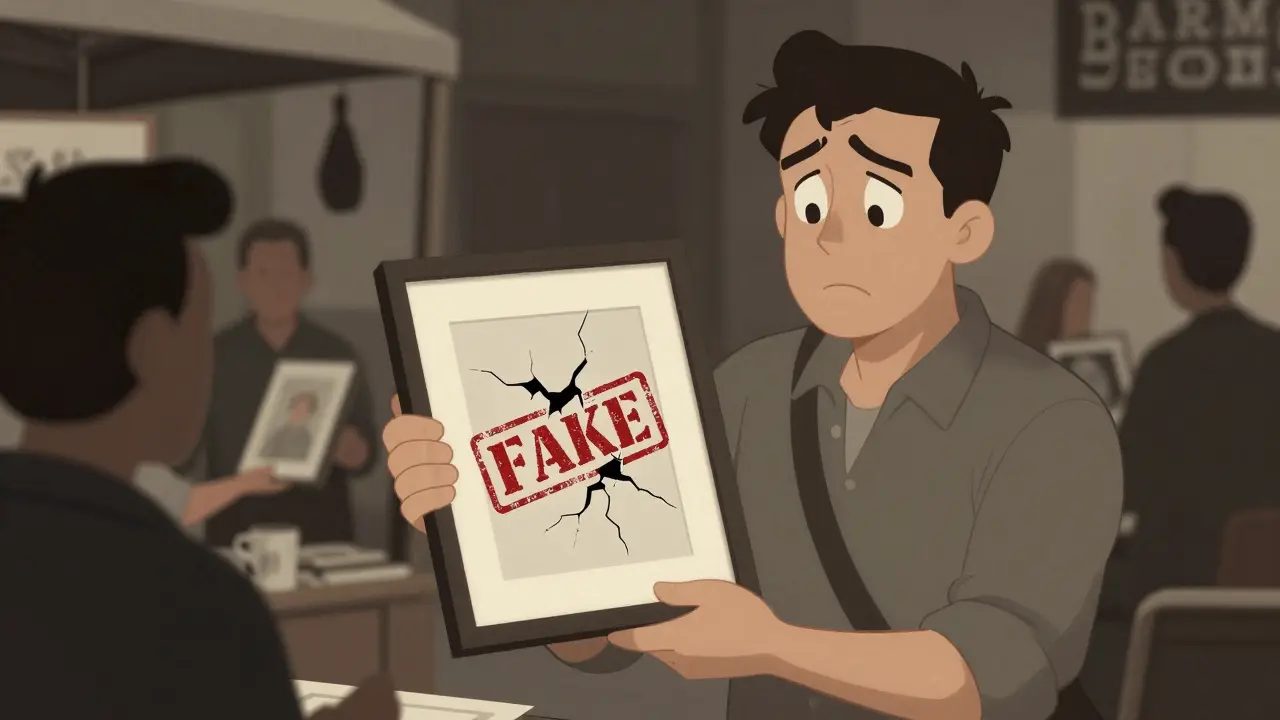
Imagine buying a rare digital artwork, only to find out later it’s a cheap copy of a project that doesn’t exist. This isn’t science fiction; it’s the daily reality for many in the NFT space. With millions of collections minted on blockchains like Ethereum, distinguishing between legitimate projects and malicious scams has become a critical challenge. You might wonder how platforms decide which collections get that coveted blue checkmark. The answer lies in a complex mix of technical validation, trading volume thresholds, and manual review processes.
NFT marketplace collection verification is a multifaceted process where platforms authenticate the legitimacy of NFT projects through technical validation, volume requirements, and manual review procedures to prevent fraudulent impersonation and enhance user trust. Unlike traditional social media verification, there is no single standard. Each major platform-from OpenSea to Blur-uses its own set of rules, creating a fragmented landscape that can be confusing for creators and buyers alike.
The Core Purpose: Security Over Endorsement
Before diving into the mechanics, it’s crucial to understand what verification actually means. Many users mistakenly believe a verified badge is a stamp of quality or an investment recommendation. It isn’t. As Alex Atallah, co-founder of OpenSea, stated in a CoinDesk interview, "verification is about preventing scams, not endorsing projects." The primary goal is security. By verifying a collection, marketplaces aim to reduce the risk of users interacting with fake contracts or impersonator accounts.
This distinction matters because it shapes the criteria used. Platforms aren’t looking for the "best" art; they are looking for proof of authenticity. They want to ensure that the person claiming to own the contract address is indeed the creator. This involves checking domain ownership, social media links, and sometimes even identity documents. However, this process is far from perfect. Dr. Sarah Jamie Lewis, a cryptography researcher, has criticized current models for relying too heavily on manual verification, arguing that it creates single points of failure that don’t scale with the thousands of new collections minted daily.
OpenSea: The Opaque Prestige Model
OpenSea is the largest NFT marketplace by market share, employing a verification system similar to Instagram's blue checkmark but with undisclosed specific criteria. Holding approximately 65% of the market share according to DappRadar's Q2 2023 report, OpenSea sets the tone for much of the industry. Their verification process is notoriously opaque. There is no public checklist you can tick off to guarantee approval. Instead, projects must demonstrate credibility through a combination of factors: significant media coverage, identifiable founders, and a strong, active community presence.
This lack of transparency leads to frustration. Success rates are estimated to be below 5%, according to surveys among NFT creators on Reddit. For example, user u/CryptoCollector89 documented an eight-month journey trying to get verified despite having 300 ETH in volume and press coverage, only to face multiple rejections. The process typically takes 4-12 weeks, with applicants submitting through an official form and waiting for a manual review. While prestigious due to OpenSea’s massive user base (over 1.4 million monthly active users), the difficulty of obtaining verification makes it less accessible for newer or smaller projects.
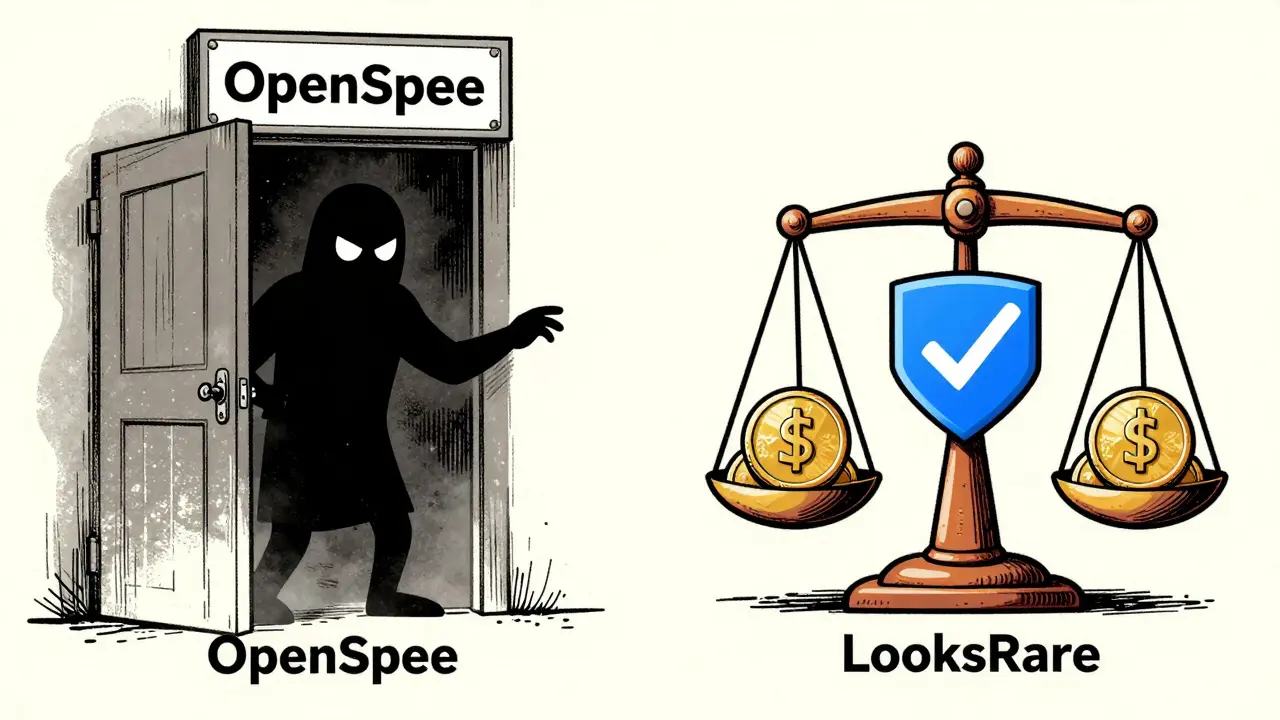
LooksRare: The Volume-Based Approach
In contrast, LooksRare is an NFT marketplace that launched a verification system requiring collections to meet specific trading volume thresholds or prove notable status. Launched in early 2022, LooksRare introduced a more objective, albeit economically exclusionary, model. According to their documentation updated in July 2023, collections must meet one of three criteria to request verification:
- Legitimacy: Confirmed through manual review to ensure they are not impersonating other collections.
- High Volume: Accumulating at least 250 ETH/WETH in trading volume specifically on LooksRare, or 500+ ETH across the broader NFT ecosystem (excluding private sales).
- Notable Status: Affiliation with high-profile public figures or significant cultural relevance.
This system appeals to traders who value transparency. In a Q3 2022 community survey, 74% of LooksRare users rated the volume-based system as "fair and transparent," compared to just 39% for OpenSea. However, it disadvantages new creators. The NFT Creator Alliance’s white paper found that 92% of collections failing to meet these volume thresholds were less than six months old. Essentially, you need money to get verified, which creates a barrier to entry for emerging artists. Once verified, collections receive a blue checkmark, but LooksRare explicitly states that this does not constitute an endorsement to buy.
Blur and Other Major Players
Blur is a professional-focused NFT marketplace that captured 60% of trading volume in mid-2023, offering verification through a 'Verified Collections' program with undisclosed specific criteria. Blur, which surged in popularity among professional traders, offers verification through its "Verified Collections" program. Projects submit documentation via an official form, but like OpenSea, the specific criteria remain largely undisclosed. This opacity is partly due to the rapid evolution of the market. Blur’s focus on pro-traders means their verification often prioritizes liquidity and established reputation over artistic merit or community size.
Other platforms have experimented with different models. X2Y2, for instance, required at least 100 ETH in trading volume and passed a manual review before discontinuing its verification system in late 2022. These shifts highlight how verification standards evolve with market conditions. As platforms compete for users, they adjust their protocols to balance security with accessibility.
| Marketplace | Primary Criteria | Transparency Level | Average Processing Time | Key Limitation |
|---|---|---|---|---|
| OpenSea | Credibility, Media, Community | Low (Opaque) | 4-12 Weeks | Subjective, Low Success Rate (<5%) |
| LooksRare | Volume (250+ ETH) or Notability | High (Objective) | 3-7 Business Days | Economically Exclusionary for New Projects |
| Blur | Documentation Submission | Low (Undisclosed) | Variable | Lack of Clear Guidelines |
| X2Y2 (Discontinued) | Volume (100+ ETH) + Manual Review | Medium | N/A | No Longer Active |
Technical Verification and Smart Contracts
Beyond manual reviews, technical verification plays a growing role. Developers can programmatically access verified collection data using APIs. For example, Moralis, a blockchain data provider, allows developers to fetch verified collection information for specific addresses. This requires setting up an API key and running scripts, a process that takes about 15-30 minutes for experienced developers. This approach enables third-party tools and wallets to display verification status automatically, enhancing user safety without relying solely on marketplace interfaces.
However, the most advanced technical solutions are still emerging. The Ethereum Research community proposed a privacy-focused verification system using zero-knowledge proofs (ZKPs). In this model, verification involves validating cryptographic parameters such as Collection Address, Token ID, and Nullifier Hashes. This method checks nullifier hash availability, confirms transaction amounts, and validates proofs to prevent double-spending while preserving privacy. Barry Whitehat, an Ethereum protocol researcher, noted that this approach properly addresses security issues but warned that gas costs might be prohibitive for mainstream adoption. Implementing such a system would require smart contract deployment with complex state management, taking experienced Solidity developers 80-120 hours to build.
The Future: Standardization and Decentralization
As the market matures, the push for standardized verification is growing. Regulatory pressure, such as the SEC’s enforcement actions against fraudulent projects like Stoner Cats, is driving platforms to strengthen their systems. Gartner predicts that by 2025, 70% of major NFT platforms will implement standardized verification protocols compliant with regulations like the EU’s MiCA. Meanwhile, proposals like the Ethereum Name Service (ENS) suggestion to use ENS domains for avatar verification offer decentralized alternatives. Although unimplemented as of late 2023, such ideas point toward a future where verification is less dependent on centralized platforms and more rooted in cryptographic proof.
For now, the landscape remains hybrid. Industry consensus, reflected in the Allium NFT Standards Group’s white paper, suggests combining volume metrics, technical validation, and manual review. This balances security, accessibility, and fraud prevention. While complete standardization is unlikely due to competitive dynamics, the trend is clear: verification is becoming more technical, transparent, and essential for trust in the digital asset economy.
Why do NFT marketplaces verify collections?
Marketplaces verify collections primarily to prevent fraud and impersonation scams. With $142 million lost to NFT impersonation in 2022 alone, verification helps users distinguish legitimate projects from fakes, enhancing trust and security on the platform.
Does a verified badge mean the NFT is a good investment?
No. Verification confirms the authenticity of the collection and its creator, not the quality or value of the assets. As OpenSea’s co-founder stated, verification is about preventing scams, not endorsing projects. Verified collections can still lose value or engage in wash trading.
How long does it take to get verified on OpenSea?
Processing times vary significantly, but community reports suggest an average of 4-12 weeks. The process is opaque, with success rates estimated below 5%, depending on factors like media coverage, founder identification, and community strength.
What are the volume requirements for LooksRare verification?
LooksRare requires collections to have at least 250 ETH/WETH in trading volume on their platform, or 500+ ETH across the broader NFT ecosystem (excluding private sales). Alternatively, collections can qualify through notable status or manual legitimacy review.
Can developers check if a collection is verified programmatically?
Yes. Services like Moralis provide APIs that allow developers to query verified collection data for specific addresses. This enables integration of verification status into third-party apps and wallets, improving user safety beyond marketplace interfaces.
Is there a standardized way to verify NFTs across all platforms?
Currently, no. Each marketplace uses its own protocols. However, industry groups like the Allium NFT Standards Group are pushing for hybrid models combining technical validation and manual review. Future developments may include decentralized methods like ENS domains or zero-knowledge proofs.
Why is verification important for small creators?
Verification builds initial credibility and protects against impersonators. However, current systems often disadvantage small creators due to high volume requirements or opaque criteria. Surveys show 68% of creators view verification as important, yet 82% find the process excessively difficult.
What role do zero-knowledge proofs play in NFT verification?
Zero-knowledge proofs offer a technically superior, privacy-preserving method for verification by validating cryptographic parameters without revealing sensitive data. While promising for preventing double-spending and ensuring authenticity, high implementation complexity and gas costs currently limit mainstream adoption.
