
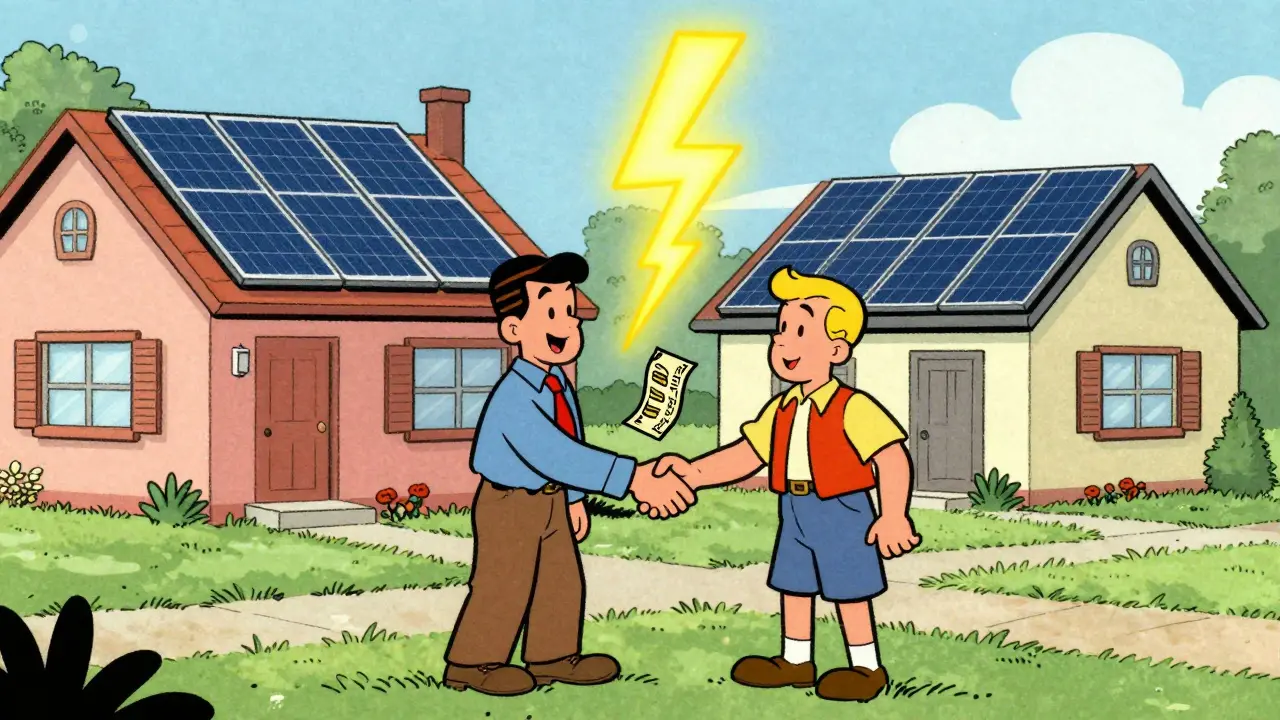
Imagine selling the extra electricity your solar panels generate directly to your neighbor, without calling your utility company or waiting for a monthly credit. That is exactly what Blockchain energy trading is a system that uses distributed ledger technology to enable direct, peer-to-peer energy exchanges between producers and consumers using automated smart contracts. It removes the middlemen who traditionally control how power is bought and sold. For years, the energy market has been rigid, centralized, and expensive. Now, technology is breaking those walls down, turning every home with a battery or solar array into a potential power plant.
This isn't just about saving a few dollars on a bill. It’s about reshaping how we think about energy ownership. In 2026, as renewable adoption hits new highs, the old grid infrastructure is struggling to keep up with decentralized production. Blockchain steps in not as a buzzword, but as a practical tool for matching supply and demand in real-time. If you have ever wondered why your excess energy goes to waste or why green energy costs more than it should, this shift explains the solution.
The Core Problem: Why Traditional Energy Markets Fail Small Players
To understand why blockchain matters here, you first have to look at how broken the current system is for small-scale producers. In the traditional model, if you install solar panels, you are still tied to a monopoly utility. You send your excess power back to the grid, and they buy it at a rate set by them-often significantly lower than what they charge you when you buy power back. This is called net metering, and while it helped start the solar revolution, it creates a massive inefficiency.
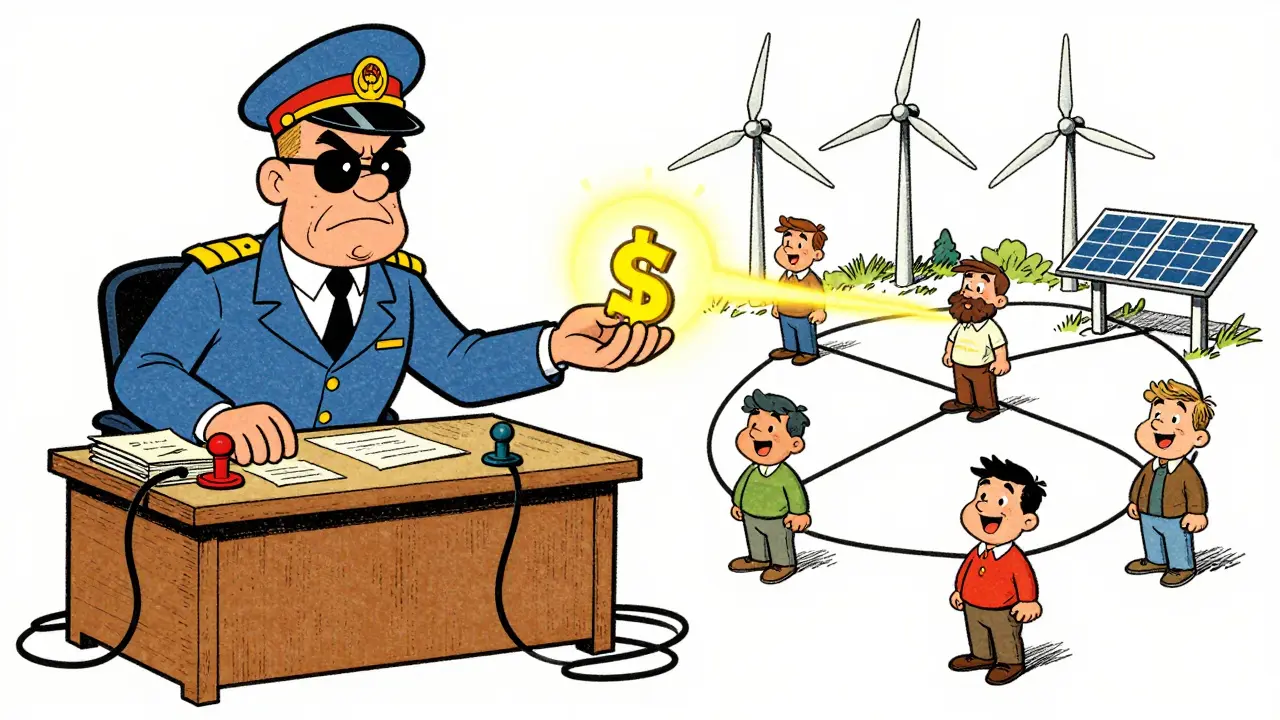
The utility acts as the sole intermediary. They handle the accounting, the distribution, and the pricing. Each step adds administrative overhead. When millions of homes become "prosumers" (both producing and consuming), this centralized bottleneck becomes unmanageable. The grid struggles with reverse flows of electricity, leading to instability. Meanwhile, you, the producer, get little financial reward for helping stabilize the local network. Blockchain solves this by removing the central authority from the transaction layer, allowing peers to trade directly.
How Peer-to-Peer Energy Trading Actually Works
You might picture complex servers and heavy machinery, but the mechanics are surprisingly simple once you strip away the jargon. At its heart, blockchain energy trading relies on three key components: digital tokens, smart contracts, and a distributed ledger.
- Digital Tokens: Energy is converted into a digital currency or token. One kilowatt-hour (kWh) might equal one token. This makes energy tradable like any other asset.
- Smart Contracts: These are self-executing codes stored on the blockchain. You set the rules beforehand. For example, "If my battery has surplus power after 2 PM, sell it to Neighbor B at $0.15 per kWh." When the condition is met, the contract executes automatically.
- Distributed Ledger: Every transaction is recorded across multiple computers (nodes). No single entity controls the record. This ensures that if you sell power, the payment is instant and verifiable by everyone involved.
Let’s say you live in Halifax, Canada, where winter winds make wind turbines efficient. Your turbine generates more power than you need during a storm. Instead of feeding it into the main grid for pennies, your smart device broadcasts availability to a local P2P marketplace. Your neighbor, who needs to charge an EV, accepts the offer. The smart contract handles the transfer of energy credits and the payment simultaneously. It happens in seconds, with no human intervention.
Cost Efficiency: Cutting Out the Middleman
The most immediate benefit for users is cost reduction. Traditional energy procurement involves a long chain of intermediaries: generators, transmission operators, distributors, and retailers. Each layer takes a cut. By enabling direct transactions, blockchain energy trading eliminates brokerage fees and reduces administrative costs associated with manual billing and verification.
For businesses, this means predictable energy costs. A factory could agree to buy low-cost excess solar power from nearby residential complexes during peak hours via a smart contract. They bypass the wholesale market spikes. For homeowners, it means higher returns on their renewable investments. Studies suggest that P2P platforms can increase revenue for prosumers by up to 30% compared to traditional feed-in tariffs, because they capture the retail price rather than the wholesale buy-back rate.
Decentralization and Grid Resilience
Centralized systems have a fatal flaw: single points of failure. If a major substation fails or suffers a cyberattack, entire regions go dark. Blockchain-based energy networks distribute risk. Because the ledger is maintained by many nodes, there is no central server to hack or crash.
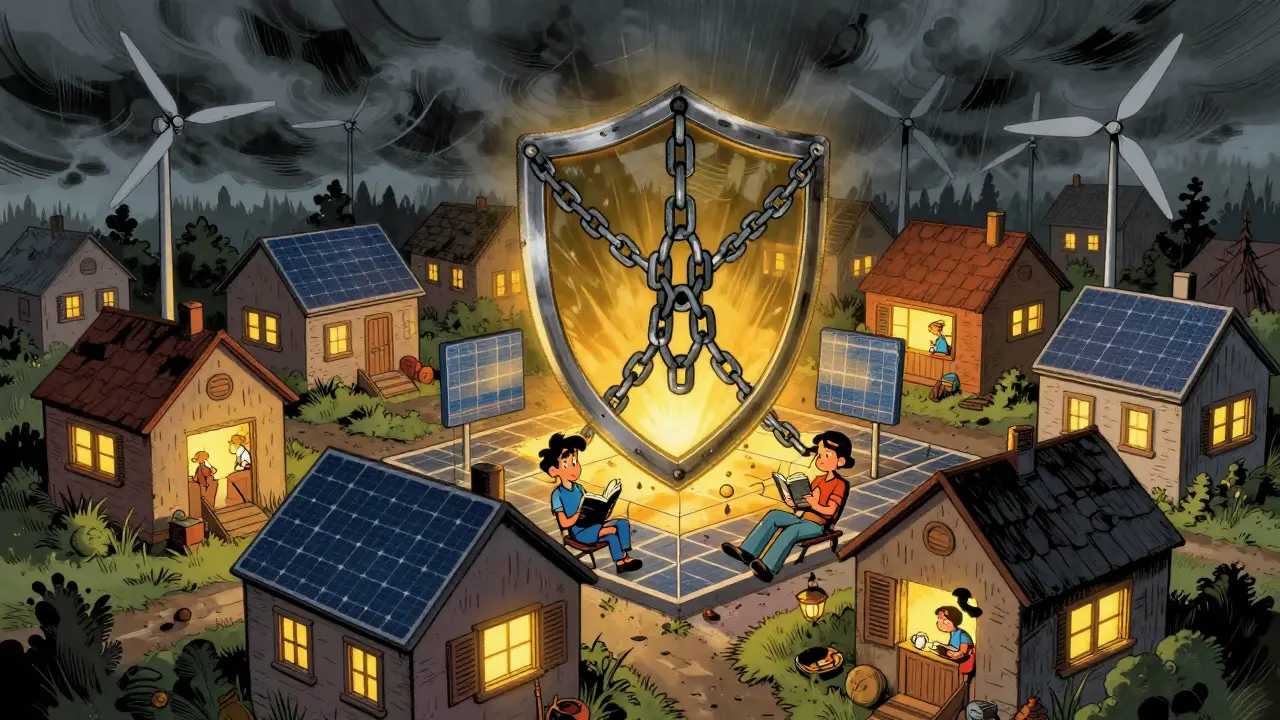
More importantly, decentralization improves physical grid resilience. When communities trade locally, less power travels long distances over high-voltage lines. This reduces transmission losses, which can account for 5-10% of total energy generated. Local microgrids powered by blockchain coordination can island themselves during outages, keeping critical services running while the main grid recovers. This was proven effective in various pilot programs across Europe and North America, where neighborhood clusters maintained power during extreme weather events.
| Feature | Traditional Utility Model | Blockchain P2P Model |
|---|---|---|
| Intermediaries | Multiple (Generators, Distributors, Retailers) | None (Direct Peer-to-Peer) |
| Pricing Control | Set by Utility/Monopoly | Dynamic/Market-Driven by Users |
| Transaction Speed | Monthly Billing Cycles | Real-Time (Seconds) |
| Data Transparency | Opaque (Proprietary) | Immutable & Publicly Verifiable |
| Grid Stability | Vulnerable to Central Failures | Resilient via Distributed Nodes |
Transparency and Trust Through Immutability
In energy trading, trust is usually forced upon you. You trust the meter is accurate. You trust the bill is correct. With blockchain, trust is mathematical. The immutable nature of the ledger means that once a transaction is recorded, it cannot be altered or deleted. This prevents fraud, such as double-counting green certificates or manipulating consumption data.
This transparency is crucial for regulatory compliance. Governments require proof that renewable energy targets are being met. Blockchain provides an automatic, auditable trail of every green kWh traded. Regulators don’t need to manually inspect records; they can verify the data on-chain. This reduces the burden on companies and increases confidence for investors looking to fund clean energy projects.
Empowering Communities and Local Economies
Perhaps the most profound impact is social. Blockchain energy trading keeps money within the community. When you sell power to a neighbor, that dollar stays local instead of flowing to a distant corporate headquarters. This fosters energy independence and strengthens social bonds.
It also democratizes access. Previously, only large utilities could participate in energy markets due to high entry barriers. Now, a small farmer with a wind turbine or a homeowner with rooftop solar can enter the market instantly. This inclusivity accelerates the adoption of clean energy technologies, as the economic incentive for individuals becomes stronger. Early adopters report not just savings, but a sense of agency-they are actively participating in the transition to a low-carbon future, not just passively paying bills.
Challenges to Adoption
Despite the benefits, hurdles remain. Regulatory frameworks are often outdated, designed for one-way power flow. Many jurisdictions still view P2P trading as a legal gray area. Additionally, the scalability of blockchain networks can be an issue; some older blockchains struggle to handle thousands of transactions per second required for real-time grid balancing. However, newer Layer-2 solutions and private permissioned chains are addressing these speed and privacy concerns.
Hardware integration is another factor. You need smart meters and IoT devices that can communicate with the blockchain. While costs are dropping, initial setup remains a barrier for some households. Still, as interoperability standards improve, these technical gaps are closing rapidly.
Is blockchain energy trading available everywhere?
Not yet. Availability depends heavily on local regulations. Countries like Germany, Australia, and parts of the United States have active pilot programs and supportive laws. In many other regions, utilities still hold monopolies that prevent direct peer-to-peer sales. Check your local energy regulator’s stance on "distributed generation" and "virtual power plants" to see if you can participate.
Do I need crypto knowledge to use these platforms?
No. Most consumer-facing platforms abstract away the blockchain complexity. You interact with a user-friendly app that shows your energy production and earnings. The underlying cryptocurrency or token handling is managed automatically by the software. You don’t need to manage wallets or private keys unless you choose to trade the tokens externally.
How does this help the environment?
It maximizes the use of renewable energy. Often, excess solar or wind power is wasted because the grid can't store or transmit it efficiently. Blockchain allows this surplus to be consumed immediately by neighbors, reducing reliance on fossil-fuel backup generators. It encourages more people to invest in renewables because the return on investment is better.
What hardware do I need to start trading?
You generally need a smart inverter (for solar/wind), a smart meter capable of two-way communication, and a stable internet connection. Some platforms provide specific IoT devices that plug into your existing setup to facilitate the connection to the blockchain network.
Are my energy usage data safe on the blockchain?
Yes, through encryption and zero-knowledge proofs. While the ledger is public, sensitive personal data is encrypted. Only the necessary transaction details (amount and time) are visible to ensure fair pricing, while your identity and detailed consumption patterns remain private unless you choose to share them.
