
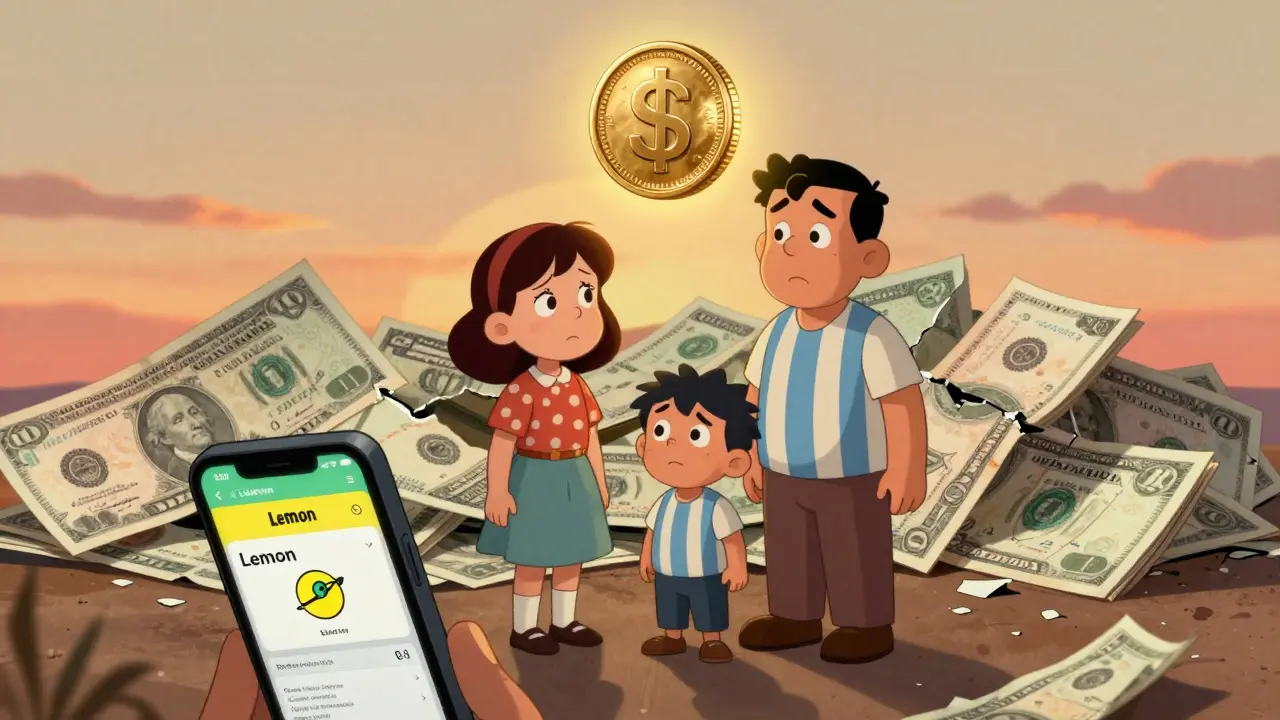
Every month, millions of Argentines face a brutal choice: watch their pesos lose half their value in a year, or find another way to hold onto what they’ve earned. With inflation hitting 43.5% in May 2025 - still more than double the global average - saving in local currency isn’t just risky, it’s nearly impossible. For many, the answer isn’t a bank account. It’s crypto.
Why Crypto? Because the Peso Won’t Hold Value
The Argentine peso has been crumbling for decades. In 1989, inflation hit 2,600%. Even in 2023, it soared past 160%. Today, prices rise faster than people can get paid. A loaf of bread that cost 1,000 pesos last year now costs 2,500. Salaries can’t keep up. And when you try to save in pesos, your money disappears before you even notice. That’s where crypto steps in - not as a gamble, but as a lifeline. Argentines aren’t buying Bitcoin because they think it’ll make them rich. They’re buying it because they need to protect what they already have. The most common tool? Stablecoins. Specifically, USDT (Tether), USDC (USD Coin), and DAI. These aren’t speculative tokens. They’re digital versions of the U.S. dollar, pegged to keep their value steady. If you hold $100 in USDT, it’s still $100 tomorrow, even if your peso account loses 20% in the same time.How It Actually Works: From Paycheck to Digital Dollar
It’s simpler than it sounds. Most Argentines don’t trade crypto on complex platforms. They use apps like Lemon, which work like a regular banking app - but with crypto baked in. Here’s how it goes:- You get paid in pesos - say, 500,000 pesos for a month’s work.
- You open Lemon and tap “Convert to USDC.” The app instantly turns your pesos into $600 worth of USD Coin.
- Your savings are now locked in a digital dollar. No bank can freeze it. No government can devalue it.
- When you need to buy groceries, you use a Lemon-linked Visa debit card. The app converts your USDC back to pesos at the real market rate - not the government’s fake rate.
It’s Not Just Savings - It’s Survival
Saving is only part of the story. Crypto is also how Argentines send money to family, pay for imports, and even get paid by foreign employers. Remittances - money sent home by people working abroad - jumped 25% in 2021 and another 11% in 2022. By 2023, over $156 billion flowed into Argentina from overseas. Traditional services like Western Union charge 10% or more in fees and take days. With crypto, you send $500 to your sister in Córdoba in five minutes for less than $1 in fees. She gets it in USDT, converts it to pesos on her phone, and buys milk the same day. Even small businesses are switching. A mechanic in Rosario might list his services in USDT. A freelance designer in Mendoza invoices clients in the U.S. in USDC. No more waiting for wire transfers. No more losing value while the bank holds your money.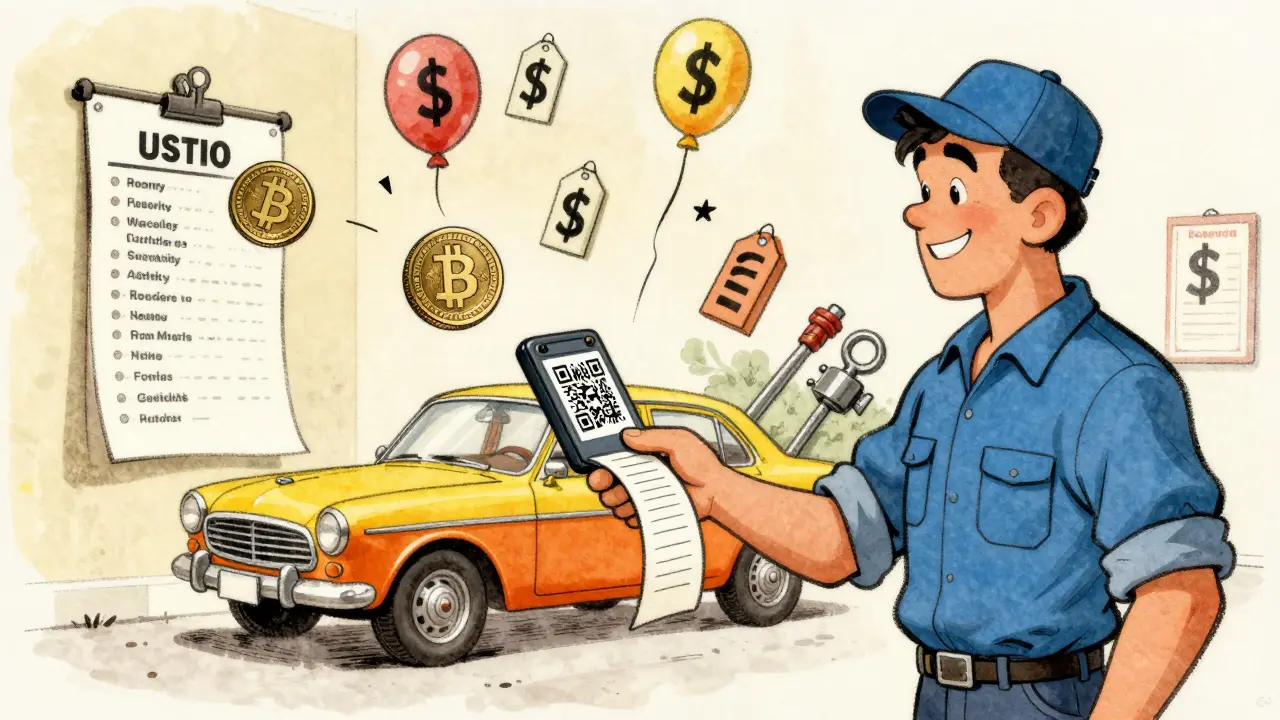
Why Argentina Leads Latin America
Brazil has more people. Mexico has more banks. But Argentina has the most crypto users in Latin America - 19.8% of the population, according to Chainalysis. That’s more than double Brazil’s rate. Why? Because desperation breeds innovation. In Brazil, crypto is often seen as an investment. In Argentina, it’s a necessity. People don’t buy Bitcoin because they heard it might hit $100,000. They buy it because their salary won’t cover rent next month. Platforms like Binance and Lemon have scaled fast to meet demand. Local fintechs have popped up to help users navigate the system. Even non-tech-savvy grandparents now use QR codes to send USDT to their grandkids. The learning curve isn’t steep - the apps do the heavy lifting.Government Shifts: From Opponent to Regulator
For years, the Argentine government treated crypto like a threat. Now, under President Javier Milei, the tone has flipped. Milei openly supports Bitcoin. He calls the peso “a failed experiment.” In March 2025, the National Securities Commission (CNV) issued Resolution 1058/2025 - the first formal rules for crypto exchanges, custodians, and traders in Argentina. It’s not a ban. It’s a license. Companies must now register, follow anti-money-laundering rules, and disclose their reserves. It’s not perfect, but it’s a big step. This shift matters. Before, people used crypto in the shadows. Now, they can do it legally. Banks are starting to partner with crypto platforms. Schools are teaching crypto basics. The ecosystem is growing - not because of hype, but because it works.
What’s Next? A New Financial Layer
Argentina isn’t just using crypto to survive. It’s building something new. Imagine a future where your salary is paid in USDC. Where your child’s school fees are paid in DAI. Where your retirement fund is held in Bitcoin, not pesos. That future isn’t science fiction - it’s already being built. The tools exist. The demand is massive. And the government is slowly catching up. Argentina’s experiment shows that when traditional systems fail, people don’t wait for permission. They build their own. Other countries with high inflation - like Turkey, Nigeria, and Lebanon - are watching. But Argentina is the first where crypto became part of daily life, not just a side hustle. It’s not about getting rich. It’s about not going broke.Is This the Future for Other Countries?
Maybe. But Argentina’s case isn’t about tech. It’s about trust. People there stopped trusting their banks. They stopped trusting their government. They stopped trusting their own currency. Crypto didn’t replace those institutions - it bypassed them. The lesson isn’t that crypto is magic. It’s that when people are left with no safe place to store value, they’ll find one - even if it’s built on blockchain code. For Argentines, crypto isn’t an investment. It’s insurance.Can I use crypto to save money in Argentina if I don’t know how blockchain works?
Yes. Most Argentines using crypto don’t understand blockchain. They use apps like Lemon or Binance, which work like regular banking apps. You tap a button to convert pesos to USDT or USDC. You tap another to spend it. The tech runs in the background. You just need a smartphone and a bank account to link.
Is crypto legal in Argentina?
Yes. While there’s no law saying crypto is official money, it’s legal to buy, sell, and hold. Since March 2025, the National Securities Commission (CNV) has regulated exchanges and crypto businesses, requiring them to register and follow anti-fraud rules. This makes using crypto safer and more reliable.
Why do Argentines prefer stablecoins over Bitcoin?
Bitcoin’s price swings too much for daily savings. If your $1,000 in Bitcoin drops to $800 overnight, you can’t pay your rent. Stablecoins like USDT and USDC stay at $1 each. They act like digital dollars - stable, predictable, and useful for saving, paying bills, or sending money. Bitcoin is used more for long-term holding, but stablecoins are the daily tool.
How much of Argentina’s population uses crypto?
About 19.8% of Argentines - roughly 9 million people - own or regularly use cryptocurrency, according to Chainalysis data from 2024. That’s the highest rate in Latin America and one of the highest in the world. Most use stablecoins for savings and payments, not just speculation.
Can I send crypto to someone in Argentina from another country?
Yes. Sending USDT or USDC to someone in Argentina is fast and cheap. A $200 transfer takes under 10 minutes and costs less than $1. The recipient converts it to pesos on their phone app and spends it like cash. This is how millions of Argentines receive money from family abroad - faster and cheaper than Western Union or PayPal.
What’s the biggest risk of using crypto in Argentina?
The biggest risk isn’t crypto itself - it’s scams. Fake apps, phishing links, and fake customer support numbers target people new to crypto. Always use well-known platforms like Lemon, Binance, or Coinbase. Never share your private keys. If an app promises 50% returns in a week, it’s a scam. Crypto is a tool, not a lottery ticket.

nathan yeung
January 14, 2026 AT 12:20Been using USDT for remittances to my family in Mumbai. Same principle. No bank delays, no crazy fees. Just send, they convert, done. Argentina’s not alone - this is the new normal for anyone with a shitty local currency.
Bharat Kunduri
January 16, 2026 AT 02:33lol argentinans are just lemmings with smartphones. crypto aint magic its just gambling with more steps. also who trusts a blockchain when your own govt is corrupt? same thing.
Callan Burdett
January 18, 2026 AT 01:41This is beautiful. Not because crypto is perfect - but because people are taking control. When the system fails, humans adapt. Argentina’s not just surviving - they’re redesigning finance from the ground up. Respect.
myrna stovel
January 19, 2026 AT 18:10It’s so inspiring to see how ordinary people are building resilience without waiting for permission. No one handed them a solution - they just used what was available. That’s the real innovation here: agency. And it’s happening quietly, in apps, on phones, in kitchens across Buenos Aires.
Ashlea Zirk
January 21, 2026 AT 12:25While the adoption of stablecoins in Argentina is a compelling case study in financial self-determination, it is critical to acknowledge the structural vulnerabilities that necessitate such adaptations. The absence of monetary stability, coupled with regulatory uncertainty, underscores a systemic failure that cannot be resolved through technological substitution alone. The underlying governance deficits remain unaddressed.
Alexandra Heller
January 22, 2026 AT 09:04People are using blockchain to escape the consequences of their own government’s incompetence. But let’s be honest - if you need a digital dollar to survive, you’re not building a future. You’re just delaying collapse. And one day, the blockchain won’t save you from hunger.
Hannah Campbell
January 23, 2026 AT 14:11Oh great another crypto cult video. Next they’ll say the moon landing was faked and the peso is just a conspiracy. I’m sure the fed is just jealous that Argentines found a way to bypass their invisible money machine. 🤡
Liza Tait-Bailey
January 23, 2026 AT 16:03i used lemon last year when i visited buenos aires. my friend converted 100k pesos to usdc in like 30 sec. then bought coffee with it. no big deal. just normal now. kinda makes you wonder why the rest of us still use banks lol
Nishakar Rath
January 24, 2026 AT 00:02So you mean to tell me that people are using crypto because their currency is garbage? Shocking. I bet the fed loves this. More people outside the dollar system. More chaos. More control for the elite. This isn’t freedom - its just a different cage with more wires
Jason Zhang
January 24, 2026 AT 11:29Let’s not pretend this is revolutionary. Every country with hyperinflation tries this. Venezuela. Nigeria. Turkey. Argentina’s just the one that got lucky with app design. The tech didn’t change - the desperation did.
Katherine Melgarejo
January 25, 2026 AT 03:24So the whole country is basically playing sims but with real money. Cute. I’m just waiting for the first grandma to accidentally send her life savings to a scammer because she tapped the wrong QR code.
Shaun Beckford
January 26, 2026 AT 23:1019.8% adoption? That’s a statistical mirage. Most of those users are trading once and then abandoning it. The real metric is active monthly users. And guess what? That number’s half of that. Also, USDT is centralized. It’s not crypto. It’s a bank with a blockchain logo.
Chris Evans
January 27, 2026 AT 03:04What we’re witnessing isn’t a financial revolution - it’s an ontological rupture. The peso was a signifier of state legitimacy; crypto is the signified of decentralized autonomy. The blockchain doesn’t just store value - it reconfigures the very phenomenology of trust. We are no longer subjects of currency, but nodes in a post-sovereign economy.
Pat G
January 27, 2026 AT 08:18Another American pretending to care about Argentines. You don’t get it. This isn’t empowerment - it’s a symptom of collapse. And you’re all just here to click ‘like’ while your own country gets ready to implode next.
Pramod Sharma
January 28, 2026 AT 22:48Simple. If your money loses value, you move it. No philosophy needed. Just logic.
Chris O'Carroll
January 30, 2026 AT 22:40Wait so the government is now okay with crypto? That’s like a arsonist becoming a fire inspector. They’re just trying to tax it now. They’ll regulate it into oblivion. Mark my words.
Christina Shrader
January 31, 2026 AT 18:24My cousin in Cordoba uses this system. She’s a nurse. She gets paid in pesos, converts to USDC, pays her daughter’s school in DAI. It’s quiet. It’s daily. It’s working. That’s all that matters.
Kelly Post
February 1, 2026 AT 10:59I’ve been reading about this for months. But what I didn’t realize is how much of this is about dignity. It’s not just about saving money - it’s about saying ‘I still have control.’ That’s powerful. Even if you don’t understand blockchain, you understand freedom.
Tony Loneman
February 3, 2026 AT 05:56Everyone’s acting like this is some genius hack. Newsflash: USDT is backed by Tether’s offshore shell companies. DAI is just crypto collateral that could tank in a crash. And Bitcoin? If the chain forks or the miners quit - bye bye savings. This isn’t salvation - it’s a house built on wet sand. And you’re all clapping like it’s a palace.
Anthony Ventresque
February 4, 2026 AT 07:11One thing I keep wondering - what happens if the US cuts off access to USDC? Or if Tether gets frozen? Is Argentina ready for that? Or is this just borrowing stability from another country’s system?
Bryan Muñoz
February 5, 2026 AT 12:30THEY’RE ALL BEING WATCHED. EVERY TRANSACTION. THE FED IS SITTING BACK LAUGHING AS ARGENTINES GIVE THEM A MAP TO EVERYONE WHO DARES TO ESCAPE THE DOLLAR. THIS ISN’T FREEDOM - IT’S A TRAP. THEY WANT YOU TO USE CRYPTO SO THEY CAN TRACK YOU BETTER. 👁️
myrna stovel
February 6, 2026 AT 01:12That’s the paranoid fantasy. If the government wanted to track people, they’d just monitor bank accounts - which they already do. Crypto’s pseudonymous. It’s actually harder to trace than pesos in a bank. You’re blaming the tool for the system’s sins.