

When Genshiro launched its airdrop campaigns in early 2022, many participants thought they were getting in on the next big DeFi project. At the time, GENS was priced at $0.063 per token. Some users walked away with tens of thousands of dollars worth of tokens. Today, those same tokens are worth less than a penny. In fact, as of September 2025, GENS traded at just $0.00001301 - a drop of nearly 99.98% from its original airdrop value. This isn’t just a market dip. It’s a story of ambition, execution, and the brutal reality of DeFi hype.
How the Genshiro Airdrop Actually Worked
Unlike most crypto airdrops that simply reward wallet holders, Genshiro’s distribution was built around active participation. The two biggest campaigns happened on MEXC and Gate.io, and neither gave tokens away for free just because you held something. On MEXC, users had to vote using MX tokens to qualify. You needed at least 10 MX tokens to cast a vote, and you could vote up to 500,000 MX. The system allowed multiple votes before the voting window closed - but your MX tokens were locked during the event. They unlocked within an hour after voting ended. This wasn’t passive. It forced users to commit real assets to even have a chance at GENS tokens. The total reward pool on MEXC was 885,000 GENS. At the reference price of $0.063, that amounted to over $55,000 in value. The entire event - from voting to trading - happened in less than a day. It was fast, structured, and designed to filter out casual participants. Gate.io ran an even larger campaign: 1,277,825 GENS tokens distributed for free through their Startup Free Offering. Details were less public, but the scale suggests they prioritized user acquisition over strict participation rules. The key difference? MEXC made you earn it. Gate.io just handed it out.What Made Genshiro Different
Genshiro wasn’t just another DeFi app. It was built as a full ecosystem on Kusama, Polkadot’s canary network. Its goal? To be a one-stop DeFi shop with cross-chain functionality built in. That meant:- Seamless asset transfers between blockchains
- Lending and borrowing without needing to move assets between platforms
- Yield farming powered by multiple liquidity pools
- Smart contract execution with layer-2 scaling to handle volume
- A DAO governance system where token holders could vote on upgrades
Why the Price Plunged
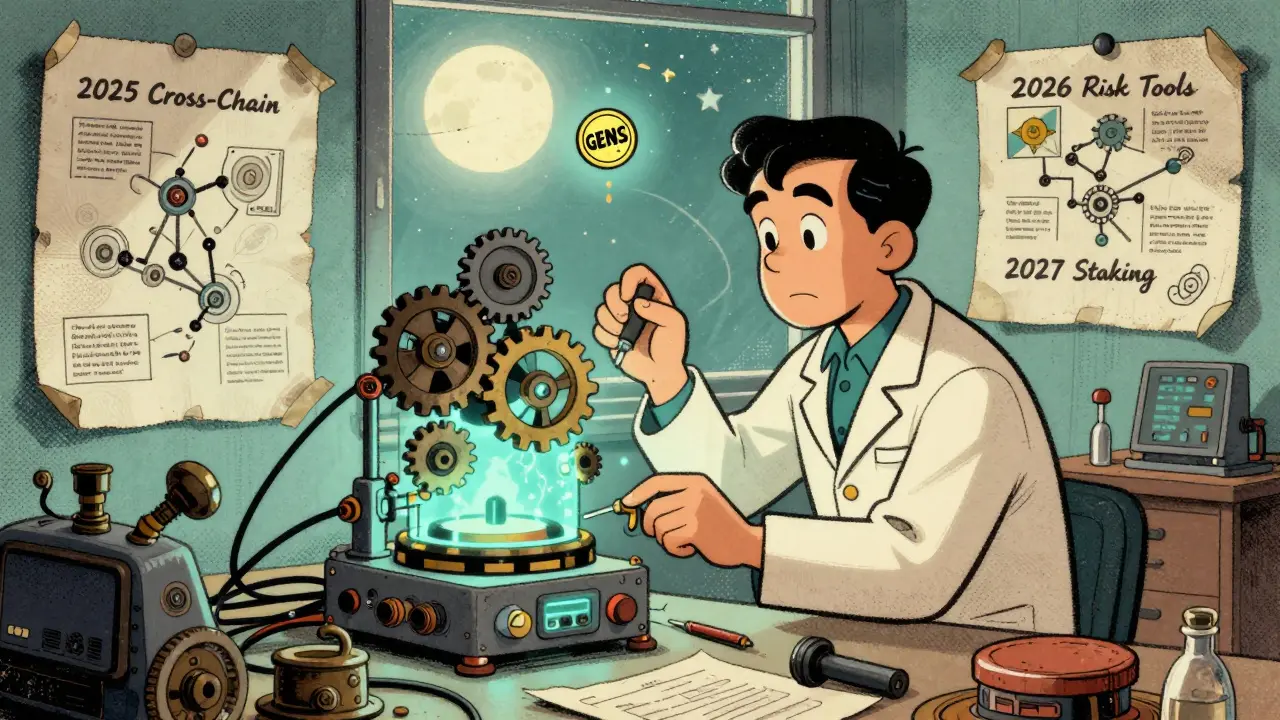
The drop from $0.063 to $0.00001301 didn’t happen overnight. It took three years. And while market-wide crypto crashes played a role, the real issue was adoption. Kusama never gained the same user base as Ethereum. Even though Genshiro offered better cross-chain tools than most Ethereum-based DeFi apps, users stayed where the liquidity was. Ethereum had billions in locked value. Kusama had a few hundred million. Liquidity pools on Genshiro never reached critical mass. Without deep pools, trades became expensive and slippage high. That drove users away. Without users, the DAO couldn’t fund development effectively. Without funding, new features stalled. The roadmap looked promising - 2025 was supposed to expand cross-chain support, 2026 would add risk management tools, and 2027 would introduce new staking options. But without market confidence, progress slowed. Team updates became less frequent. Community engagement dropped. The airdrop didn’t fail because the tech was bad. It failed because the ecosystem around it didn’t grow.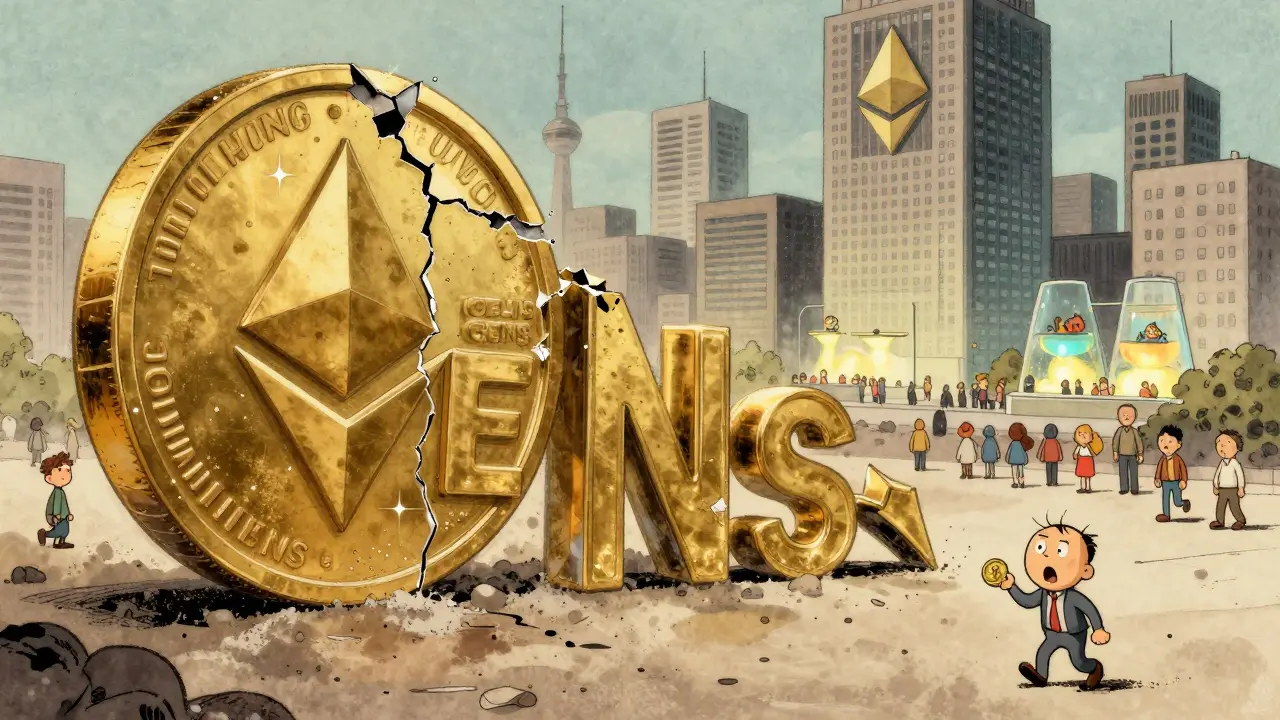
What Happens Now? Is There Still Hope?
As of 2026, Genshiro is still active. The team hasn’t shut down. The code is still being updated. The roadmap hasn’t been abandoned. But the market has moved on. The low price of GENS - under $0.00002 - means that if you still hold tokens from the 2022 airdrop, your position is nearly worthless in dollar terms. But that also means there’s almost no downside left. If Kusama sees a revival, if Polkadot’s parachain ecosystem grows, if Genshiro finally unlocks the cross-chain liquidity it was built for - then GENS could rebound. But betting on that is pure speculation. There’s no guarantee. No major exchange has listed GENS for trading in 2025 or 2026. No new airdrop announcements have been made. The project is in a holding pattern. For new users? There’s no current airdrop. No official portal. No way to claim GENS. The door closed after the 2022 campaigns. Any site claiming to offer a "new Genshiro airdrop" is likely a scam.Lessons from the Genshiro Airdrop
This isn’t just a story about one token. It’s a lesson for anyone chasing crypto airdrops:- Airdrops aren’t free money. They’re a way to bootstrap a community. The value isn’t in the tokens - it’s in the network.
- Technical superiority doesn’t guarantee success. Genshiro had better architecture than most. But users didn’t care if the experience was clunky or liquidity was thin.
- Market timing matters. Launching on Kusama in 2021 was bold. But Ethereum dominated. DeFi users weren’t ready to move.
- Don’t assume future value. The $0.063 price in 2022 was based on hype, not fundamentals. Today’s price reflects reality.
Will There Be Another Genshiro Airdrop?
As of March 2026, there is no official announcement of a new Genshiro airdrop. The project’s last major distribution was in early 2022. No team member, official blog, or social media channel has hinted at another campaign. If one were to happen, it would likely follow the same pattern: active participation, not passive holding. You’d probably need to:- Hold or stake a specific token (possibly MX, KSM, or another Kusama-based asset)
- Complete tasks like joining the Discord, verifying your wallet, or using Genshiro’s lending platform
- Vote on governance proposals to prove commitment
Final Thoughts
Genshiro’s airdrop was real. The tech was solid. The vision was clear. But crypto doesn’t reward innovation alone. It rewards adoption. And adoption requires liquidity, ease of use, and a community that shows up. The GENS token is still in existence. The platform still runs. But the dream of it becoming a DeFi powerhouse never fully materialized. For those who got in early, the tokens are nearly worthless. For those watching from the sidelines, the lesson is simple: look beyond the airdrop price. Look at the ecosystem. Look at the users. Look at the real activity - not the hype.Was the Genshiro airdrop legitimate?
Yes, the Genshiro airdrops conducted through MEXC and Gate.io in early 2022 were legitimate. They were officially run by the Genshiro team and tied to verified exchange platforms. Tokens were distributed to qualifying participants based on voting activity or direct allocation. No official airdrop has occurred since then.
Can I still claim GENS tokens from the 2022 airdrop?
No. The voting and distribution windows for both the MEXC and Gate.io campaigns closed in January 2022. There is no active portal or method to claim additional GENS tokens. Any site claiming to offer a "late claim" or "new distribution" is a scam.
Why did GENS lose over 99% of its value?
The crash was caused by low adoption, weak liquidity on Kusama, and the dominance of Ethereum-based DeFi platforms. Despite Genshiro’s advanced architecture, users didn’t migrate in large numbers. Without trading volume or active users, the token’s market value collapsed. Market-wide crypto downturns in 2022-2023 accelerated the decline.
Is Genshiro still being developed?
Yes. The Genshiro team continues to work on its roadmap, with planned updates for 2025-2030 focused on cross-chain expansion, risk management, and new yield opportunities. However, development pace has slowed due to lack of funding and user engagement. Official updates are rare, and no major upgrades have been released since 2023.
Should I buy GENS tokens now?
Buying GENS today is extremely speculative. At $0.00001301, the token has almost no market value. There’s no guarantee it will recover. Only consider it if you believe Kusama’s ecosystem will revive and Genshiro will become a major DeFi hub - which is a long shot. Most investors treat it as a high-risk, low-reward gamble.

Lorna Gornik
March 21, 2026 AT 14:26Pradip Solanki
March 22, 2026 AT 17:28DarShawn Owens
March 23, 2026 AT 01:28Tony Phillips
March 24, 2026 AT 12:50Jackie Crusenberry
March 24, 2026 AT 21:04Alice Clancy
March 25, 2026 AT 11:31Nicolette Lutzi
March 27, 2026 AT 03:36Kevin Da silva
March 28, 2026 AT 09:13kavya barikar
March 29, 2026 AT 01:03Cordany Harper
March 29, 2026 AT 20:58Zion Banks
March 31, 2026 AT 14:45Jenni Moss
April 1, 2026 AT 04:41Brad Zenner
April 2, 2026 AT 07:45Andy Green
April 2, 2026 AT 23:54Shayne Cokerdem
April 3, 2026 AT 23:21Abhishek Thakur
April 5, 2026 AT 01:57vu phung
April 6, 2026 AT 13:31aravindsai pandla
April 7, 2026 AT 07:31Andrea Zaszczynski
April 8, 2026 AT 22:33