
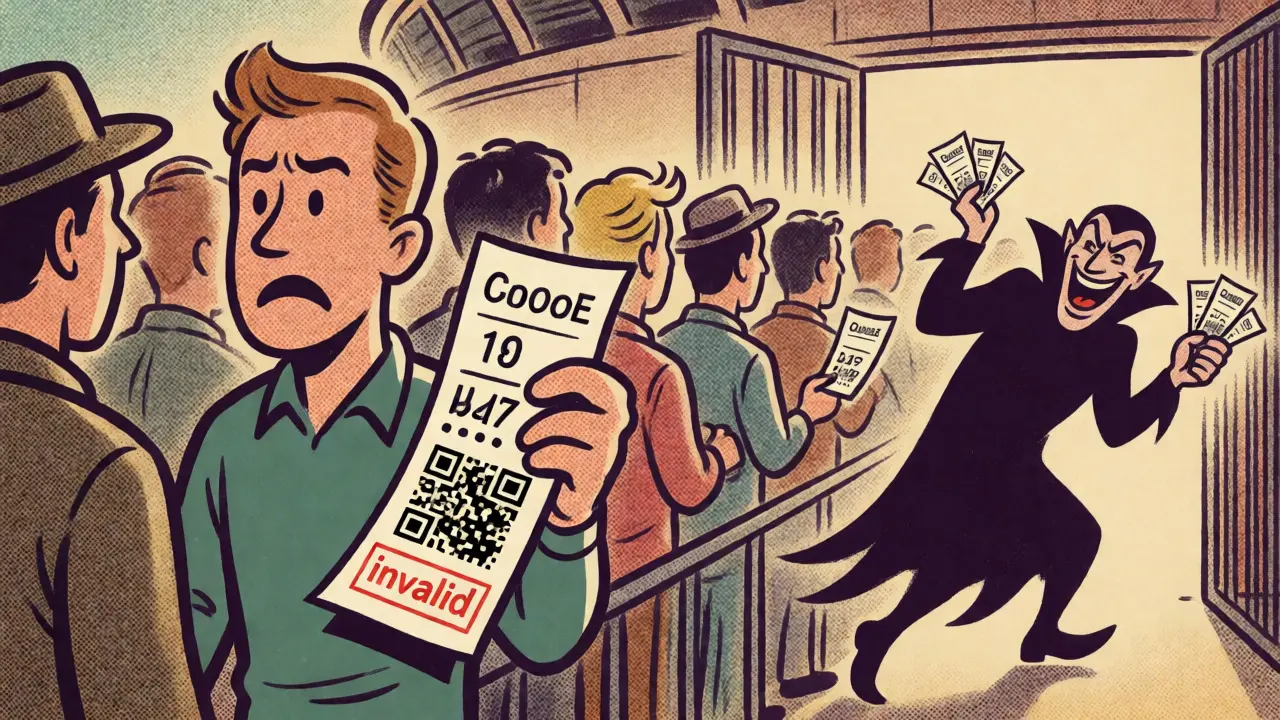
You bought a ticket months ago. You saved for it. You waited in line. Then, at the gate, you’re told your QR code is invalid because someone else scanned it first. Or worse, you paid $300 for a seat that should have cost $50 because a bot snatched it up instantly. This isn't a glitch; it's the broken reality of traditional event ticketing. For decades, we’ve accepted scalpers, fakes, and opaque pricing as the price of admission. But what if the ticket itself could prove its own history? What if the artist got paid every time it changed hands?
Blockchain ticketing is moving from a buzzword to a backend reality. It’s not just about slapping an NFT label on a PDF. It’s about using distributed ledger technology to create immutable records of ownership. As of late 2026, platforms like GUTS, B.A.M Ticketing, and Tixbase are proving this model works for everything from local festivals to major sports leagues. If you’re an organizer or an attendee tired of the chaos, here is how the tech actually changes the game.
The Core Problem with Legacy Systems
Traditional ticketing relies on centralized databases. When you buy a ticket, you get a unique identifier, usually a QR code. The problem? That code is easily copied. A screenshot is as good as the original file until someone scans it. This creates a massive loophole for fraud. Secondary markets like StubHub or Viagogo thrive on this uncertainty. They charge high fees, and often, the original creator sees none of that profit.
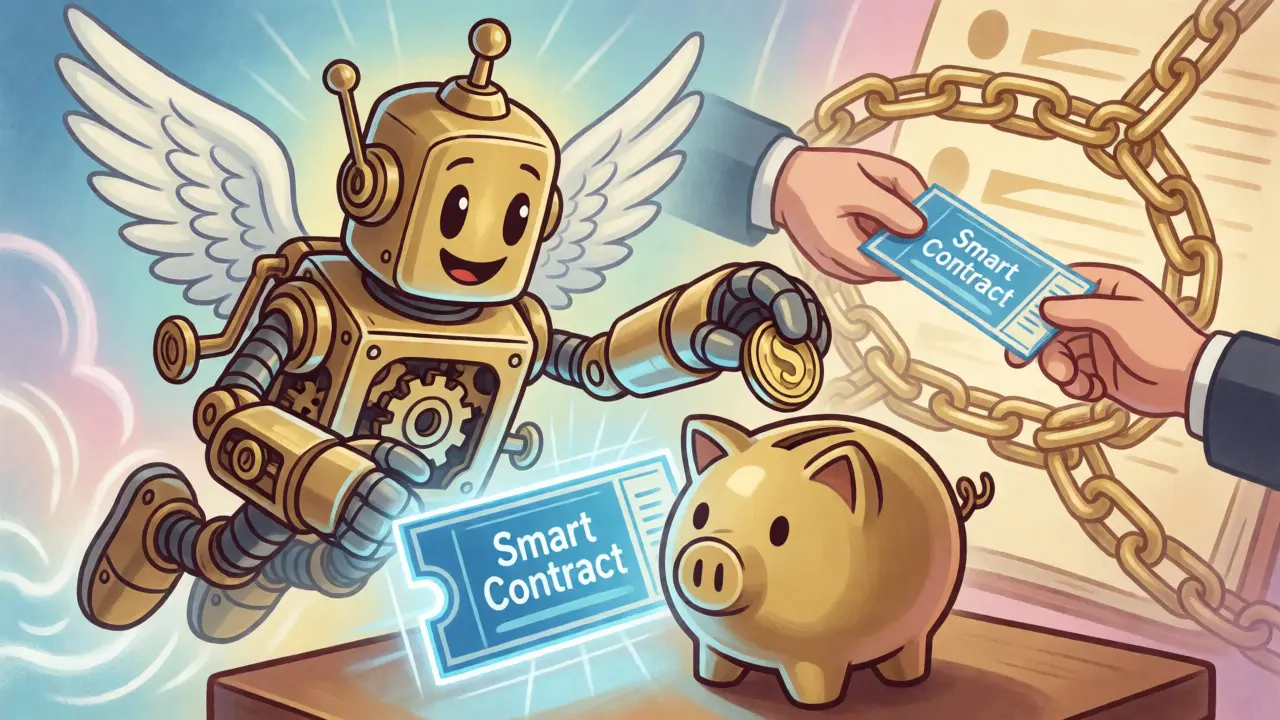
Consider the economics. In a standard resale, the fan pays double. The reseller pockets the difference. The artist gets nothing extra. With smart contracts, the rules change. The contract can dictate that any resale above face value triggers a royalty payment back to the organizer. It’s not magic; it’s code executing automatically. This shifts power from scalpers back to the ecosystem creators.
How Smart Contracts Control the Market
A smart contract is self-executing code stored on the blockchain. In ticketing, it acts as the rulebook. Unlike a paper ticket or a static digital image, a blockchain ticket is dynamic. It knows who owns it, where it has been, and what conditions must be met for transfer.
- Immutable History: Every transfer is recorded. No one can forge a transaction history.
- Royalty Enforcement: Organizers set a percentage (e.g., 10%) for secondary sales. The contract deducts this automatically during transfer.
- Price Caps: Contracts can prevent tickets from being listed above a certain multiplier of face value, curbing extreme scalping.
- Dynamic Pricing: Some advanced contracts adjust prices based on demand signals recorded on-chain, though this is still experimental.
This level of control was impossible before. Centralized platforms had the data but lacked the incentive to enforce fair pricing for creators. Blockchain aligns incentives through transparency.
NFT Tickets: More Than Just Hype
Non-Fungible Tokens (NFTs) are the most visible face of blockchain ticketing. An NFT ticket is a unique digital asset representing access rights. But don’t confuse this with buying a piece of JPEG art. The utility is key.
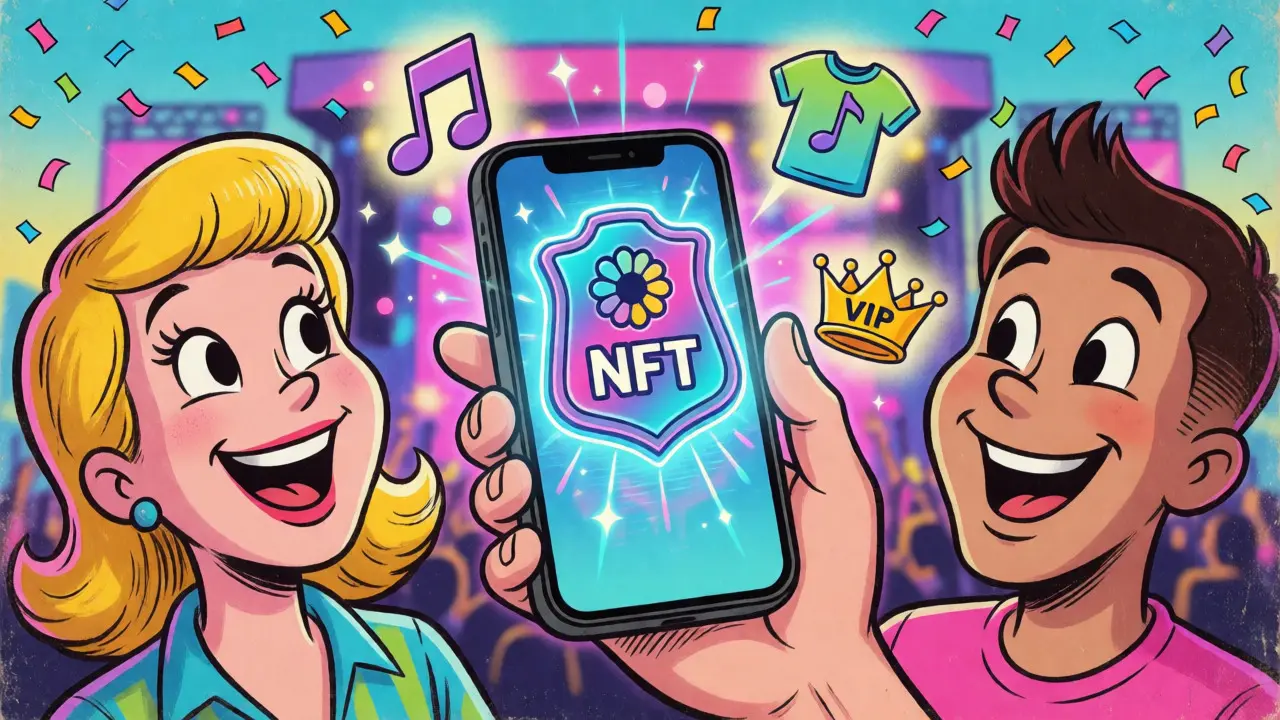
Platforms like Oveit use NFTs to bundle experiences. Imagine your ticket isn’t just entry-it’s also a badge that unlocks a Discord channel, gives you early access to merch, or grants voting rights on the setlist. Coachella experimented with this via their "Coachella Keys" program, offering lifetime pass holders unique privileges. While not yet universal, this turns a passive purchase into an active membership.
Technically, these tickets often live on Layer-2 solutions or sidechains to keep gas fees low. High fees would kill ticketing adoption. Solutions using networks like Avalanche, as seen with Tixbase, allow for fast, cheap transactions suitable for high-volume events.
Real-World Implementation: Who Is Doing It Right?
It’s easy to talk theory. Let’s look at who is actually shipping products in 2026.
| Platform | Primary Focus | Key Tech Feature | Best For |
|---|---|---|---|
| B.A.M Ticketing | SaaS for Organizers | End-to-end oversight & royalties | Venues & Artists wanting control |
| Tixbase | Sports & Entertainment | Custom Avalanche L1 chain | High-volume stadium events |
| Oveit | Validation & Payments | Crypto/RFID integration | Festivals needing multi-gate support |
| GUTS | General Events | User-friendly wallet abstraction | Mid-sized concerts & conferences |
Tixbase’s partnership with Avalanche is significant. By building a dedicated Layer-1 blockchain, they avoid congestion issues common on public chains. Their implementation for events like the Copa América de Béisbol showed that rotating barcodes and mobile-only access can work seamlessly with blockchain verification. Attendees didn’t need to know they were using crypto; they just knew their ticket worked.
The User Experience Barrier
Here is the hard truth: most people don’t care about blockchain. They care about getting in without hassle. If your ticket requires setting up a MetaMask wallet, understanding gas fees, and confirming transactions on Etherscan, you’ve lost 90% of your audience.
Successful implementations hide the complexity. This is called "wallet abstraction." Users sign up with an email and password. The platform manages the private keys behind the scenes. When they scan their phone, the app interacts with the blockchain invisibly. If the user has to think about "tokens," the product failed.
Educational materials matter too. Attendees need clear instructions on how to transfer a ticket to a friend. If sending a ticket feels more complicated than Venmo-ing money, friction increases. Hybrid models-where traditional QR codes coexist with blockchain backends-are often the best starting point for large, diverse audiences.
Security and Fraud Prevention
Counterfeiting costs the industry billions. Physical tickets can be forged. Digital screenshots can be duplicated. A blockchain ticket solves this by tying validity to a cryptographic signature. Only the current holder of the private key can generate a valid check-in token.
Furthermore, IPFS (InterPlanetary File System) integration ensures that the ticket metadata (seat number, date, event details) is stored decentrally. This prevents single points of failure. If the central server goes down, the ticket record remains accessible on the network. This resilience is crucial for massive events where server crashes have historically caused entry chaos.
Challenges and Skepticism
Is blockchain a silver bullet? Not entirely. Critics rightly point out that traditional digital ticketing systems have improved significantly. Many now offer traceable transfers and secure verification without the overhead of a distributed ledger. For small local events, the cost of implementing blockchain infrastructure might outweigh the benefits of preventing a few fake tickets.
There is also the issue of environmental perception, though Proof-of-Stake networks have largely mitigated energy concerns. The real hurdle is cultural resistance. Venues and promoters are used to existing workflows. Migrating staff training, scanning hardware, and customer support processes takes time.
Moreover, regulatory clarity varies by region. Are NFT tickets securities? In most cases, no-they are access rights. But legal frameworks are still catching up. Organizers must consult legal experts to ensure compliance, especially regarding consumer protection laws around refunds and cancellations.
The Future: Beyond Entry
The future isn’t just about getting through the door. It’s about what happens after. Blockchain tickets can serve as persistent identity markers. Did you attend the 2024 festival? Your wallet holds a proof-of-attendance token. This could unlock discounts for next year or exclusive merch drops.
We are seeing early signs of this in niche communities. Hobby farms and seasonal attractions are using tokenized tickets to create loyalty loops. Instead of a disposable paper stub, attendees hold a digital collectible that appreciates in social value within the community. This transforms ticketing from a transactional necessity into a relationship-building tool.
For developers and organizers, the takeaway is clear: start small. Pilot blockchain ticketing for VIP sections or limited-edition events. Measure the reduction in fraud and the increase in secondary market revenue. Once the ROI is proven, scale up. The technology is ready; the question is whether the industry is willing to adapt its legacy mindset.
Do I need a crypto wallet to use blockchain tickets?
Not necessarily. Most modern platforms use custodial wallets or account abstraction. You sign up with an email, and the platform handles the crypto aspects in the background. You only interact with a simple app interface, similar to Apple Wallet or Google Pay.
Can I still refund my ticket if I cancel?
Yes, but the process depends on the smart contract rules set by the organizer. Typically, refunds are processed back to the original payment method or as a credit within the platform. The blockchain record ensures that once refunded, the ticket cannot be reused or resold.
What happens if my phone dies at the venue?
Most blockchain ticketing apps cache the last valid state locally. However, best practices involve having a backup option, such as showing a photo ID linked to your account or accessing the ticket via a web portal on another device. Some venues also accept manual lookup by name or order ID.
Are blockchain tickets more expensive to buy?
Initially, there may be small network fees (gas), but these are often subsidized by the platform or negligible on efficient chains like Polygon or Avalanche. Over time, the savings from reduced fraud and better secondary market control can offset any minor technical costs for the organizer, potentially keeping ticket prices stable for fans.
How do organizers earn from resales?
Through smart contract royalties. When a ticket is transferred on a supported marketplace, the contract automatically splits the sale price. For example, if a ticket sells for $200 and the royalty is 10%, $20 goes directly to the organizer’s wallet, while $180 goes to the seller. This happens instantly and transparently.
