
Sweden isn’t banning cryptocurrency outright. But if you’re running a Bitcoin mining operation there, you’re fighting an uphill battle. Since 2022, the country has moved from quietly observing crypto growth to actively pushing back - not because it hates technology, but because it sees crypto mining as a direct threat to its climate goals.
Why Sweden Cares More Than Other Countries
Most European nations treat crypto mining like any other industrial activity: register it, tax it, keep an eye on it. Sweden does something different. It measures energy use - not just where it comes from, but how much is used in total. In 2023, Sweden’s Financial Supervisory Authority (FI) and the Financial Stability Council (FSC) made a bold claim: Bitcoin mining at current levels releases 120 million tonnes of CO2 annually. That’s the same as 100 million round-trip flights between Stockholm and Bangkok. The number shocked even seasoned regulators. What made it worse? Much of that mining had moved to Sweden after China banned it in 2021. Between April and August 2022, Sweden’s Bitcoin mining energy use jumped by over 300%. The country’s energy mix is 84% renewable - mostly hydroelectric and nuclear. That sounds good, right? But Sweden doesn’t care if the power is clean if it’s still being wasted. Every kilowatt-hour used for mining is one less for homes, hospitals, or electric buses. And with Sweden aiming for net-zero emissions by 2045, crypto mining looked like a step backward.How Much Energy Are We Talking About?
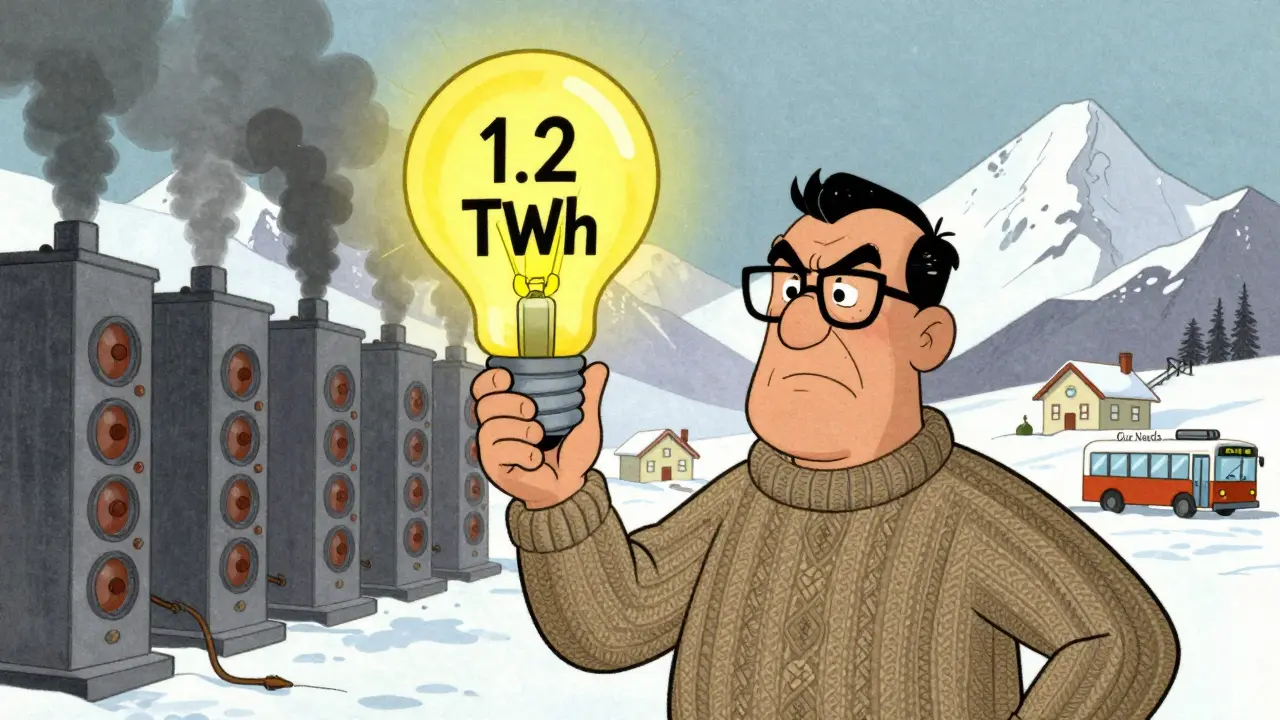
The numbers are staggering. As of 2023, Bitcoin mining in Sweden consumed about 1.2 TWh per year - enough to power 200,000 homes. Globally, Bitcoin uses more electricity than entire countries like Sweden or Norway. The Cambridge Centre for Alternative Finance puts Bitcoin’s annual consumption at 143 TWh. That’s more than the entire electricity use of the Netherlands. And it’s not just carbon. Bitcoin’s water footprint is just as alarming. A 2021 UN study estimated that Bitcoin mining used enough water to meet the daily needs of over 300 million people in sub-Saharan Africa - mostly for cooling data centers. Sweden’s Energy Agency found that mining rigs in the north benefit from cold weather, cutting cooling costs by 20-30%. But even with those savings, the total energy demand is still too high for Sweden’s comfort.Sweden vs. Its Neighbors
Look at Norway. It’s got cheap hydropower, a similar climate, and a booming mining scene - hosting about 1.5% of global Bitcoin mining. No restrictions. No public outcry. Just growth. Iceland? Same thing. Geothermal energy is abundant. Mining is welcome. The government even offers tax breaks. Sweden? Not even close. While Germany and France focus on regulating exchanges and wallet providers, Sweden targets the mining hardware itself. It doesn’t matter if you’re using 100% wind power - if you’re sucking up megawatts, you’re a problem. That’s why Sweden ranked 47th out of 50 countries in the 2024 Crypto Regulatory Index. Switzerland? Third. Germany? Eighteenth. Sweden? Near the bottom. Not because it’s anti-innovation - but because it sees energy waste as a moral failure.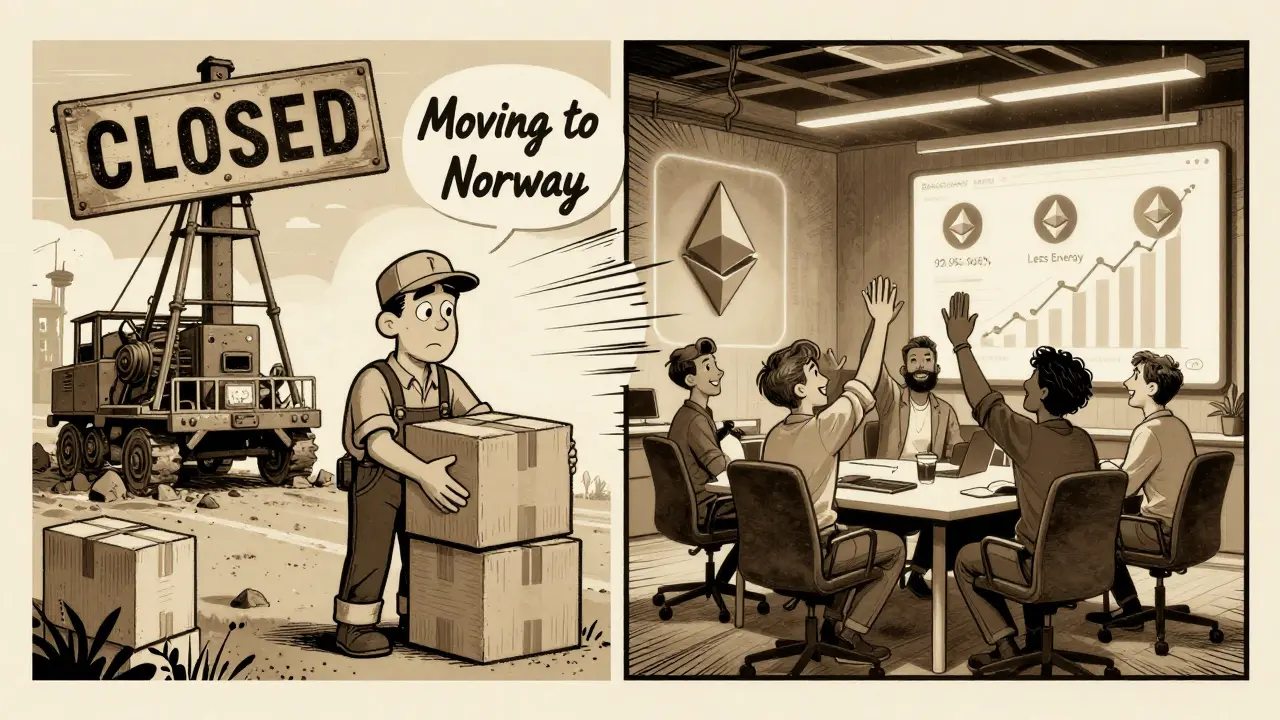
The Human Cost: Businesses Struggle to Survive
For mining operators in Sweden, the rules aren’t just strict - they’re unpredictable. In early 2025, a 2-megawatt mining facility in Norrbotten County lost its banking services overnight. The bank didn’t give a reason. The owner, who used only hydroelectric power, said he was told, “We don’t do business with crypto anymore.” Trustpilot reviews for Swedish crypto exchanges have dropped from 4.2 in 2022 to 2.8 in early 2025. Users complain about delayed withdrawals, invasive KYC checks, and sudden account freezes. One Reddit user wrote: “I’ve been mining for three years. Now I can’t even open a business account. I’m being punished for using clean energy.” The Swedish Crypto Mining Association surveyed 47 active mining companies in 2024. Two-thirds said they plan to leave Sweden by 2026. Norway is the top destination. Then Germany. Then the U.S.But Not Everyone Is Losing
There’s a quiet revolution happening too. Some companies aren’t fighting the system - they’re adapting. EcoChain, a Stockholm startup, switched from Bitcoin mining to Ethereum staking in 2023. Their energy use dropped by 99.95%. Revenue? Still positive. They now earn from transaction fees and network validation rewards - with zero mining rigs. The Swedish government is quietly supporting this shift. In 2025, it allocated 200 million SEK ($18.4 million USD) to help mining operators convert waste heat into district heating. A pilot project in Luleå recovered 65% of the heat from mining hardware - enough to warm 300 homes in winter. The Swedish Energy Agency also gave 150 million SEK to projects developing proof-of-stake infrastructure. That’s not a ban. That’s a nudge - with cash.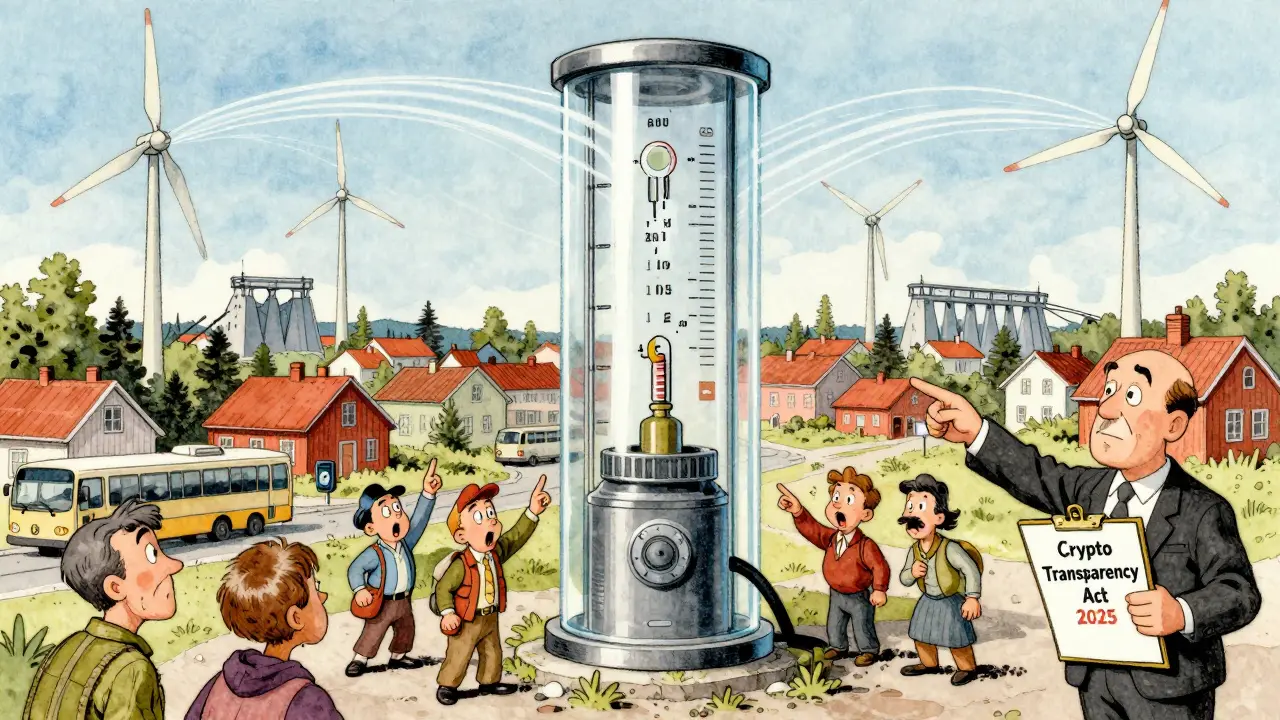

LeeAnn Herker
January 8, 2026 AT 14:32So Sweden’s banning Bitcoin because it uses too much power? LOL. Next they’ll outlaw refrigerators because they ‘waste’ electricity keeping your milk cold. Meanwhile, China’s mining 70% of Bitcoin with coal and nobody’s screaming. Funny how the woke West picks fights it can win.
Andy Schichter
January 9, 2026 AT 21:14They’re not against crypto. They’re against the idea that someone else gets to decide what ‘waste’ means. It’s not about energy-it’s about control. Sweden wants to be the priest of the digital age, blessing only the ‘right’ kinds of innovation. Meanwhile, the rest of us just want to mine in peace.
Caitlin Colwell
January 11, 2026 AT 09:15I get it. Power is precious. But I also know people who lost their jobs because banks cut them off overnight. No warning. No help. Just gone. That’s not policy. That’s punishment.
Charlotte Parker
January 12, 2026 AT 13:50Let me get this straight-Sweden’s so proud of its 84% renewable energy that it’s willing to kick out entire industries because they’re using ‘too much’ of it? That’s not sustainability. That’s spiritual superiority wrapped in a carbon-neutral blanket. If you’re not using your clean energy, someone else should. Let Norway have it. Let Iceland have it. Let the market decide.
And don’t give me that ‘it’s for the homes’ nonsense. The grid’s not full. The turbines aren’t spinning out of control. You’re just scared that crypto is too decentralized to control. That’s the real issue.
Calen Adams
January 14, 2026 AT 05:28Look, I get the energy concerns, but let’s talk ROI. Bitcoin mining at scale creates demand-side innovation in grid resilience, heat recovery tech, and renewable integration. Sweden’s throwing away a $2B+ industrial sector because they’re too lazy to engineer a solution. Meanwhile, Finland’s building crypto-heated apartment complexes. Sweden’s just mad because they can’t regulate the future.
And the carbon pricing proposal? Finally. That’s the right tool. Not bans. Tax the externality. Let the market adapt. But nope-Sweden’s still stuck in 2012 thinking mode.
Valencia Adell
January 15, 2026 AT 01:48Let’s not romanticize this. The 47% drop in mining? That’s not innovation-it’s brain drain. You don’t reduce emissions by chasing out businesses. You reduce them by making them better. Sweden didn’t fix the problem. They just exported it. And now Norway’s getting the credit for Sweden’s failed policy.
Also, that ‘EcoChain’ pivot? That’s not a revolution. That’s a retreat. Staking doesn’t create new tech. It just moves the same people to a less energy-intensive scam. The real winners? The VCs who cashed out early.
Jacob Clark
January 15, 2026 AT 13:28Okay, but hold on-so Sweden banned mining because it uses energy, but they still have nuclear plants running 24/7? And hydro dams flooding valleys? And electric cars charging at night? And heated homes in -30°C winters? So mining is the villain because it’s visible? Because it’s decentralized? Because it’s not owned by the state? This isn’t about energy. This is about power. And control. And ego.
Also, the ‘real-time transparency’ law? That’s just a PR stunt. Anyone with a VPN and a shell company can fake it. The real problem? Sweden’s regulators don’t understand blockchain. They’re using 20th-century tools to fight 21st-century tech. And they’re losing.
Rahul Sharma
January 16, 2026 AT 19:17India also faces energy challenges. But we believe in innovation with responsibility. Sweden's approach is too harsh. Instead of banning, they should have partnered with miners to use excess renewable energy during low-demand hours. Heat recovery is brilliant! Why not scale it? I support blockchain, but not at cost of environment. Balance is key 😊
Mollie Williams
January 17, 2026 AT 11:44I keep thinking about that miner in Norrbotten who lost his bank account. No reason given. Just gone. What does that say about a society that treats people like risks instead of citizens? We talk about energy waste, but what about the waste of trust? Of dignity? Of livelihood? Maybe the real cost isn’t in kilowatts-it’s in the silence of people who used to believe in progress.
Tiffani Frey
January 18, 2026 AT 10:50Sweden’s policy is actually quite sophisticated. They’re not banning crypto-they’re redefining its value proposition. By forcing miners to either adapt or leave, they’re creating space for more sustainable blockchain applications. The 37% of companies focused on enterprise solutions? That’s the real win. This isn’t anti-tech. It’s pro-intelligent-tech. And the heat-recovery pilot? Genius. It turns a problem into infrastructure.
Other countries should study this-not copy it blindly, but learn how to pivot from resistance to redirection.
Paul Johnson
January 18, 2026 AT 11:43They banned mining because its bad for the planet? LMAO. What about all the energy wasted on Netflix bingeing? Or TikTok dances? Or Elon’s rockets? Why is crypto the bad guy? Oh right because its not owned by the government and its decentralized so its easy to scapegoat. Typical. Sweden wants to be the police of the internet. Guess what? The internet doesn't care about your rules
Kelley Ramsey
January 19, 2026 AT 20:48It’s amazing how much fear gets disguised as environmentalism. But I’m hopeful. The fact that Sweden’s pushing for transparency and heat recovery means they’re still trying to fix things-not just shut them down. Maybe this is the first step toward a smarter, more responsible crypto future. I believe in change. I believe in balance. I believe we can do better.
Michael Richardson
January 21, 2026 AT 02:03Sweden’s a socialist nanny state. If you want to mine, mine in America. Stop pretending you’re saving the planet. You’re just scared of freedom.
Sabbra Ziro
January 22, 2026 AT 10:08I think the most beautiful part of this whole story is how Sweden didn’t just say ‘no’-they said ‘here’s another way.’ The heat recovery projects, the funding for proof-of-stake, the transparency laws-they didn’t kill innovation. They redirected it. That’s leadership. Not fear. Not control. Evolution. And honestly? That’s the kind of change I want to see more of.