
Cross-Chain Transfer Fee Calculator
Estimate Your Transfer Costs
Compare fees for transfers between different blockchains using Elk Finance versus native bridges
Elk Finance isn’t another DeFi platform trying to be everything. It’s laser-focused on one thing: moving crypto between blockchains without the headaches. If you’ve ever tried sending USDC from Polygon to Avalanche and watched your gas fees spike to $15 while the transaction sits for 20 minutes, you know why this matters. Elk Finance’s ElkNet bridge promises to fix that - but is it safe, practical, or just another niche tool for hardcore DeFi users?
What Elk Finance Actually Does
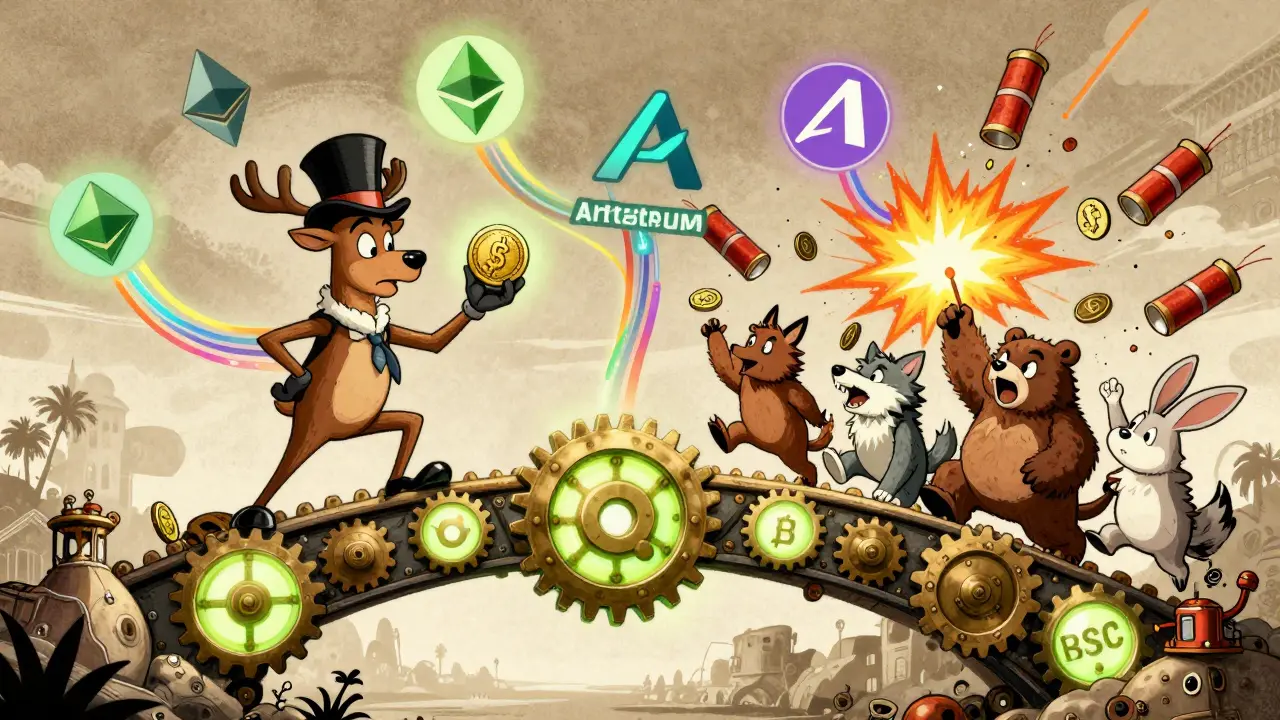
Elk Finance is a decentralized exchange built on Polygon, but it’s not designed for swapping tokens on a single chain. Its real job is connecting 14 different blockchains - including Ethereum, Solana, Avalanche, Arbitrum, and Binance Smart Chain - through its proprietary ElkNet bridge. Think of it like a universal adapter for crypto. Instead of using separate bridges for each chain, you use one platform to move assets wherever you need them.
The native token, ELK, runs on Ethereum (ERC-20), Polygon (MATIC), and BSC (BEP-20). You need it to pay for bridge fees, stake for rewards, or provide liquidity. As of October 2023, the circulating supply was around 11.99 million ELK tokens, with a market cap of $274K and a fully diluted valuation of nearly $1 million. That’s tiny compared to Uniswap or PancakeSwap, but it’s not unusual for specialized tools.
How It Works: Simple in Theory, Tricky in Practice
Using Elk Finance is straightforward if you’ve used MetaMask or Trust Wallet before. Go to app.elk.finance, connect your wallet, pick your source chain (say, Polygon), your destination (like Arbitrum), enter the amount, and confirm. The bridge handles the rest.
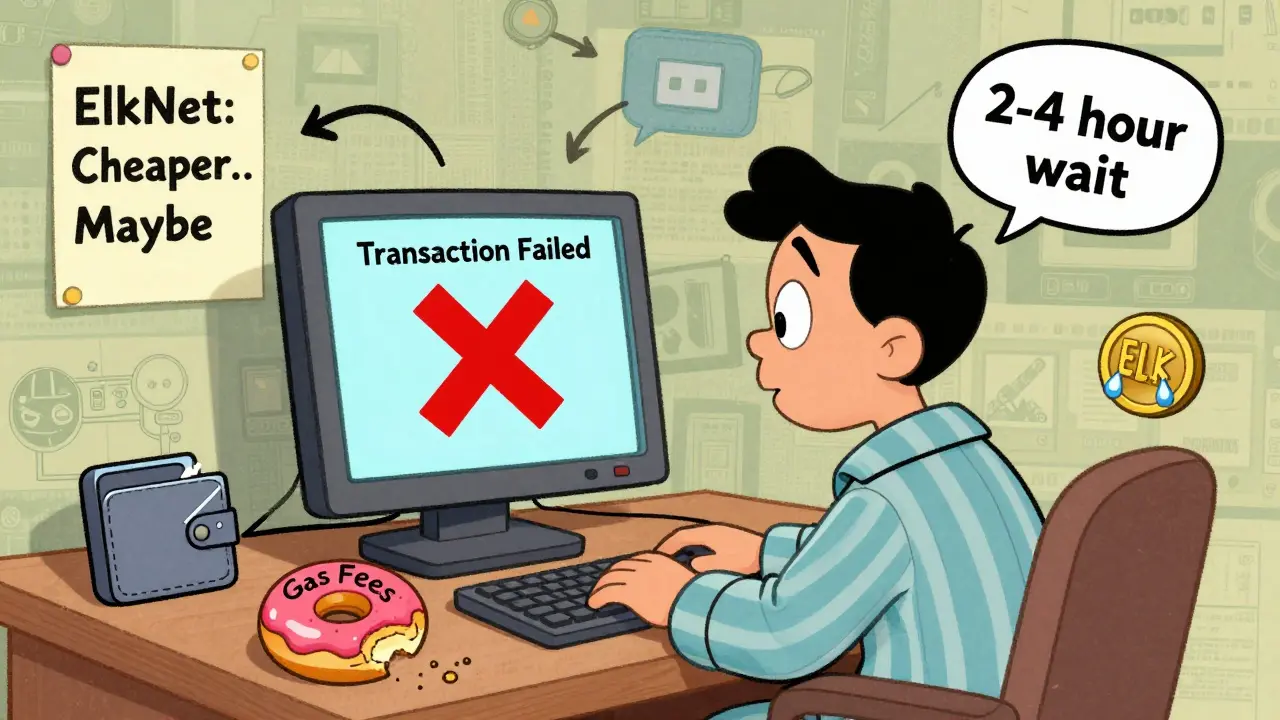
Real users report mixed experiences. One Reddit user moved $500 in USDC from Polygon to Avalanche in 7 minutes for just $0.87 in fees - far cheaper than the native Polygon bridge during congestion. That’s the kind of win Elk Finance promises. But there’s a flip side. The platform’s website analytics show an average visit duration of zero seconds. That doesn’t mean people are leaving quickly - it likely means the platform’s tracking is broken, or users hit errors and bounce without realizing what happened.
First-time users often struggle with transaction failures. The platform warns you to monitor gas prices, but it doesn’t explain how. If you’re not familiar with Etherscan or PolygonScan, you might get stuck waiting for a transaction that never confirms. There’s no live chat. Support happens through Discord and Telegram, with response times averaging 2-4 hours. That’s fine for a small project, but not ideal if you’re trying to move funds during a market dip.
Trading Pairs and Liquidity: A Limited Selection
Don’t come here looking for BTC, ETH, or even Shiba Inu. Elk Finance only lists two tokens: ELK and USDC. That gives you just eight trading pairs. Compare that to Uniswap, which lists over 10,000 tokens. This isn’t a swap platform - it’s a bridge with minimal trading functionality.
The low volume is telling. The 24-hour trading volume hovers around $19,930. That’s less than what a single popular meme coin trades in an hour on bigger DEXs. Low volume means wider spreads and higher slippage if you try to trade. It also means less liquidity for yield farmers. If you’re looking to earn interest on your crypto, Elk Finance offers farming opportunities, but the rewards are small and the risk is high. There’s no insurance against impermanent loss, even though the platform claims to protect liquidity providers. That’s a red flag.
Security and Regulation: The Elephant in the Room
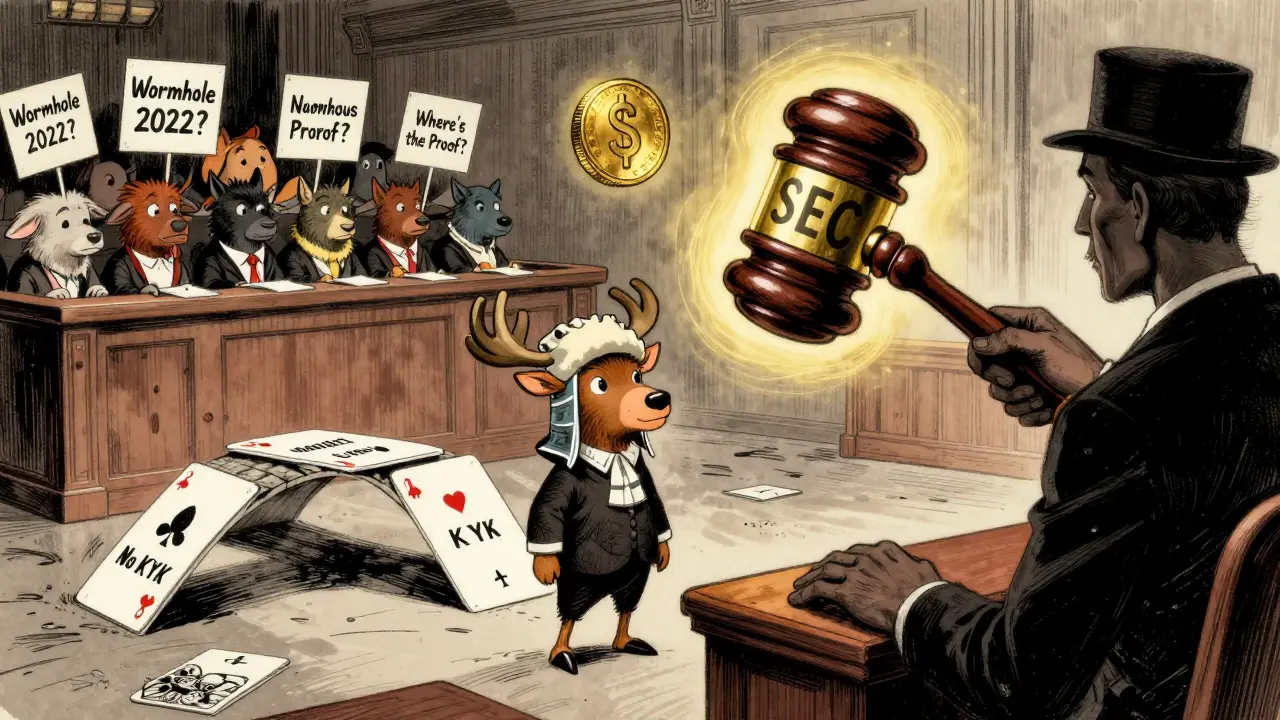
Elk Finance is not regulated by any government body. FxVerify confirmed it has no licenses, no KYC, and no oversight. That’s common in DeFi - but it’s not harmless. Cross-chain bridges have been hacked for hundreds of millions. The $625 million Wormhole breach in 2022 showed how vulnerable these systems can be. Elk Finance hasn’t been hacked - yet - but its small team, anonymous founders, and lack of public audits make it a higher-risk bet than platforms like Synapse or Multichain.
There’s no formal security audit report published on their site. No third-party firm has verified their smart contracts. That’s a dealbreaker for institutional investors - and it should be for anyone putting in more than a few hundred dollars. The platform claims its bridge is "secure," but without proof, that’s just marketing.
How It Stacks Up Against the Competition
Elk Finance competes in a crowded space. Multichain, Synapse Protocol, and Wormhole all offer similar cross-chain services with bigger teams, more chains, and stronger reputations. Where Elk Finance tries to win is on cost and simplicity. It claims lower fees during Polygon congestion - and user reports back that up. But it doesn’t have the same level of integration. For example, Synapse supports over 20 chains and has integrations with major wallets like Ledger. Elk Finance only lists MetaMask, Trust Wallet, and SafePal.
Elk Finance also lacks the developer tools that make other bridges scalable. Synapse offers a "Bridge-as-a-Service" API for dApps to integrate cross-chain transfers. Elk Finance says it’s planning that feature, but it’s not live yet. That puts them behind.
Who Should Use Elk Finance?
Elk Finance isn’t for beginners. It’s not for casual traders. It’s not for people who want to buy Bitcoin with a credit card.
It’s for one group: experienced DeFi users who regularly move assets between Polygon, Arbitrum, Avalanche, and other EVM chains - and hate paying high gas fees during peak times. If you’re already using a wallet like MetaMask, understand gas fees, and know how to check transaction status on a block explorer, then Elk Finance might save you money and time.
But if you’re new to crypto, or if you’re planning to deposit more than $500, you should look elsewhere. The lack of regulation, minimal liquidity, and unverified security make it too risky for anything beyond small, experimental transfers.
The Future: Can Elk Finance Grow?
Elk Finance announced integration with Base (Coinbase’s Layer 2) in September 2023. That’s a good sign - it means they’re expanding. Their roadmap includes offering "Bridge-as-a-Service" to developers, which could be their path to relevance. If they can get dApps to embed their bridge, they might gain traction.
But growth is slow. Their website gets just over 1,000 visits a month. That’s 0.17% of Uniswap’s traffic. Without a marketing push, a major partnership, or a breakthrough in security, they’ll stay a niche tool - useful for a few, irrelevant to most.
Price predictions are all over the place. CoinCodex says ELK could hit $0.12 by May 2025 - a 225% jump. But the current RSI is 40, indicating neutral to bearish momentum. The market doesn’t believe it yet. With only 247,000 token holders, the community is small. If confidence drops, the token could slide fast.
Final Verdict
Elk Finance (Polygon) is a real tool with real benefits - cheaper, faster cross-chain transfers when networks are congested. But it’s not a full exchange. It’s not regulated. It’s not secure by verified standards. And it’s not growing fast.
If you’re a technical user who needs to move small amounts between chains and you’re comfortable with risk, it’s worth trying. Keep it under $500. Test it with a tiny transfer first. Monitor the transaction. Be ready for delays.
If you’re looking for a safe, reliable, or scalable DeFi platform - look at Synapse, Multichain, or even Uniswap’s own cross-chain tools. Elk Finance is a clever workaround, not a solution for the mainstream. It’s a tool for a specific job. Use it wisely, or don’t use it at all.
