
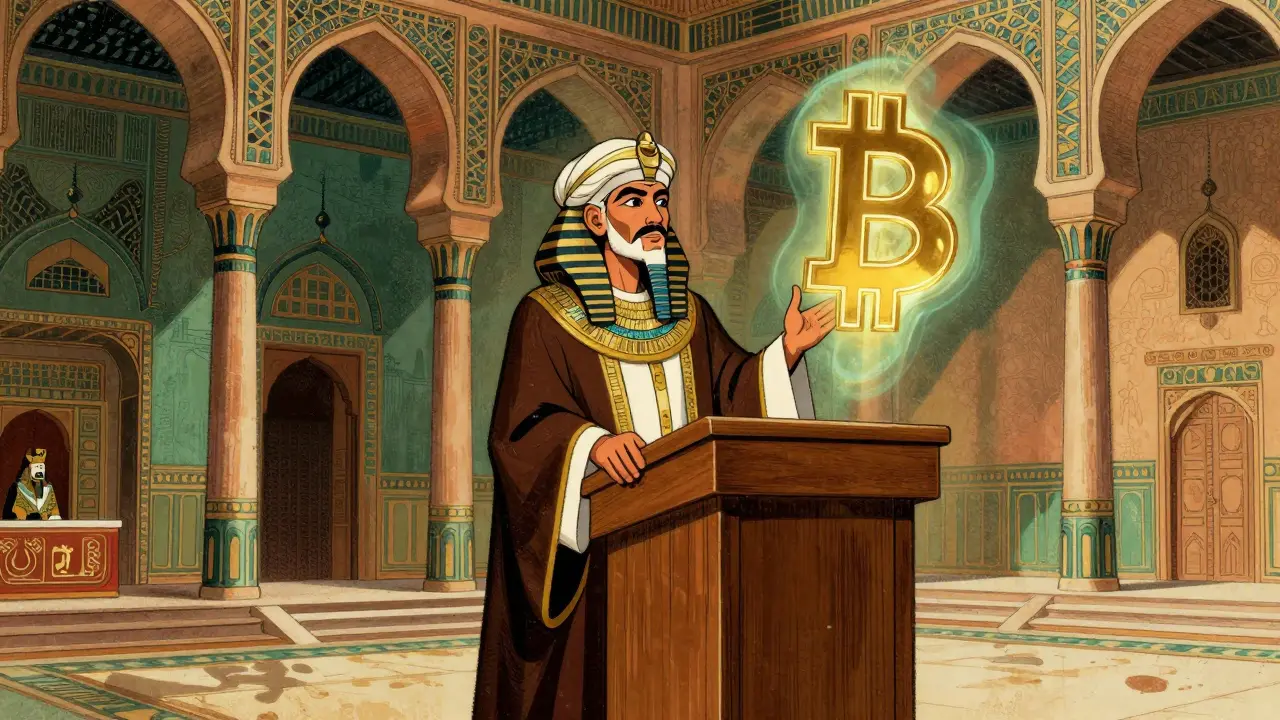
Imagine waking up to find that the digital asset you've been trading is suddenly declared a sin by one of the most influential religious authorities in the world. For many Muslims, especially those in Egypt, this became a reality in December 2017. The Egyptian Grand Mufti is the highest authority on Islamic legal rulings (fatwas) in Egypt, and his stance on digital assets isn't just a suggestion-it's a definitive prohibition. By declaring Bitcoin and other cryptocurrencies haram, the ruling created a massive ripple effect across the Islamic finance world.
The Core of the Prohibition
The ruling didn't just come from one person's whim. It was issued through Dar Al-Ifta, which is Egypt's official Fatwa House and a consultancy body for the judiciary. Led by Dr. Shawky Ibrahim Allam, the council didn't just say "no" to crypto; they explained why based on strict Sharia principles. The main issue? Bitcoin fails to meet the requirements of a legitimate currency or property under Islamic law.
From their perspective, Bitcoin is a ghost. It has no physical existence and cannot be exchanged in a tangible way. Because it's purely electronic and decentralized, the Mufti argued that it lacks the necessary "standard and value" required for a stable medium of exchange. In simpler terms, if the government doesn't back it and there's no physical asset tied to it, it's viewed as an unstable gamble rather than a legitimate investment.
Why the Mufti Sees Crypto as Dangerous
While the religious arguments are central, the Egyptian fatwa leans heavily on security and social stability. The Mufti's office pointed out that the anonymity of decentralized currencies creates a playground for illegal activities. They specifically highlighted how cryptocurrencies have been used by extremist groups like ISIS, drug traffickers, and money laundering syndicates to move funds without detection.
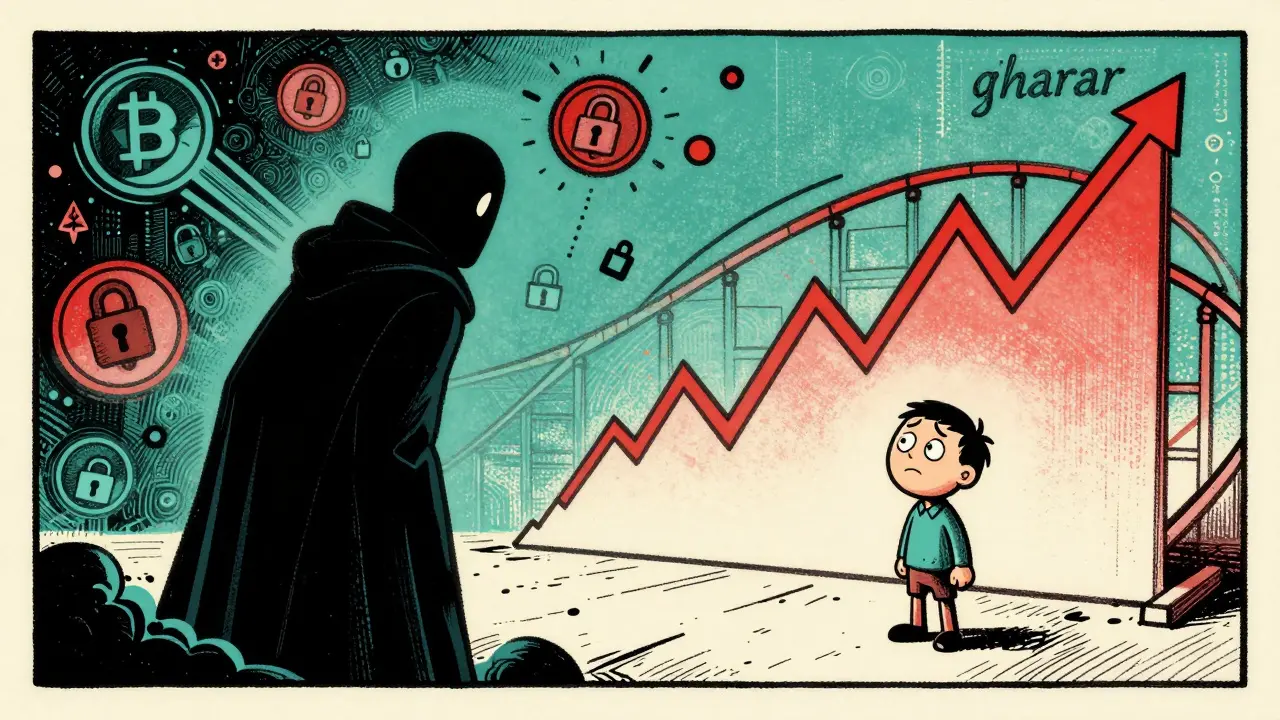
Beyond the crime aspect, there is a deep concern for the "little guy." Because there is no central regulatory authority to protect users, the ruling describes the market as being filled with "uncertainty and deception." In Islamic finance, this is known as gharar-excessive uncertainty that can lead to one party being cheated. For the Egyptian authorities, the volatility of the crypto market isn't just a risk; it's a violation of the ethical requirement for clarity and fairness in contracts.
Comparing Different Islamic Views on Crypto
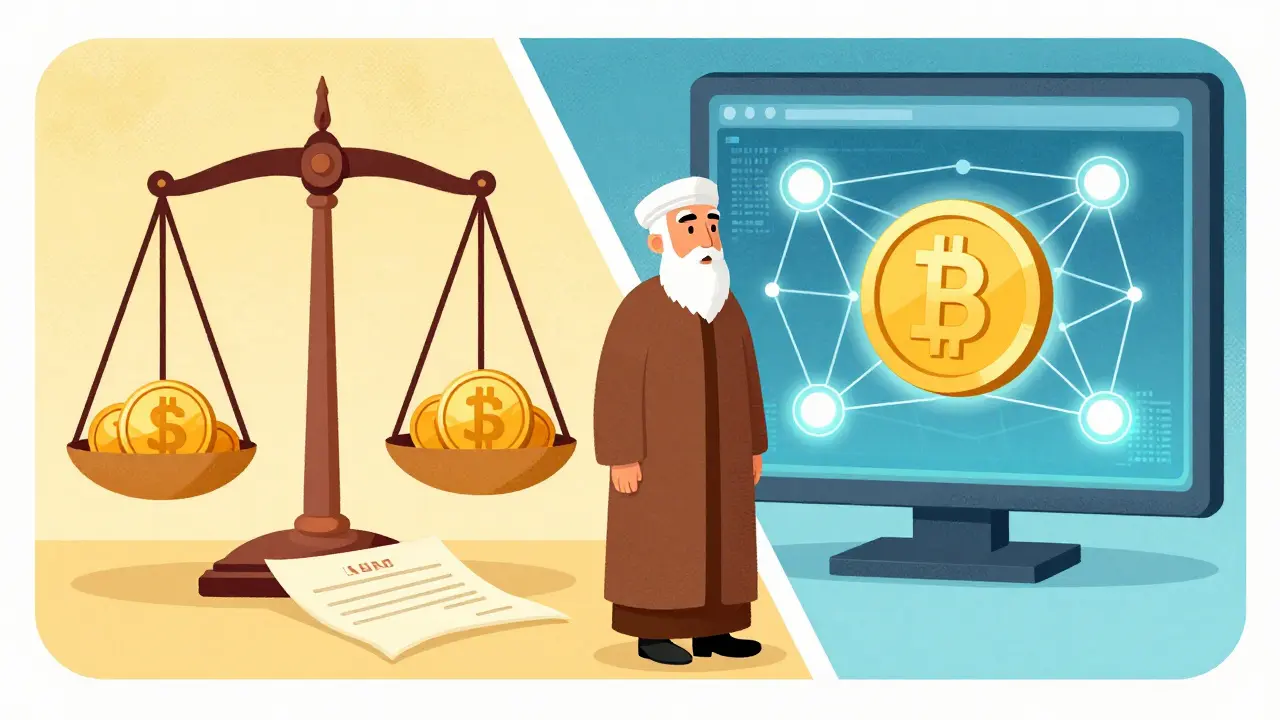
The Egyptian stance is among the most restrictive in the world, but not every Islamic scholar agrees. There is a fascinating divide between those who look at the process of crypto and those who look at its utility. While the Egyptian Grand Mufti focuses on the lack of regulation, other experts, like Mufti Faraz Adam, argue that if a thing is used as a currency and has value in a network, it should be treated as an asset.
| Perspective | View on Legality | Primary Reasoning | Key Concern |
|---|---|---|---|
| Egyptian Grand Mufti | Haram (Forbidden) | Lack of physical form and state backing | Cybersecurity and Terrorism |
| Progressive Scholars (e.g., Mufti Adam) | Permissible (with screening) | Functional utility as a digital asset | Project Legality/Sharia Compliance |
| Syrian Islamic Council | Prohibited | High levels of gharar (uncertainty) | Speculative nature |
The Technical Clash: Property vs. Speculation
To understand why this debate is so heated, we have to look at how Islamic Finance defines wealth. Traditionally, wealth must be rooted in real assets or utility. Scholars like Al-Qaradaghi argue that Bitcoin doesn't even qualify as mal (property) because it's purely digital and speculative. They see it as more of a credit-based capitalist tool than a tool for a moral economy.
On the flip side, critics of the Egyptian fatwa suggest that the ruling ignores maslahah (public interest). They argue that in a world moving toward digitalization, refusing to acknowledge digital assets could hinder the economic progress of Muslim communities. This creates a confusing environment for an investor: do you follow the state-backed authority of al-Azhar University, or do you follow a scholar who views the technology as a new form of digital gold?
Real-World Consequences for Users
If you're a Muslim living in Egypt or following Egyptian guidance, this fatwa isn't just a theoretical debate-it's a strict boundary. The ruling prohibits everything: buying, selling, leasing, or even mining. This means using a trading platform or accepting Bitcoin as payment for a service is considered a religious transgression.
However, those who follow more flexible interpretations have a different set of rules. They don't just buy any coin; they perform a "Sharia screen" to make sure the project isn't involved in forbidden activities (like gambling or interest-based lending). They also calculate and pay zakat (charitable tax) on their crypto holdings, treating the coins as actual currency. This split has led to a fragmented market where some users operate in the shadows and others openly build "Halal" crypto portfolios.
Will the Ruling Ever Change?
Since 2017, the Egyptian position has remained a wall. Even as Central Bank Digital Currencies (CBDCs) emerge and regulation becomes more common, the core arguments of the Grand Mufti still hold weight in Egypt. The original concerns about cybersecurity and national stability are still very relevant to the Egyptian government.
Still, the evolution of the technology is relentless. As more regulated exchanges enter the market and the "wild west" era of crypto fades, some wonder if the gharar (uncertainty) argument will weaken. For now, the Egyptian Grand Mufti's ruling stands as a stark reminder that in the world of Islamic finance, the intersection of faith and technology is rarely a straight line.
Why did the Egyptian Grand Mufti declare Bitcoin haram?
The declaration was based on several factors: the lack of physical existence, the absence of a central regulatory authority, and the presence of excessive uncertainty (gharar). Additionally, concerns over Bitcoin's use by criminal and extremist groups played a significant role in the ruling.
Does this fatwa apply to all cryptocurrencies or just Bitcoin?
The fatwa is broad and covers all forms of cryptocurrency transactions. It prohibits the purchasing, selling, leasing, and subscription to any cryptocurrency services, not just Bitcoin.
Do all Islamic scholars agree that crypto is forbidden?
No, there is a significant divide. While the Egyptian authorities and the Syrian Islamic Council are restrictive, other scholars like Mufti Faraz Adam believe cryptocurrencies can be permissible if they are treated as digital assets and screened for Sharia compliance.
What is the role of Dar Al-Ifta in this ruling?
Dar Al-Ifta is Egypt's official Fatwa House. It serves as the primary body for issuing religious legal opinions and acts as a consultancy for the Egyptian judiciary, giving the Grand Mufti's ruling significant institutional weight.
How does the concept of "gharar" apply to Bitcoin?
Gharar refers to excessive uncertainty or risk in a contract. The Mufti argued that Bitcoin's extreme price volatility and lack of tangible backing create an environment of deception and uncertainty that is forbidden under Islamic law.

Noel Mandotah
April 27, 2026 AT 08:39Oh wow, so the solution to financial instability is just... pretending digital assets don't exist. Pure genius. 🙄
Iestyn Lloyd
April 27, 2026 AT 23:39It is quite interesting to see how the interpretation of 'property' differs across jurisdictions. In the UK, the legal status of crypto has evolved significantly through court rulings, treating it as a form of personal property despite the lack of a central issuer. The focus on gharar in the Egyptian ruling is a classic application of Sharia principles to modern volatility.
Livvy Cooper
April 29, 2026 AT 16:25Basically just a way for the government to keep control. Not surprising.
Elle Kharitou
April 29, 2026 AT 21:55This is such a beautiful example of how faith and modern innovation try to dance together in a world that is changing so rapidly! 🌟 It really makes me think about how we define 'value' in our own lives, isn't it just a collective agreement between souls? 💖 I feel for the people caught in the middle of these rulings because they just want to secure their future and provide for their families while staying true to their spiritual path, which is such a noble journey to undertake in this chaotic age! ✨🙏 Maybe one day we will find a bridge that connects the timeless wisdom of the Mufti with the decentralized dreams of the new generation so everyone can thrive in harmony! 🌈🌻
Rain Richardsson
April 30, 2026 AT 19:51That's a really thoughtful perspective on the struggle for balance.
Kara Spadone
May 1, 2026 AT 00:28The lack of a physical anchor is just a metaphor for the void in modern spirituality :) people chase numbers because they have no internal center 🌀
Arun Prabhu
May 2, 2026 AT 16:57A quaint attempt to rationalize the primitive fear of the intangible. The intellectual bankruptcy required to dismiss a cryptographic ledger as 'ghostly' is simply staggering, truly a masterclass in obfuscation by the state elite.
Amanda Macy
May 3, 2026 AT 12:28The tension here is between institutional stability and individual autonomy. When a state-backed authority defines the moral boundary, it serves as much to protect the national economy from capital flight as it does to protect the believer from risk.
Emily A
May 4, 2026 AT 11:43It is fundamentally illogical to equate anonymity with inherent immorality. The Mufti's argument regarding terrorism is a flawed generalization, as traditional cash systems facilitate illicit activities far more effectively than a transparent, public blockchain ever could.
Alex Mazonowicz
May 5, 2026 AT 12:46I believe we will see a change soon!!! Technology always wins in the end!!!!
April D Thompson
May 6, 2026 AT 12:39Listen, the drama of this is just wild! We're talking about the intersection of ancient laws and code that literally doesn't exist in the physical plane. It's like trying to fit a square peg into a round hole, but the peg is made of light and the hole is made of tradition! We have to be inclusive of these different worldviews because the shift to a digital economy is going to leave people behind if we don't start talking about the ethics of it now in a way that actually respects their soul!
Jehan ZA
May 8, 2026 AT 10:55I find the commitment to the principle of gharar to be quite consistent with the broader goals of Islamic social justice. While the restriction is severe, it is conducted with a clear intent to safeguard the populace from predatory speculation.
Pramendra Singh
May 9, 2026 AT 18:37I'm sure a middle ground will be found eventually for everyone's peace of mind.