
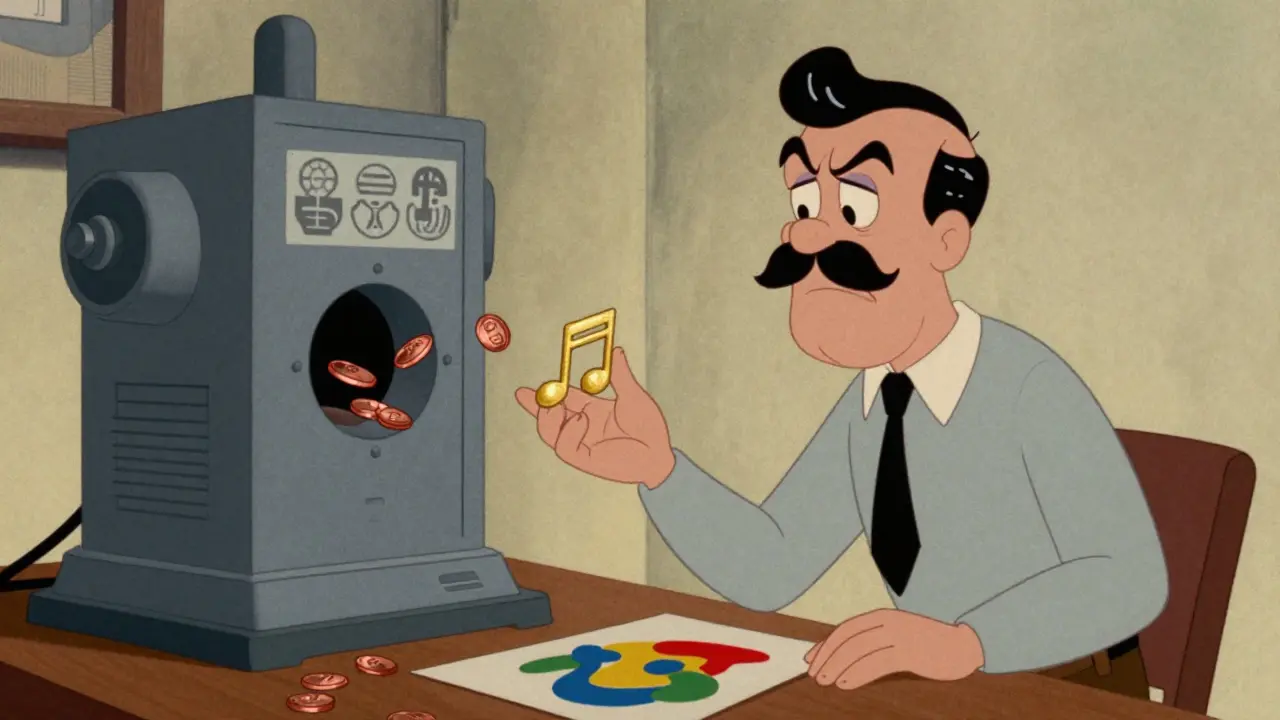
For years, creators have been essentially renting their own careers. You spend hours crafting a video, a song, or a piece of art, only to upload it to a platform that owns the relationship with your audience and takes a massive cut of your earnings. It's a frustrating cycle where the platform holds the keys to your livelihood. But things are shifting. Digital Ownership is a paradigm shift where content producers gain complete control, rights, and economic benefits over their digital assets, including intellectual property and revenue streams. Instead of being a tenant on a corporate site, you become the landlord of your own digital ecosystem.
The Shift from Renting to Owning
In the traditional model, the power imbalance is stark. Platforms like YouTube or Spotify act as the gatekeepers. According to data from NewM.io, creators in these old systems typically only see 45-55% of the revenue their work generates. The rest vanishes into the platform's pocket for the "privilege" of hosting your content. If the platform decides to change its algorithm or ban your account, you lose your audience overnight.
Digital ownership flips this script. By using Blockchain technology, creators can now distribute their work directly to fans. In these ownership models, platform fees can drop to as low as 2-5%, as seen on decentralized platforms like Mirror.xyz. This means you keep 85-95% of your money. It's the difference between barely scraping by and building a sustainable business.
How the Technology Actually Works
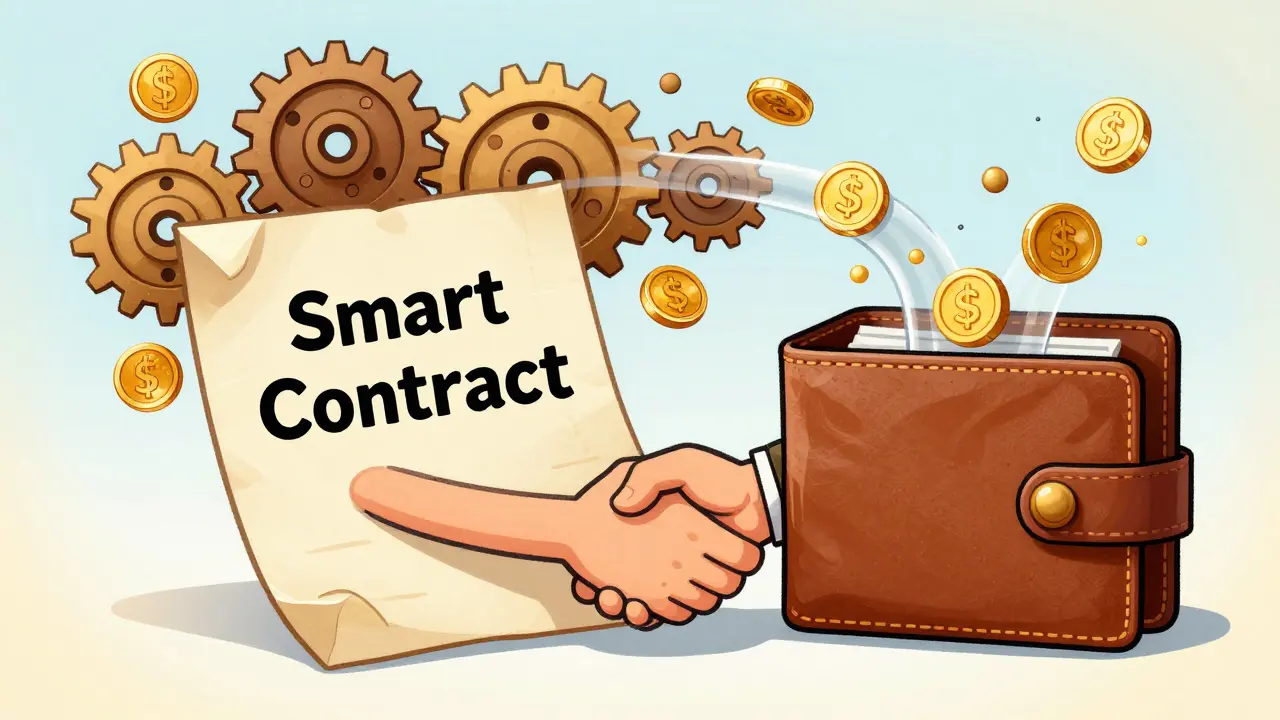
You don't need to be a computer scientist to get this, but it helps to understand the tools. The magic happens through Smart Contracts, which are self-executing contracts with the terms written directly into code. These contracts allow for automated royalty payments. For example, you can set a rule that every time your digital art is resold to a new collector, 10% of that sale goes directly back to your wallet instantly.
Most creators rely on networks like Ethereum, Solana, or Polygon to verify these assets. To store the actual files (since putting a high-res video directly on a blockchain is too expensive), many use IPFS (InterPlanetary File System), a decentralized storage method that ensures your work doesn't disappear if one server goes down. To manage these assets, you'll use a digital wallet like MetaMask or Phantom.
| Feature | Traditional Model (Web2) | Ownership Model (Web3) |
|---|---|---|
| Revenue Share | Creator keeps 45-55% | Creator keeps 85-95% |
| Secondary Sales | $0 for the creator | 5-10% automatic royalties |
| Audience Control | Platform-owned (Algorithm dependent) | Creator-owned (Direct access) |
| Asset Permanence | Subject to platform deletion | Decentralized and permanent |
Real-World Wins and Hard Lessons
The numbers tell a compelling story. Harvard's NFT Staircase research found that artists using ownership models earned 3.2x more per transaction than those on traditional digital marketplaces. Take the musician RAC, who generated $1.2 million from NFT sales in 2023. He managed to keep 95% of his rights while diversifying his income. For him, digital ownership isn't just a trend; it's a financial strategy.
However, it isn't all sunshine and rainbows. Many creators struggle with the technical side. A Capterra survey revealed that 63% of creators find wallet management too complex. There's also the issue of "gas fees"-the cost of processing a transaction on the blockchain. While Layer 2 solutions like Polygon have brought these costs down to around $0.50-$2.00, spikes in network congestion on the main Ethereum chain can still make minting expensive.
Then there's the legal gray area. As researcher Dr. Sarah Jamie Lewis has pointed out, owning a token on a blockchain doesn't automatically override copyright law. You still need to be clear about who owns the intellectual property (IP) versus who owns the digital token of that property.
Building a Community That Actually Engages
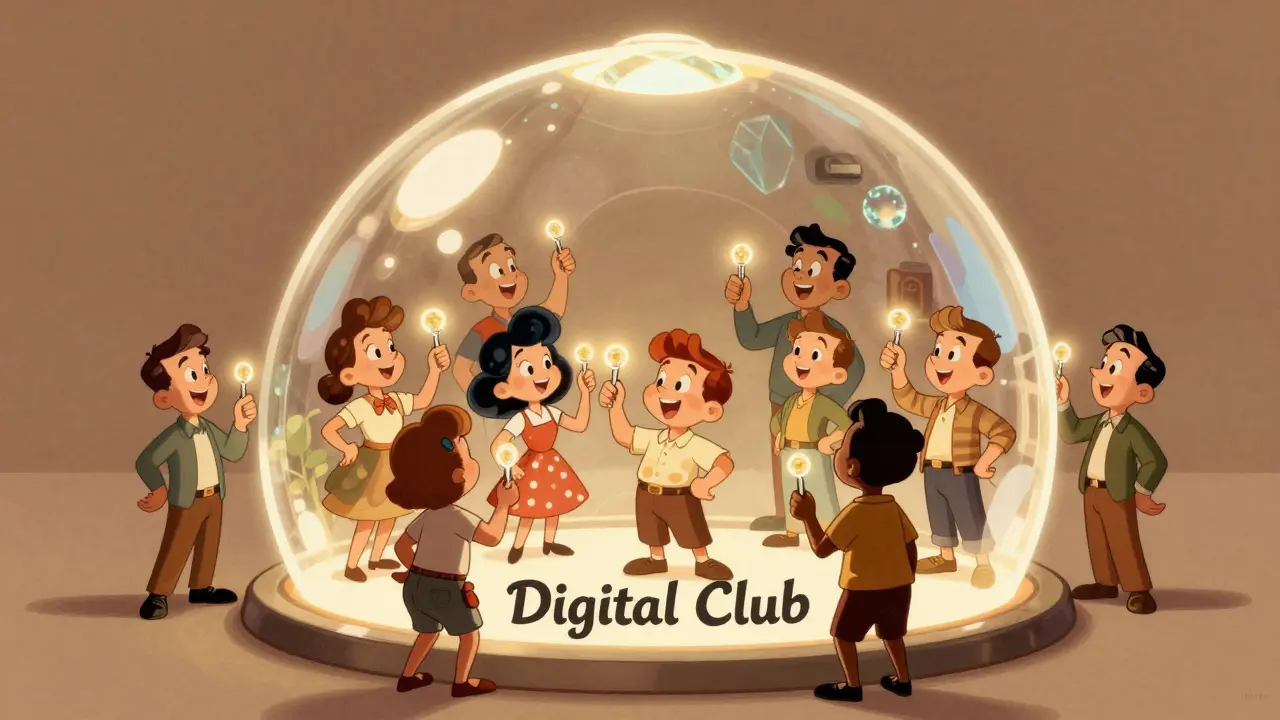
One of the biggest benefits of digital ownership is the ability to create "token-gated" communities. Instead of just having "followers" who might never see your post due to an algorithm, you have "holders." These are people who have a financial and emotional stake in your success. Havro Digital's 2024 analysis showed that these communities have 47% higher engagement rates than traditional social media followers.
Imagine giving your top 100 supporters a special token that grants them access to a private Discord channel, early access to new releases, or a vote on what your next project should be. This transforms your audience from passive consumers into active collaborators. You're no longer fighting for a few seconds of attention in a feed; you're building a digital club where the members are invested in the brand.

How to Actually Get Started
If you're ready to move away from the "rental" model, expect a bit of a learning curve. Most creators spend about 15-20 hours mastering the basics of wallets and marketplaces, and another 40-60 hours figuring out their "tokenomics"-basically, the economy of how their tokens will work.
- Choose Your Wallet: Start with a self-custody wallet like MetaMask if you want full control, or a custodial wallet like Coinbase Wallet if you prefer a simpler, more guided experience.
- Select a Network: Use Polygon or Solana for low fees and fast transactions. Use Ethereum if you're targeting high-end collectors who value the most established network.
- Pick Your Marketplace: OpenSea is the biggest and has great beginner resources. However, look for platforms that align with your specific niche (e.g., Mirror for writers) to ensure you're reaching the right audience.
- Set Your Royalties: Decide on a fair percentage (usually 5-10%) for secondary sales. This ensures you get paid as your work increases in value over time.
The Road Ahead: Hybrid Models
Will every creator abandon Instagram or Spotify? Probably not. The most likely future is a hybrid approach. Gartner predicts that 73% of professional creators will use a blend of traditional and ownership models by 2027. You'll use the big platforms for discovery (getting new eyes on your work) and your ownership ecosystem for monetization and deep community engagement.
With new tools like Shopify's 'Ownable' API, integrating these features into a standard online store is becoming much easier. We're moving toward a world where digital ownership is as standard as having a copyright notice on a book. The goal isn't to destroy the platforms, but to ensure that the people actually creating the value are the ones who own it.
Do I need to be a coder to use digital ownership tools?
No, you don't need to code. Most modern marketplaces and platforms provide a user-friendly interface for "minting" assets and setting royalty percentages. However, you will need to spend a few hours learning how to manage a digital wallet and secure your seed phrases.
What happens if I lose my wallet password?
In a self-custody wallet (like MetaMask), there is no "forgot password" button. You rely on a seed phrase (a series of 12-24 words). If you lose that phrase and your password, you lose access to your assets. This is why many beginners start with custodial wallets or use hardware wallets like Ledger for extra security.
Are royalties actually guaranteed on the blockchain?
While smart contracts automate royalties, some marketplaces have historically allowed users to bypass them. However, industry standards (like those being developed by the W3C) are working toward standardized enforcement so that creators are paid regardless of which marketplace is used for the resale.
How much does it cost to start?
The cost depends on the network. On Polygon, minting a piece of content can cost as little as $1.50. On Ethereum, it can be much higher depending on network traffic. Most creators start with a small amount of cryptocurrency (under $50) to cover their initial transaction fees (gas fees).
Does this replace traditional copyright?
Not exactly. Digital ownership proves you own a specific token or copy of a work, but legal copyright is still handled by government laws. It is possible to own the NFT of a piece of art without owning the legal copyright to reproduce it, unless the creator explicitly transfers those rights in the contract.

Findlay Duncan Lyon
April 25, 2026 AT 00:37Spot on. Absolute game changer for the arts.
Ali Tate
April 25, 2026 AT 07:59typical midwit take thinking a few smart contracts solve the systemic rot of the internet actually the volatility of these assets is a joke and only the most brain-dead peasants fall for the hype while the real power players just move the goalposts again its all just digital feudalism with a fresh coat of paint
Eric Raines
April 25, 2026 AT 21:21Actually, you're missing the point about the infrastructure. I've spent years studying these protocols and it's obvious that the scalability issues on Ethereum make this a pipe dream for 99% of creators. You can't just 'move to Polygon' and expect the same liquidity or prestige. It's honestly exhausting how people pretend the transition is seamless when the UX is still a nightmare from 2011. I've tried to explain this in other threads but nobody listens. It's just a cycle of hype and crashes and we're all just pretending it's progress while the actual tech lags behind the marketing promises.
Doc Coyle
April 27, 2026 AT 04:52It is simply wrong to gamble with one's livelihood using such unstable tools. True creators should rely on hard work and traditional copyright, not a digital token that could lose value in an hour. It is morally bankrupt to push people toward these speculative bubbles under the guise of empowerment. We should be returning to simpler times where art had intrinsic value regardless of a blockchain record. It's not about the money, it's about the integrity of the craft which is being eroded by this tech.
Clair Geary
April 28, 2026 AT 14:16this feels like such a breath of fresh air for the indie scene! i love how the idea of token-gating turns a crowd into a real community where everyone actually cares about the growth of the artist it's like a digital cozy club for the most loyal fans just imagine the sparks that fly when a creator actually owns their reach without some corporate suit deciding who sees their work it's just pure magic
Liz Ariza
April 28, 2026 AT 19:37Totally agree! 🌟 The energy of owning your own work is just unmatched! It's all about that creative liberation 🚀✨ It's so empowering to see artists finally getting the bag they deserve without the middleman taking a huge slice! 🎨💰 Let's get this bread!
Gloris Young
April 28, 2026 AT 23:56Very useful breakdown. I like the hybrid approach mentioned at the end. It's the most realistic way forward.
Jennifer L
April 29, 2026 AT 04:05Oh my goodness, the thought of losing a seed phras is absolutely TERRIFYING!! 😱 I can't even imagine the sheer agony of losing years of hard work because of one lost piece of paper. It is truly a travesty that we must bear such a burden for the sake of independence. However, the possibility of earning 95% of one's revenue is a most wondrous prospect indeed, and I believe we should strive for peace between the old systems and the new ones for the benefit of all creators regardless of their technical prowess.
Hannah Rubia
April 29, 2026 AT 13:24It is imperative to note that the legal distinction between token ownership and intellectual property rights remains the most significant hurdle. While the smart contract facilitates the transfer of the asset, the underlying copyright typically remains with the creator unless a formal legal assignment is executed. Therefore, creators must be diligently advised to pair their blockchain strategy with traditional legal contracts to ensure comprehensive protection of their works.
Lisa Camp
May 1, 2026 AT 04:30STOP WAITING AND JUST DO IT! There is no excuse for staying on a platform that robs you! Get your wallet, mint your work, and take your power back right now! If you're too scared of the learning curve, you don't deserve the success! MOVE NOW!
Mike Word
May 2, 2026 AT 13:09I wonder if the IPFS storage model holds up long-term if the incentive for nodes to host the data disappears. It's an interesting technical trade-off between centralization and permanence. Most of these decentralized storage solutions still rely on some form of payment or token incentive to keep the files alive. If the token crashes, does the art disappear? That seems to be the missing piece of the puzzle here.
Sarah Ingrams
May 3, 2026 AT 06:57this is so helpful i really needed to see this broken down simply
Mary Tawfall
May 3, 2026 AT 15:05The transition might be steep, but the rewards are clearly worth the effort for anyone looking to build a legacy. It's heartening to see a path where artists aren't just fighting an algorithm for visibility. Every small step toward ownership is a victory for creativity. We just need to support each other through the technical hurdles and the community will grow naturally. It's all about taking that first brave step and trusting the process of decentralization to bring back the human element to the internet. Keep pushing forward, everyone!