

Imagine trying to buy a cup of coffee in a country where the currency itself is illegal. That’s the reality for millions of people living in banned crypto jurisdictions. While governments like China and Algeria have slapped strict prohibitions on cryptocurrency trading, the technology doesn’t just vanish because a law says so. Instead, users are finding clever, technical ways to bypass these bans using Decentralized Exchanges (DEXs). If you live in one of these restrictive regions-or you’re just curious about how digital assets survive under heavy regulatory pressure-this guide breaks down exactly how DEX access works when the odds are stacked against you.
| Challenge | Solution | Risk Level |
|---|---|---|
| Internet Blocking (Great Firewall) | VPNs + Decentralized Domains (ENS) | Medium |
| Lack of Local Fiat On-Ramps | P2P Markets & Cross-Border Remittances | High |
| Legal Penalties for Trading | Non-Custodial Wallets + Privacy Tools | Very High |
| Fake Front-End Scams | Verified Contract Addresses | Medium |
The Reality of Crypto Bans Today
It’s easy to assume that if a government bans something, it disappears. But with cryptocurrency, the opposite often happens. According to recent data from the Atlantic Council, while some nations have outright bans, others have partial restrictions that create gray areas. In countries like Afghanistan, Algeria, Bangladesh, and China, the rules are strict. For instance, Algeria’s Law No. 25-10 criminalizes owning, issuing, trading, and mining crypto. Yet, despite these harsh penalties, DEX transaction volume in Algeria grew by 63% annually between 2022 and 2024. Why? Because people need financial sovereignty more than they fear fines.
The core issue isn’t just legality; it’s accessibility. Centralized exchanges (CEXs) like Binance or Coinbase require KYC (Know Your Customer) verification. If you live in a banned jurisdiction, you likely can’t pass these checks, or your bank account gets flagged. This is where Decentralized Exchanges, such as Uniswap or PancakeSwap, become lifelines. They operate on smart contracts rather than through a company headquarters you can sue or shut down. You don’t hand over your ID; you connect your wallet, and the code executes the trade. It’s peer-to-peer power in its purest form.
Technical Hurdles: More Than Just a Website
Accessing a DEX from a banned country isn’t as simple as typing "uniswap.org" into your browser. Governments use sophisticated tools to block known crypto domains and IP addresses. In China, the Great Firewall actively targets these connections. A study by Chainalysis found that 78% of users in China and Algeria rely on Virtual Private Networks (VPNs) to even reach the front-end interface of a DEX. But a VPN alone isn’t enough. Network latency increases by 15-25% due to routing, which can cause transactions to fail if gas fees aren’t optimized correctly.
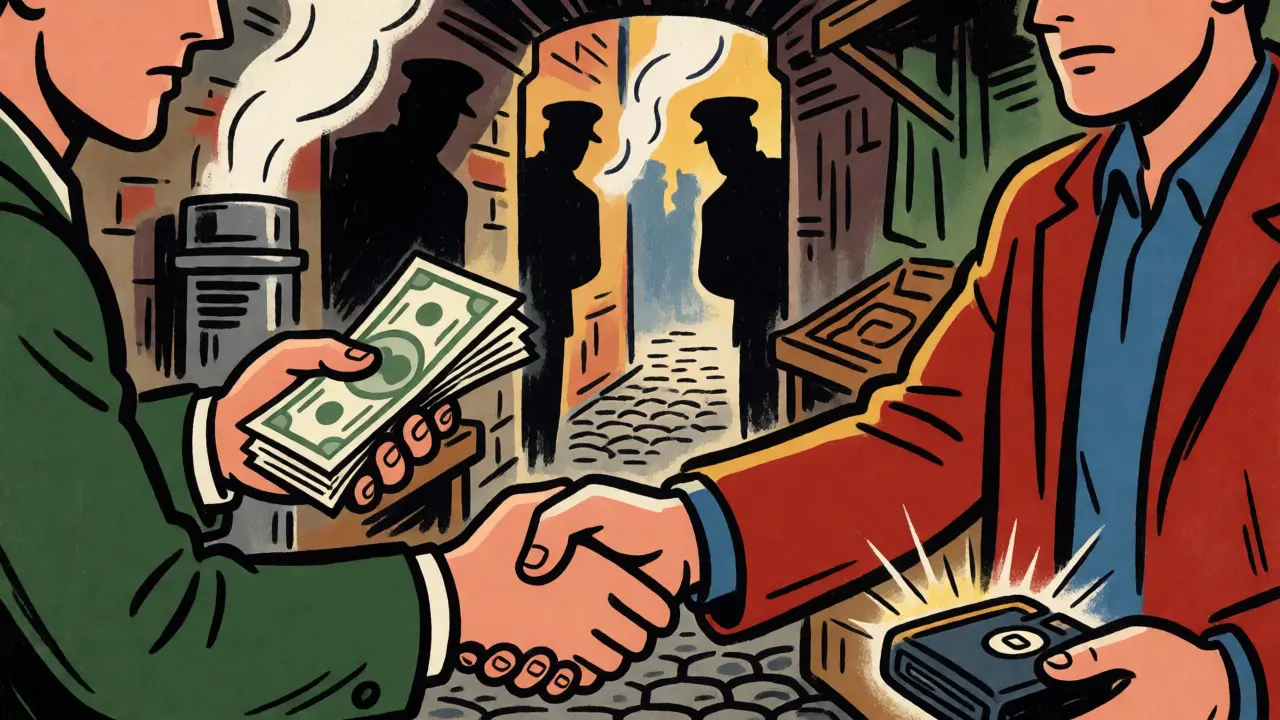
Another major hurdle is the "on-ramp." How do you get crypto into your wallet if banks won’t touch it? Most users resort to Peer-to-Peer (P2P) transfers or cross-border remittances. For example, a user in Shanghai might buy USDT via a Hong Kong P2P group, transfer it to a hardware wallet like a Ledger Nano X, and then use MetaMask to swap it for ETH on Uniswap. This workflow takes an average of 37 minutes per transaction, compared to just 8 minutes in unrestricted markets. The friction is real, and it costs money in time and higher fees.
Strategies for Staying Invisible and Safe
If you’re navigating these waters, you need a strategy. One popular method in Algeria involves using Telegram bots that provide daily updated mirrors of DEX front-ends. These mirrors help bypass government blocks on main domains. However, this comes with risks. In 2024, 61% of Algerian users reported encountering malicious mirror sites designed to drain wallets. Always verify contract addresses directly from the official protocol documentation, not just from a random link in a chat group.
In Bangladesh, where anti-money-laundering laws carry criminal penalties, users have gotten creative with steganography-hiding transaction data within ordinary image files. While only 44% find this effective due to complexity, it highlights the lengths people go to maintain privacy. For most users, however, the best defense is a non-custodial wallet combined with a reputable VPN. Trust Wallet and MetaMask usage has grown 42% faster in banned jurisdictions than in regulated ones, showing that self-custody is the preferred route for survival.
The Legal Gray Area and Enforcement Risks
Just because you *can* trade doesn’t mean you’re safe. Regulators are shifting their focus from blocking platforms to targeting on-ramps and liquidity providers. TRM Labs notes that 14 out of 30 jurisdictions studied now implement mandatory front-end takedowns. Moreover, blockchain analytics firms are getting better at tracing activity. In Q1 2025, 31% of transactions from banned jurisdictions were still traceable to the country of origin through IP analysis and pattern recognition, even with basic privacy measures.
Experts disagree on whether these bans will hold. Dr. Sarah Chen from Georgetown University argues that complete bans are becoming obsolete because enforcement costs escalate exponentially while technical barriers drop. China spends an estimated $2.3 billion annually on crypto-related internet monitoring, yet DEX usage there still grew by 19% year-over-year in 2024. On the other side, the IMF warns that unmonitored capital flight through DEXs creates systemic risks, estimating $18.7 billion in unrecorded flows from banned to permitted jurisdictions in 2024. The message is clear: the cat-and-mouse game is intensifying.
Real-World User Experiences
Let’s look at actual user stories. In Venezuela, though not officially banned, heavy restrictions drive high DEX usage for remittances. Users report 73% higher success rates sending money home via DEXs during hyperinflation periods compared to traditional banking channels. Conversely, in Egypt, where religious edicts combine with legal prohibitions, social deterrence is strong. Only 49% of users successfully accessed DEXs via browser extensions without significant issues, compared to 68% in Bangladesh.
A common complaint across all regions is security. Phishing attempts are 63% higher for users in banned jurisdictions because scammers know these users are desperate for access. Fake websites mimicking Uniswap or Sushiswap are rampant. Community-driven resources, like the "Verified Mirror List" on Reddit’s r/CryptoChina, have become essential. Updated hourly by volunteers, these lists help users avoid scams. It’s a testament to the resilience of the community-they build their own infrastructure when the state tries to tear it down.
Future Outlook: Will Bans Survive?
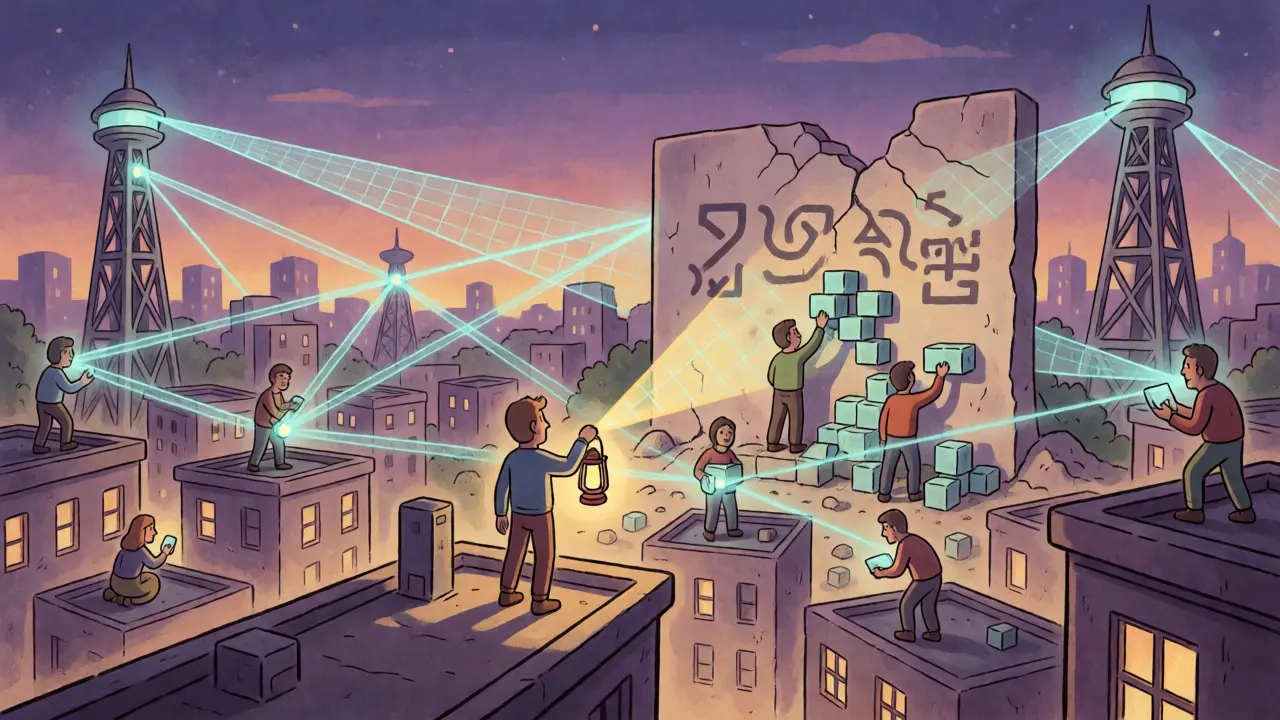
Looking ahead, the trend suggests that total prohibition is hard to sustain. Gartner predicts that complete ban regimes may collapse by 2027 as Central Bank Digital Currencies (CBDCs) reveal the technical impossibility of banning decentralized protocols without breaking the internet itself. Meanwhile, new technologies like "stealth protocols" and AI-powered traffic analysis are evolving rapidly. In Algeria, the launch of the "Algeria DEX Mesh Network," a peer-to-peer wireless network covering 17 cities, shows how communities adapt physically to digital restrictions.
If you’re planning to enter this space, start small. Expect a steep learning curve-it takes an average of 93 hours to achieve basic proficiency in banned jurisdictions versus 38 hours elsewhere. Budget for higher gas fees and potential failed transactions. Use hardware wallets for large holdings and keep your operational funds in hot wallets. Stay connected to local crypto communities for real-time updates on blocked domains and safe on-ramps. The landscape changes weekly, so flexibility is your best asset.
Is using a DEX illegal in banned countries?
Technically, yes, in many cases. Laws like Algeria's Law No. 25-10 criminalize trading activities. However, enforcement varies widely. Many users operate in a gray area where the risk is primarily financial (fines, confiscation) rather than immediate imprisonment, though penalties can be severe depending on the specific jurisdiction and amount involved.
Do I need a VPN to access DEXs in restricted regions?
In most cases, yes. Governments often block the domain names of popular DEX front-ends. A reliable VPN helps mask your IP address and bypasses these geographic restrictions. Some advanced users also use decentralized domain systems like ENS to resolve site addresses without relying on standard DNS servers that might be censored.
How do I buy crypto if banks block me?
Most users rely on Peer-to-Peer (P2P) markets or cross-border remittance services. You might buy stablecoins like USDT from a trusted individual who accepts local cash or bank transfers, then move those assets to your non-custodial wallet. This process avoids direct interaction with regulated banking institutions that might flag crypto transactions.
Are DEX transactions completely anonymous?
No, they are pseudonymous. All transactions are recorded on a public blockchain. While you don't provide ID to the DEX, blockchain analytics firms can often trace activity back to your location through IP correlation and transaction patterns. Using privacy tools and mixing services can help, but they add complexity and cost.
What are the biggest risks for DEX users in banned zones?
The top risks include phishing scams (fake DEX websites), regulatory crackdowns leading to asset confiscation, and technical failures due to network latency or blocked nodes. Additionally, liquidity can be lower for certain pairs, leading to higher slippage and worse exchange rates compared to global markets.
