

Think of developer activity as the pulse of a blockchain network. If the heart stops beating, the body dies. In the crypto world, if developers stop writing code, the ecosystem stagnates. You might look at price charts to judge a coin’s health, but that’s often noise. The real signal lies in GitHub commits and open-source contributions. Why? Because you can’t fake thousands of lines of code written by humans building actual infrastructure.
As we sit here in September 2026, the data tells a nuanced story. It’s not just about who has the most money; it’s about who has the most builders. Recent reports from Electric Capital, a leading venture firm, analyzed over 900 million code commits across 1.7 million repositories. Their findings? There were roughly 23,615 monthly active developers working on open-source cryptocurrency projects in late 2024. That sounds like a lot until you realize it was a 7% drop from the previous year. Does this mean crypto is dying? Absolutely not. It means the market is maturing. We are seeing a shift from speculative hype to sustained engineering effort.
Why Developer Metrics Matter More Than Price
You might ask, "Why should I care about a guy pushing code to a repository?" Simple. Developers create the products that users eventually buy or use. A high number of active contributors signals innovation. It suggests that the platform is solving real problems rather than just riding a wave of speculation. When developer activity drops, it often precedes a decline in network utility. Conversely, a spike usually hints at upcoming features or partnerships that could drive value.
Santiment tracks these metrics by monitoring code contributions and engagement levels. They don't just count commits; they look at the quality and frequency of updates. This distinction matters because a single large refactor counts differently than dozens of small bug fixes. For investors and enthusiasts, tracking these numbers offers a leading indicator of long-term viability. Price follows utility, and utility comes from code.
The Undisputed King: Ethereum’s Dominance
If there is one name that keeps coming up in every serious discussion about Ethereum, it’s consistency. Despite facing stiff competition and internal scaling challenges, Ethereum remains the hub for blockchain development. Data shows Ethereum recording approximately 82,800 development events in recent measurement periods. Yes, that’s down about 10% month-over-month, but let’s put that in perspective. No other chain comes close to this volume of activity.
Ethereum’s strength isn’t just historical inertia. It’s the tooling. Developers love Solidity because it works. The ecosystem around it-tools like Hardhat, Truffle, and Remix-is mature. New developers can spin up a project in minutes. Established firms trust the security model. While critics point to gas fees, the sheer size of the contributor base (around 1,300 core contributors) ensures that improvements continue rolling out. The slight dip in activity likely reflects a consolidation phase, where teams are optimizing existing protocols rather than launching new experiments.

Challengers Rising: BNB Chain and Cosmos
While Ethereum holds the crown, others are fighting hard for second place. BNB Chain secured the silver medal with 37,600 development events. Binance has poured resources into attracting talent through grants and hackathons. However, BNB Chain saw a sharper decline in activity (over 12%) compared to Ethereum. This volatility suggests its developer community is more sensitive to market sentiment. When the bull run slows, some part-time contributors on BNB Chain step back.
Then there’s Cosmos. Often overlooked in mainstream headlines, Cosmos showed resilience. It gathered 26,500 development events and actually increased its active contributor count by 2.37%. Why? Because Cosmos appeals to developers who want sovereignty. Building an app-specific blockchain gives teams control over their own gas fees and governance. As more enterprises enter Web3, this flexibility becomes attractive. Cosmos proves that niche ecosystems can thrive even when the broader market cools down.
| Platform | Development Events | Active Contributors | Trend | Key Strength |
|---|---|---|---|---|
| Ethereum | ~82,800 | ~1,300 | -10.8% MoM | Mature tooling & security |
| BNB Chain | ~37,600 | ~728 | -12.8% MoM | High throughput & low cost |
| Cosmos | ~26,500 | ~389 | +2.4% Contributors | Sovereignty & interoperability |
| Polygon/Arbitrum | Data Varies | Significant Drop | -23% MoM | Ethereum scaling |
The Layer 2 Reality Check
You’ve probably heard of Layer 2 solutions like Arbitrum, Optimism, and Polygon. These networks exist to make Ethereum faster and cheaper. But here’s the catch: their developer activity recently plummeted by about 23%. What happened?
Part of this is technical migration. Many developers are moving their codebases from testnets to mainnets, which changes how commits are tracked. Another factor is fatigue. Building on Layer 2s requires dealing with bridge complexities and fragmented liquidity. Developers want seamless user experiences, and while L2s are improving, they aren’t quite there yet. The drop doesn’t mean these chains are failing. It means the initial rush of experimental projects has settled. Now, only serious teams remain, focusing on production-grade applications rather than quick flips.
Funding Fuels the Fire
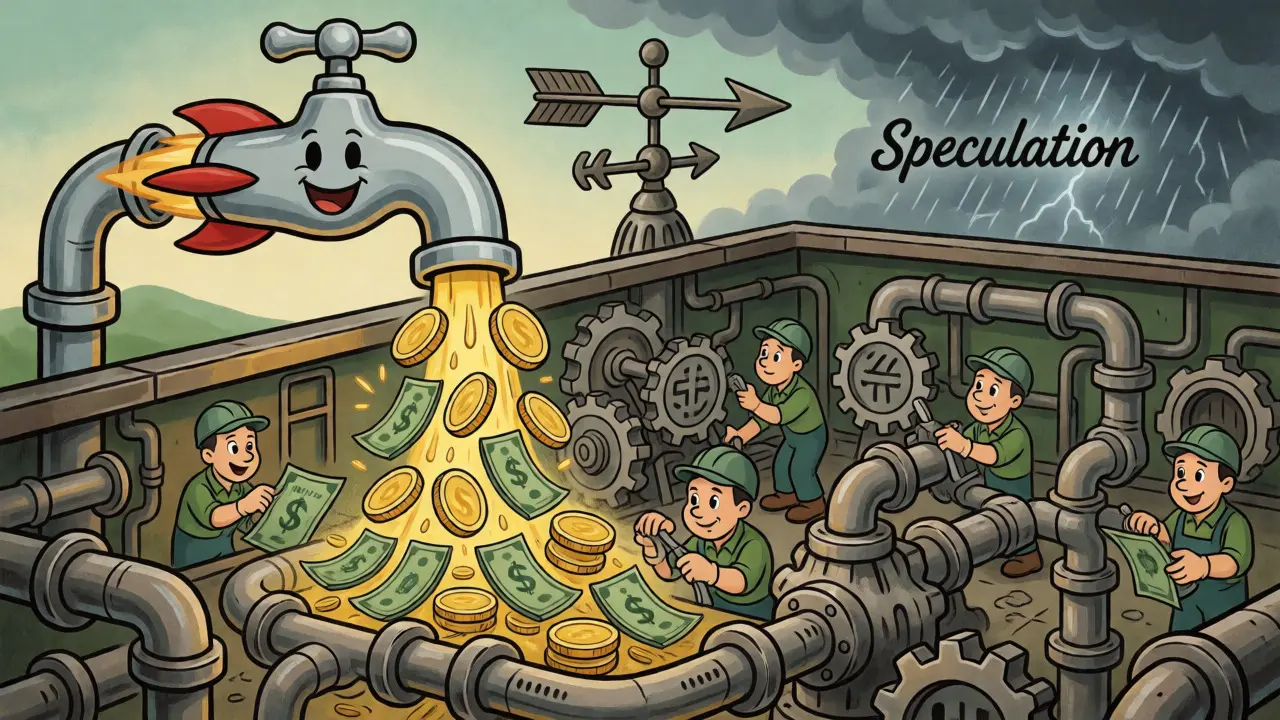
Code doesn’t write itself. Someone needs to pay for it. In Q1 2025, startups raised $3.8 billion across 220 deals. Even excluding massive rounds like Binance’s, project-level investment hit $1.8 billion. Notice where that money went: 60% flowed into infrastructure and DeFi, not speculative tokens. Investors are betting on the plumbing of Web3, not just the shiny apps.
This capital injection supports developer salaries. It funds audits, marketing, and community grants. When funding dries up, developer activity drops. When it flows, innovation spikes. The current trend shows a preference for robust infrastructure. We’re moving away from "move fast and break things" toward "build reliable systems." This shift explains why some flashy new chains lost developers while established ones retained them. Stability attracts talent.
What This Means for You
If you’re an investor, stop looking at price alone. Check the developer stats. A chain with rising commits is likely building future value. If you’re a developer, choose your platform wisely. Ethereum offers stability and jobs. Cosmos offers freedom and niche opportunities. BNB Chain offers speed and access to retail users.
For everyone else, understand that crypto is no longer just magic internet money. It’s a software industry. Like any software industry, it thrives on talent. The 2024-2025 decline in total active developers wasn’t a crash; it was a correction. We cut out the tourists. What’s left are professionals committed to building the next generation of financial and digital tools. The heartbeat is slower, but it’s stronger.
Why did developer activity decline in 2024?
The 7% decline is largely considered normal market noise. After years of explosive growth averaging 39% annually since 2015, a slight pullback is healthy. It reflects a shift from speculative experimentation to focused, sustainable development during cooler market conditions.
Is Ethereum still the best platform for developers?
Yes, in terms of raw volume and ecosystem maturity. With ~82,800 development events and extensive tooling like Solidity and Hardhat, Ethereum remains the primary destination for serious decentralized application development, despite higher costs.
How does funding impact developer activity?
Directly. In Q1 2025, $1.8 billion was invested in infrastructure and DeFi projects. This capital pays developer salaries and funds grants. High funding correlates with increased code commits, while dry spells lead to contributor attrition.
Which blockchain showed growth in developer contributors?
Cosmos stood out by increasing its active contributor count by 2.37%, reaching 389 developers. Its focus on app-specific blockchains and interoperability attracted developers seeking more control over their project environments.
Do Layer 2 networks have fewer developers now?
Yes, networks like Polygon, Arbitrum, and Optimism saw sharp decreases (~23%) in activity. This indicates a consolidation phase where experimental projects ended, leaving only committed teams building production-ready scaling solutions.
