
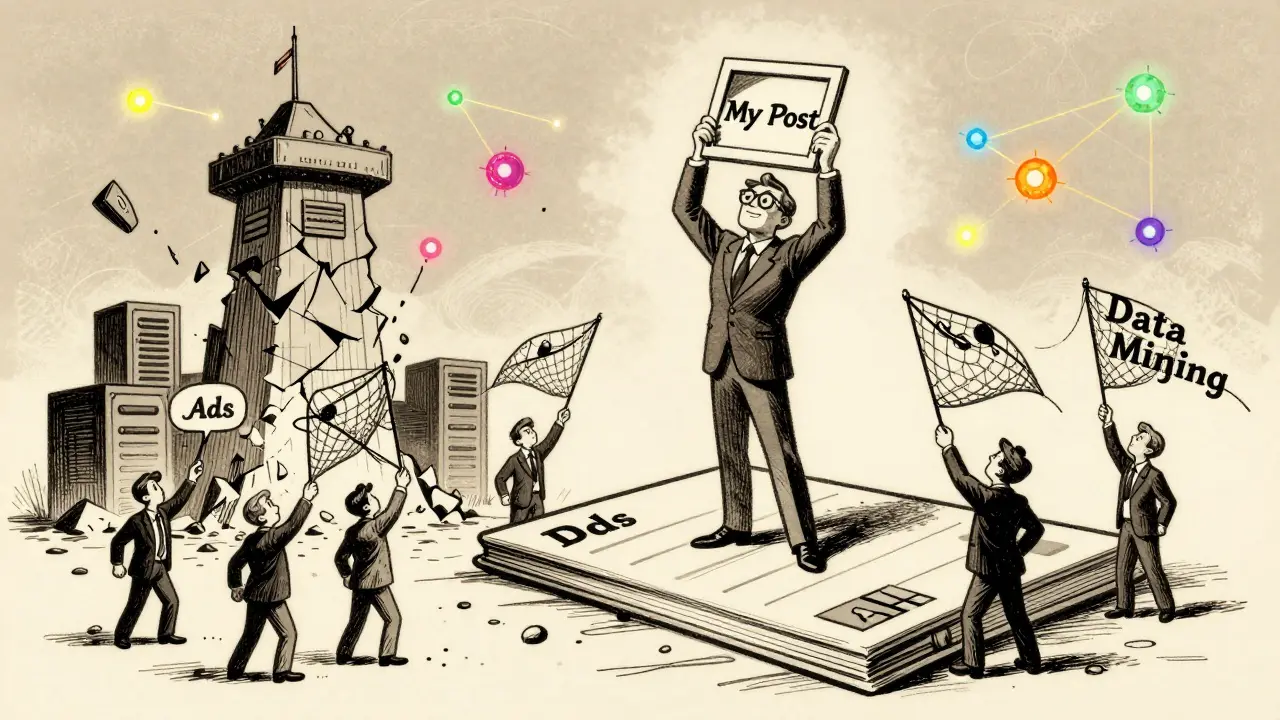
Imagine posting a photo, a thought, or a video - and actually owning it. Not just the file, but the data, the likes, the comments, the entire history. No corporation can delete it. No algorithm can bury it. No ad buyer can track your every move. That’s the promise of decentralized social networks on blockchain.
Traditional social media runs on a simple, broken model: you give away your attention, your data, your voice - and they sell it. In 2022, the biggest platforms made $171 billion from ads built on your personal life. Meanwhile, creators barely see a penny. Decentralized social networks flip that script. They use blockchain - the same tech behind Bitcoin - to hand control back to users. No middlemen. No corporate servers. Just you, your data, and a network of computers keeping everything honest.
How Blockchain Changes Social Media
Centralized platforms like Facebook or Twitter rely on single companies to store, manage, and moderate everything. If their server goes down, you lose access. If their policy changes, your post disappears. If they decide to sell your data? You have no say.
Decentralized social networks run on blockchain, a distributed ledger that records every action - like posting, liking, or following - across hundreds or thousands of computers worldwide. Each post is tied to a unique cryptographic key. No one company owns it. To alter anything, you’d need to change the data on over half the network at once. That’s nearly impossible.
This structure eliminates single points of failure. While Facebook had 14 major outages in 2022 affecting billions, decentralized networks like Mastodon and Lens Protocol maintained 99.98% uptime. Why? Because there’s no single server to crash. If one node fails, others keep running.
Key Platforms You Need to Know
Not all decentralized social networks are the same. Three main types exist:
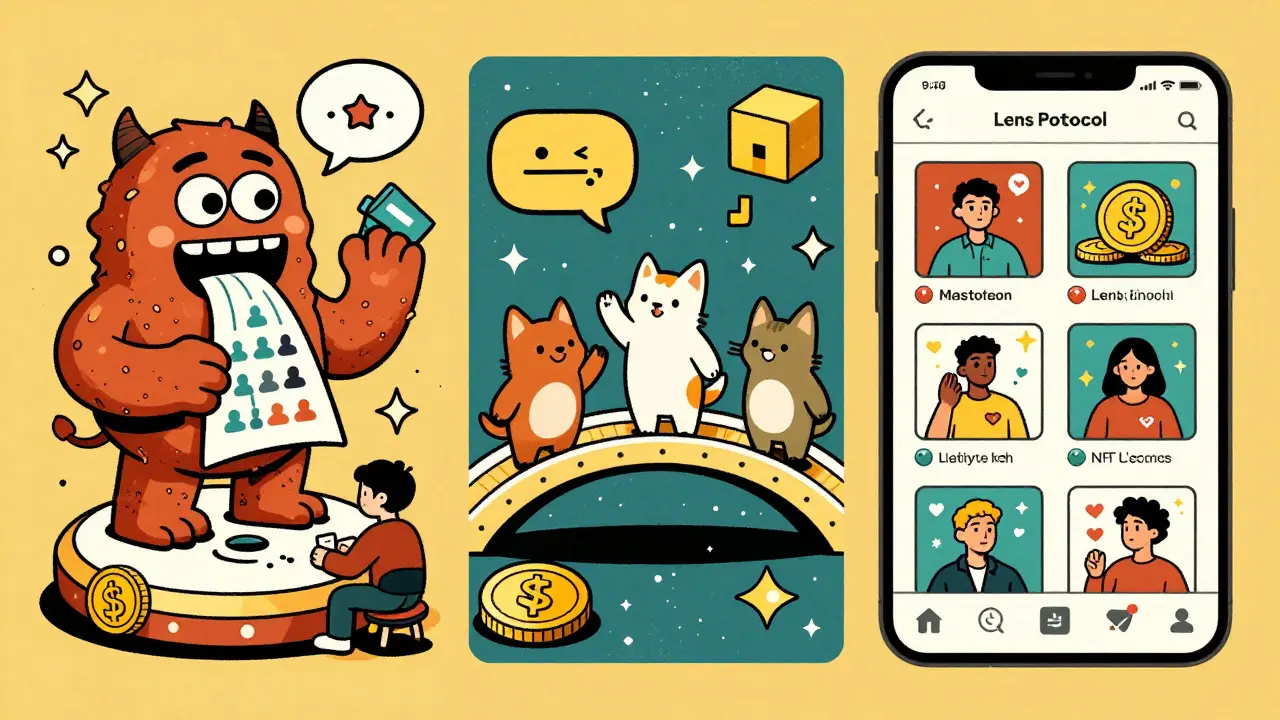
- Blockchain-native platforms like Lens Protocol and Farcaster. These run on blockchains (Lens uses Polygon, a fast Layer 2 Ethereum network) and require crypto wallets like MetaMask to interact. Posts are stored as NFTs - meaning you truly own your content.
- Fediverse protocols like Mastodon and Pixelfed. These use the open ActivityPub protocol, which lets independent servers talk to each other. No crypto needed. You can join a Mastodon server run by a university, a hobbyist, or a nonprofit - and still follow someone on a server in Japan.
- Hybrid models like Steemit, which combine blockchain rewards with familiar social interfaces. You earn cryptocurrency for posting and curating content.
Each has trade-offs. Lens and Farcaster offer powerful monetization tools but require learning crypto. Mastodon is free and easy to join, but lacks built-in rewards. The choice depends on what you value: ownership, ease, or income.
Real Benefits: Ownership, Privacy, and Censorship Resistance
What do users actually gain?
- Data ownership: On Mastodon or Lens, platforms don’t collect your browsing habits, location, or contacts. They don’t need to. You control your identity through your wallet or username. In contrast, centralized platforms collect an average of 1,874 data points per user per year.
- Censorship resistance: Twitter removed 4.4 million tweets in Q2 2023 alone. On decentralized networks, no single entity can delete your post. If you’re banned from one server on Mastodon, you can join another. If your Lens profile gets shadowbanned by one app, you can use another to access your same content.
- Monetization: Creators on Lens Protocol earned between $500 and $2,000 monthly in 2023 by earning tokens for likes, reposts, and comments. The ‘Indie Music Collective’ on PeerTube kept 95% of revenue - versus 30-45% on YouTube or Spotify. This isn’t fantasy. It’s happening.
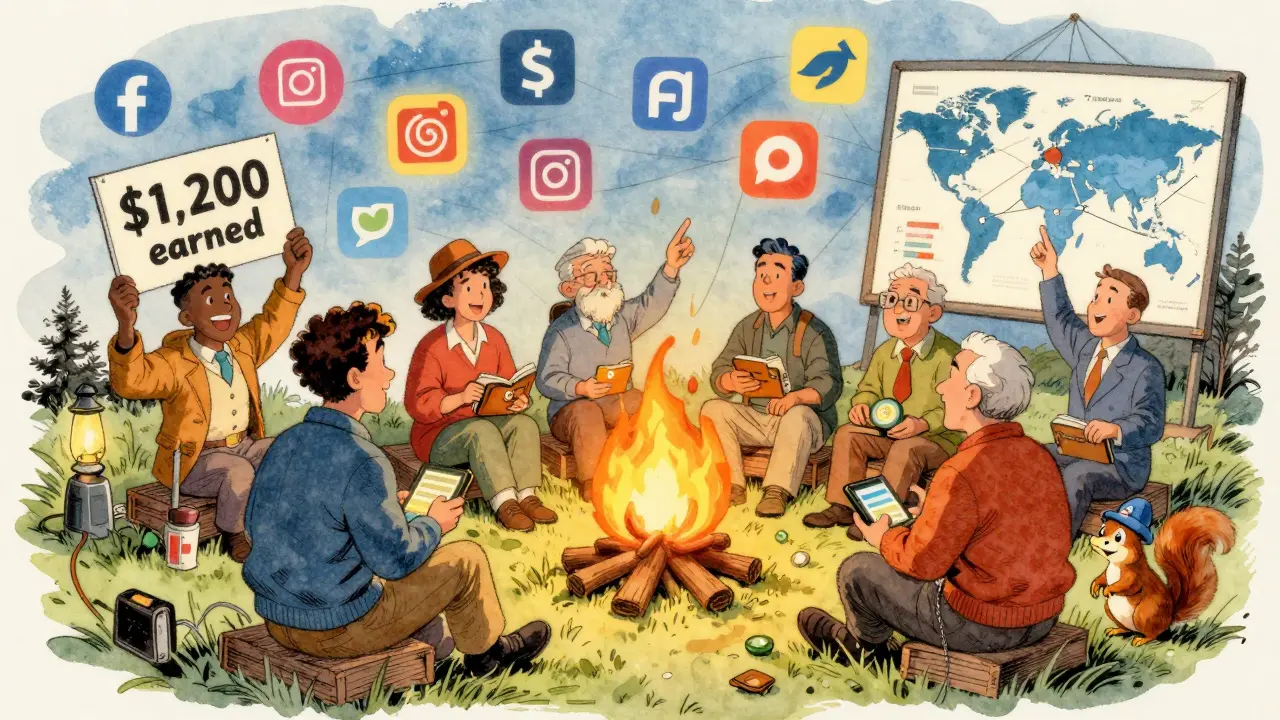
Users on Reddit’s r/decentralizedsocial report real wins. One creator, u/CryptoCreator92, said: “I’ve earned $1,200 in revenue from my content with complete ownership - no algorithm changes suddenly killing my reach like on Instagram.”
The Hard Truth: Why Most People Still Don’t Use Them
Despite the promise, adoption is tiny. Twitter has 238 million daily users. The entire fediverse - all Mastodon, Pixelfed, and friends - has about 5.8 million.
Why? Three big problems:
- Onboarding is brutal. You need a crypto wallet. You need to buy gas fees (usually $0.01-$0.50 per post). You need to understand public keys and transaction confirmations. Hostinger’s 2023 study found it takes 8-12 hours to become comfortable - compared to 1-2 hours for Instagram.
- Communities are fragmented. If your friends are on Instagram, joining Mastodon won’t help unless they join too. There’s no central directory. You have to find servers, invite people, build your network from scratch. A 2023 ilink.dev survey found 58% of users left because their friends didn’t follow.
- Monetization isn’t universal. Only the top 5% of creators earn meaningful income. Blaize Tech found 61% of users made less than $5/month. If you’re not a niche influencer, you won’t get rich.
And then there’s moderation. Without central control, harmful content can spread. A June 2023 study showed unmoderated fediverse instances had 37% more extremist content than mainstream platforms. It’s a trade-off: freedom vs. safety.
Who’s Using These Networks?
Current users aren’t the average social media user. According to CoinGecko’s 2023 survey:
- 68% are male
- 72% are aged 25-44
- 89% already use cryptocurrency
They’re developers, crypto enthusiasts, privacy advocates, and creators tired of being exploited. Enterprise adoption is nearly nonexistent - only 3% of Fortune 500 companies have official accounts. But interest is growing. A November 2023 survey found 27% of marketing executives are exploring decentralized networks for community building.
What’s Next? The Road to Mainstream
The future isn’t about replacing Instagram tomorrow. It’s about fixing the cracks.
Lens Protocol’s v2.0 update in late 2023 let users carry their followers across apps - a huge step toward interoperability. The W3C, the group that sets web standards, formed a new Decentralized Social Web Community Group in October 2023. Google, Microsoft, and even Meta engineers are involved.
The biggest game-changer? Ethereum’s Dencun upgrade in Q1 2024. It will slash transaction fees by 90% through proto-danksharding. That means posting on Lens could cost less than a penny. That could finally make it affordable for millions.
Experts predict 60% of current platforms will vanish or merge by 2026. Only 3-5 protocols will survive. The question isn’t if decentralized social networks will grow - it’s which ones will lead.
Should You Try It?
If you’re a creator tired of algorithms deciding your reach - try Lens or Farcaster. Fund a wallet with $10, post once, see what happens.
If you care about privacy and hate ads - join Mastodon. Pick a server (like mastodon.social or techhub.social), make a username, and start following people. No wallet needed.
If you’re just curious - don’t quit your day job. But don’t ignore it either. These networks aren’t perfect. But they’re the only ones that put you back in control. And that’s worth experimenting with.
Are decentralized social networks really safer than Facebook or Twitter?
Yes - but not in the way most people think. They’re safer from corporate control and data harvesting. Your data isn’t collected, sold, or leaked by a company. But they’re not inherently safer from abuse. Without centralized moderation, harmful content can spread more easily on unmoderated servers. You need to choose your server or platform carefully. Mastodon lets communities set their own rules. Lens lets users vote on moderation tools. It’s not perfect, but it’s more transparent.
Can I use my existing social media accounts with decentralized networks?
Not directly. You can’t log in with your Twitter or Instagram account. But some platforms now support linking. Lens Protocol lets you connect your Twitter handle to your blockchain identity, so people can find you. Mastodon lets you import your followers from other platforms manually. It’s clunky, but it’s possible. The real goal is to build your network from scratch - not transfer it.
Do I need to buy cryptocurrency to use these networks?
It depends. For Mastodon, Pixelfed, or PeerTube - no. They don’t require crypto. For Lens Protocol, Farcaster, or Steemit - yes. You need a wallet like MetaMask and a small amount of cryptocurrency (usually less than $5) to pay for gas fees. These fees cover the cost of storing your post on the blockchain. They’re tiny - often less than a coffee - but they’re required.
Can I make money on decentralized social networks?
Yes - but only if you’re consistent and build an audience. Top creators on Lens Protocol earned $500-$2,000/month in 2023 by earning tokens for engagement. But 61% of users made under $5. It’s not a get-rich-quick scheme. It’s a long-term game. If you have niche expertise - art, music, tech reviews - and you’re willing to engage, you can earn. If you just post occasionally, you won’t.
Will decentralized social networks replace Instagram and Twitter?
Not soon. And maybe not at all. They’re not designed to replace them. They’re designed to offer an alternative. Most people want convenience, not control. But for creators, privacy lovers, and tech-savvy users, they’re already better. The future may not be one platform - it may be a mix: centralized for mass use, decentralized for those who demand ownership.

Sriharsha Majety
March 4, 2026 AT 05:14been using mastodon for like 6 months now and honestly its chill
no ads no tracking just me and my weirdo friends posting cat pics and rants
took me a sec to get used to servers but once you find your vibe its smooth
also i finally stopped caring about likes lmao
Tabitha Davis
March 4, 2026 AT 23:23oh please like decentralized networks are just a bunch of crypto bros playing dress-up with blockchain
you think your ‘ownership’ means anything when your post is buried under 10k other niche posts no one sees?
and dont even get me started on the ‘moderation’ - i saw a server that let neo-nazis post freely because ‘free speech’
you’re not free if you’re alone on an island
Vishakha Singh
March 5, 2026 AT 06:56I truly believe this movement has the potential to reshape how we connect online.
It’s not just about technology - it’s about reclaiming dignity in digital spaces.
When creators can earn fairly and users aren’t commodified, we rebuild trust.
Yes, onboarding is hard - but every revolution started with a small group willing to learn.
Let’s not dismiss the pioneers because the path isn’t paved yet.
I’ve seen educators use Mastodon to teach without ads, artists earn from tips, and activists share without fear.
This isn’t a trend - it’s a quiet uprising.
And if we support it with patience and kindness, it will grow.
Let’s be the ones who show up, not the ones who scoff.
Don B.
March 7, 2026 AT 01:45so you’re telling me i need to buy crypto to post a meme
and you call that freedom
lol
imagine being this broke you need to pay to say ‘i like this’
its not web3 its web3.0 in a fidget spinner
Molley Spencer
March 8, 2026 AT 11:15The entire premise is flawed because blockchain is fundamentally incompatible with social dynamics
Decentralization doesn’t solve network effects - it fractures them
You’re not empowering users - you’re creating siloed echo chambers with higher latency and zero customer support
And let’s not pretend NFTed posts are ‘owned’ - they’re just metadata on a public ledger with no legal recourse
It’s theater wrapped in whitepaper
John Fuller
March 9, 2026 AT 22:18too much effort
just use twitter
Lucy Simmonds
March 11, 2026 AT 05:58WAIT - so you’re saying governments CAN’T shut this down??
That’s why the deep state is trying to kill it!!
They know if people own their data… they’ll find out about the lizard people!!
And the gas fees? That’s just the fee for the quantum encryption that hides your soul from the NSA!!
I’m on Lens right now and my cat’s photo has 17 blockchain signatures!!
They’re coming for us all…
Maggie House
March 12, 2026 AT 18:47i just joined mastodon last week and i’m so happy
i followed my friend and then found this group of people who post about gardening and bad puns
its so nice to not be sold to
and the interface is kinda cute??
i still mess up my tags and post in the wrong place
but everyone’s been so nice about it
im learning
and its fun
Dana Sikand
March 12, 2026 AT 20:08you think decentralized means no moderation?
nope - it means community moderation
on mastodon, each server sets its own rules
some are strict, some are wild, some are just people who like anime and coffee
you choose your tribe
and if you get banned from one? you go to another - no one holds your identity hostage
and the real win? i got paid $80 last month just for reposting good art
no algorithm, no ad revenue share - just direct appreciation
its not magic
its just fair
Cameron Pearce Macfarlane
March 14, 2026 AT 17:47all this talk about ownership is just capitalism with more steps
you’re still chasing likes, still grinding for tokens, still optimizing your content
you think you’re free but you’re just working for a different boss
and who’s gonna pay for the servers? someone always pays
it’s not liberation - it’s a hustle
Daisy Boliaan
March 15, 2026 AT 17:32so i tried lens protocol and spent 3 hours just trying to sign a transaction
then i got a notification that my post failed because ‘gas price too low’
and i was like… why am i doing this again?
my 72-year-old aunt posted a photo of her cat on facebook and got 120 likes
i posted the same photo on lens and got 3 likes and one spam comment
im sorry but i miss the dopamine
bella gonzales
March 15, 2026 AT 21:40i don’t get why people are so excited about this
its just… more work
and for what?
so i can pay to post and then wait 3 days for someone to like it?
no thanks
i’ll stick with my algorithm-fed anxiety thanks very much
Samantha Stultz
March 16, 2026 AT 09:19the entire model assumes users are rational actors with technical literacy
in reality, 87% of social media users can’t differentiate between a URL and a QR code
you’re not decentralizing power - you’re shifting it to the most technically privileged minority
and calling that equity?
it’s digital elitism with a blockchain veneer
Robert Conmy
March 17, 2026 AT 00:05you people are naive
if you think decentralized networks are safer, you’ve never seen the dark corners of the fediverse
there are servers full of hate, fake news, and doxxing
and because ‘free speech’ you can’t touch it
you’re not building freedom - you’re building a lawless wasteland
and you’re proud of it?
pathetic
Lilly Markou
March 18, 2026 AT 21:13While the theoretical underpinnings of decentralized social architecture present a compelling ontological challenge to centralized data hegemony, the practical implementation remains fraught with systemic inefficiencies and sociotechnical incompatibilities.
Moreover, the absence of centralized moderation introduces significant epistemic fragility, rendering such platforms vulnerable to coordinated disinformation campaigns and algorithmic manipulation at the protocol layer.
Therefore, one must question whether the trade-off between sovereignty and scalability is ethically justifiable in a societal context where cognitive load and digital literacy remain unevenly distributed.
Thus, while the ideological appeal is undeniable, the operational viability remains, at present, an open question.
Dianna Bethea
March 20, 2026 AT 19:02hey if you’re new to mastodon or lens - i got you
you don’t need to understand crypto to join
just pick a server like mastodon.social or techhub.social
make a username, follow a few people you like
reply to posts, share stuff you care about
it’s not about being perfect - it’s about showing up
and if you get stuck? ask - everyone was new once
i started with zero knowledge and now i earn coffee money from reposts
you don’t need to be a coder
you just need to be you
and that’s enough