
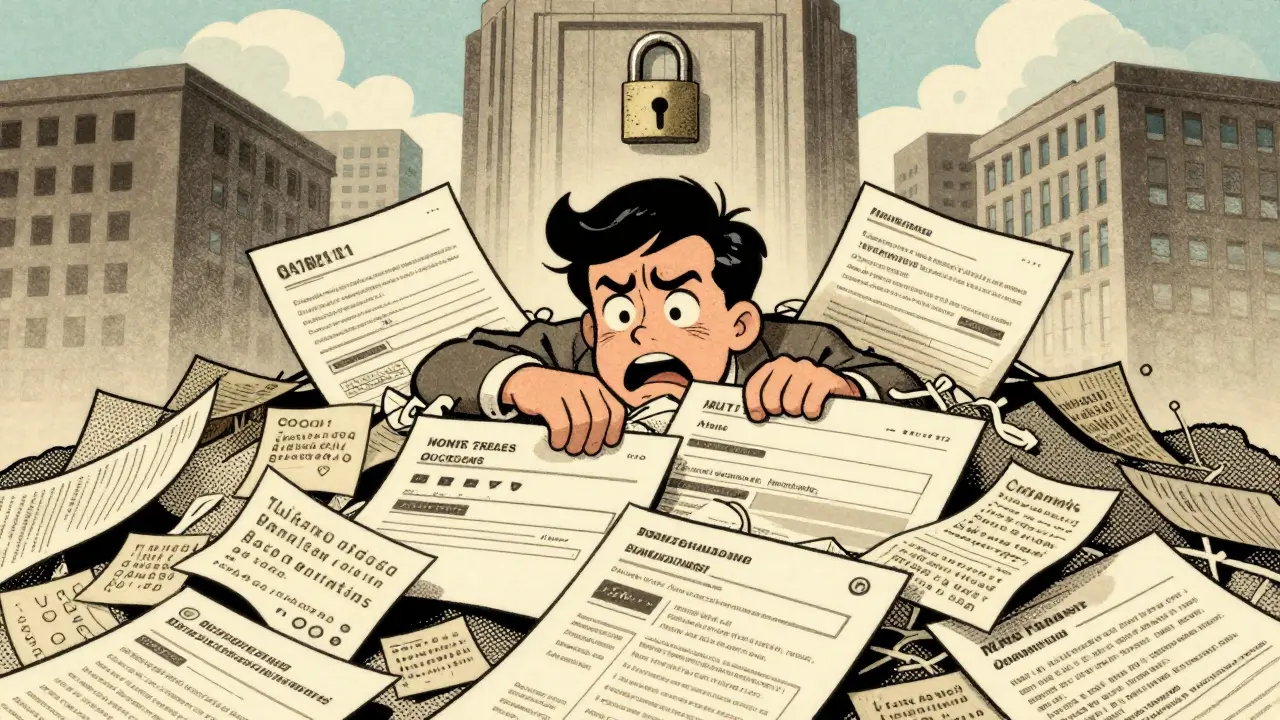
Imagine a world where you don't need to remember fifty different passwords or fill out the same form ten times just to sign up for services. Instead of handing over your social security number, home address, and birth date to every website you visit, you simply prove who you are with a single click. This isn't science fiction anymore. It is the promise of decentralized identity management, a system that shifts control of your personal data from big corporations back to you.
For decades, we have relied on centralized systems. Google, Facebook, and banks act as the gatekeepers of our digital lives. They store our data in massive databases, which are prime targets for hackers. When one of these central points fails or gets breached, millions of people suffer. Decentralized identity changes this dynamic completely by using blockchain technology to create a secure, user-controlled alternative.
The Problem With Centralized Identity
To understand why decentralized identity matters, you first have to look at how broken the current system is. Right now, your identity is fragmented. You have one identity for your bank, another for your email, and yet another for your social media accounts. Each of these entities stores copies of your sensitive information. This creates a huge security risk. If a hacker breaches one company's database, they get access to your name, email, and sometimes even financial details.
This model also violates privacy. Why does a streaming service need to know your exact date of birth and home address? They don't. But because the system is centralized, they collect it anyway to verify your account. This leads to data hoarding, where companies sell or leak information they never needed in the first place. The burden of security falls on these organizations, but the consequences of failure fall on you.
How Decentralized Identity Works
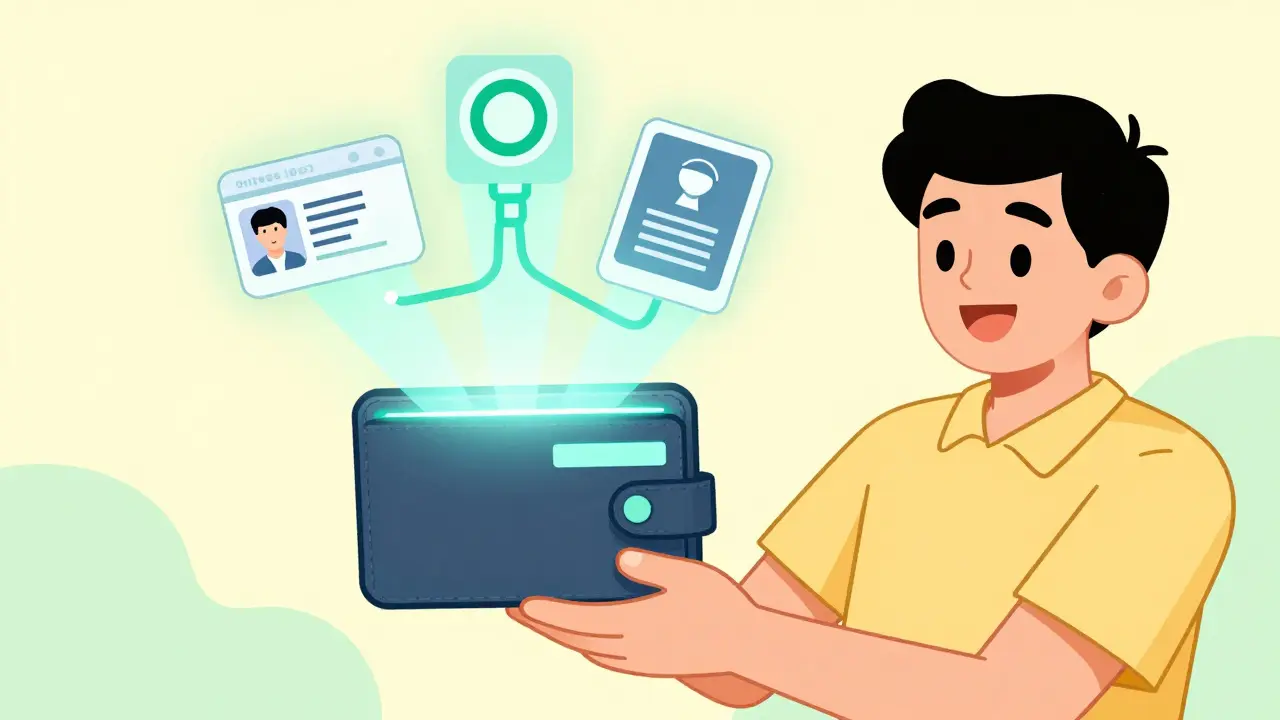
Decentralized Identity (DCI) is a framework that allows individuals to control their digital identities without relying on central authorities. It relies on three main components working together: Decentralized Identifiers (DIDs), Verifiable Credentials (VCs), and Digital Wallets.
Let's break down each part so it makes sense.
- Decentralized Identifiers (DIDs): Think of a DID as a unique username that only you control. Unlike an email address or phone number, a DID is a cryptographically secured string stored on a blockchain. It doesn't contain any personal info like your name or location. It just points to a document that proves you own that identifier. The World Wide Web Consortium (W3C) manages the standards for DIDs to ensure they work across different platforms.
- Verifiable Credentials (VCs): These are the digital versions of your driver's license, university degree, or professional certification. An issuer (like a government or university) signs these credentials digitally. You store them in your wallet. When you need to prove something, you present the credential. Because it's signed by a trusted source, anyone can verify it's real without calling the issuer directly.
- Digital Wallets: This is the app on your phone where you keep your DIDs and VCs. It holds your private keys, which are essentially the master codes to your identity. You use the wallet to share specific pieces of information with others while keeping the rest hidden.
The Role of Blockchain and Cryptography
Blockchain is the backbone of this system, but not in the way most people think. In decentralized identity, the blockchain doesn't store your personal data. That would be a terrible idea. Instead, it acts as a public ledger that records the existence of your DID and the public keys associated with it. This ensures that no one else can impersonate you or alter your identity record.
The magic happens through cryptography. Specifically, Zero-Knowledge Proofs (ZKPs) are cryptographic methods that allow one party to prove a statement is true without revealing any underlying data. For example, if a bar wants to check if you are over 21, you don't hand over your ID showing your full name and address. Instead, your wallet uses a zero-knowledge proof to mathematically prove you are over 21. The bar learns nothing else about you. This is called selective disclosure, and it is a game-changer for privacy.
Self-Sovereign Identity vs. Decentralized Identity
You will often hear the terms Self-Sovereign Identity (SSI) and Decentralized Identity used interchangeably, but there is a nuance. DCI is the broader technical framework. SSI is a specific philosophy within that framework that emphasizes complete user autonomy. In a true SSI model, you have total control. No intermediary can freeze your account or delete your identity. While DCI can still involve some intermediaries for verification, SSI pushes for a world where the individual is the sole sovereign of their data.
Most modern implementations aim for SSI principles. Companies like Okta and Ping Identity are building tools that support this vision, recognizing that users want more control over their digital footprints. As regulations like GDPR tighten, the demand for SSI-compatible solutions is growing rapidly.
| Feature | Centralized Identity | Decentralized Identity (DCI) |
|---|---|---|
| Data Storage | Corporate servers (honeypots for hackers) | User's digital wallet (private) |
| Control | Service providers | Individual user |
| Privacy | Low (data shared broadly) | High (selective disclosure via ZKPs) |
| Interoperability | Siloed (different logins for each site) | Universal (one DID works everywhere) |
| Breach Impact | Catastrophic (millions affected) | Minimal (no central database to steal) |
Real-World Use Cases in 2026
By mid-2026, decentralized identity has moved beyond theory into practical application. Here is how it is being used today:
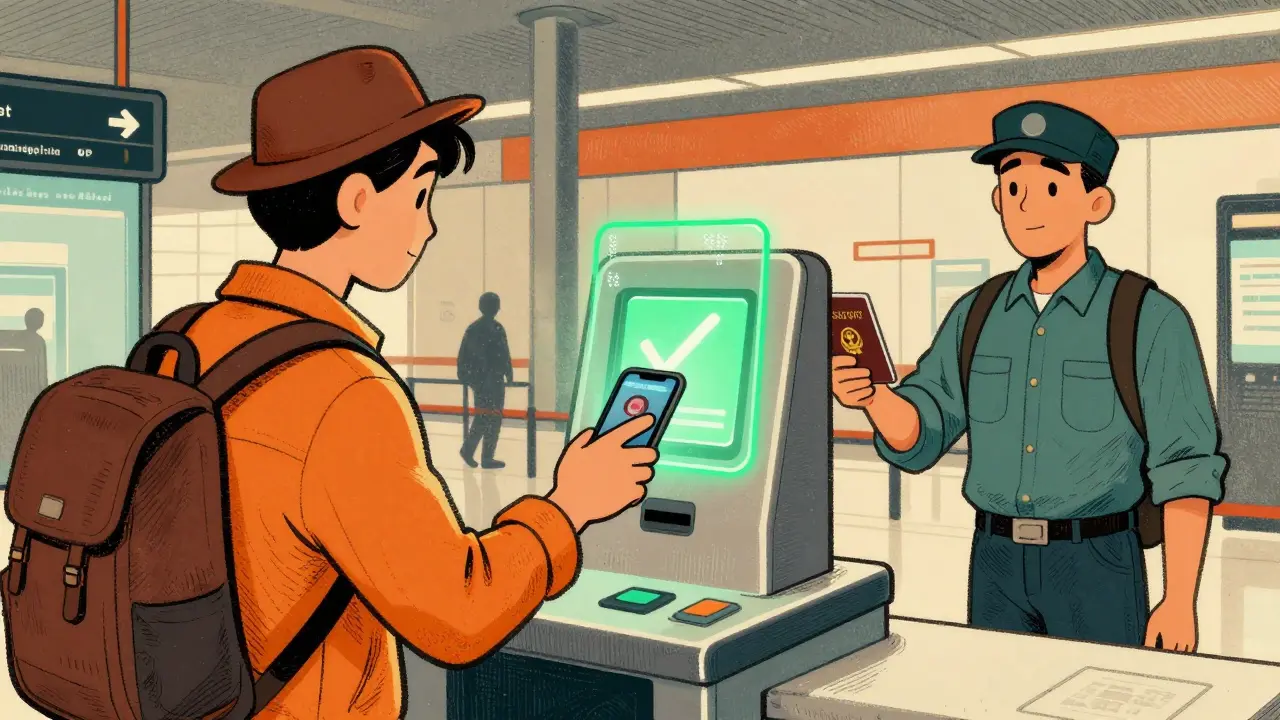
- Travel and Border Control: Several countries are piloting digital passports. Instead of showing a physical booklet, travelers present a verifiable credential from their government. Airlines and border agents verify the signature instantly without storing passenger data.
- Healthcare Records: Patients hold their medical history in a secure wallet. When visiting a new doctor, they grant temporary access to specific records. This eliminates redundant tests and reduces administrative errors.
- Financial Services: Banks use DCI for Know Your Customer (KYC) checks. Once you verify your identity with one bank, you can reuse that verified credential with other institutions. This speeds up account opening and reduces fraud.
- Education: Universities issue degrees as verifiable credentials. Graduates can share their achievements with employers instantly. Employers can verify the degree's authenticity in seconds, eliminating fake resumes.
Challenges and Barriers to Adoption
Despite the benefits, widespread adoption faces hurdles. The biggest issue is user experience. Managing private keys is hard for the average person. If you lose your password in a centralized system, you can reset it. If you lose your private key in a decentralized system, you might lose access to your identity forever. Developers are working on recovery mechanisms, such as social recovery wallets, but they are not yet perfect.
Another challenge is interoperability. While W3C standards exist, different blockchain networks and wallet providers sometimes struggle to communicate seamlessly. A credential issued on one platform might not be easily readable by a verifier on another. Industry groups like the Trust Over IP Foundation are working to catalog DID methods and improve compatibility, but fragmentation remains a concern.
Finally, there is the chicken-and-egg problem. Users won't adopt DCI unless many services accept it. Services won't accept it unless many users have it. Governments and large tech companies are starting to lead the charge, but mass adoption requires a critical mass of both issuers and verifiers.
The Future of Digital Identity
The trajectory is clear. As privacy concerns grow and cyberattacks become more sophisticated, the old model of centralized data storage is becoming unsustainable. Decentralized identity offers a path forward that aligns security with user rights. By 2027, we expect to see major operating systems integrating native support for digital wallets, making the technology invisible to the user. You won't think about "blockchain" or "DIDs." You will just tap your phone to prove who you are, securely and privately.
For businesses, investing in DCI infrastructure now means future-proofing their authentication systems. For individuals, understanding these concepts empowers you to take control of your digital life. The era of surrendering your data for convenience is ending. The era of self-sovereignty is beginning.
What is a Decentralized Identifier (DID)?
A DID is a unique alphanumeric string that serves as a digital identifier controlled entirely by the user. It is stored on a blockchain and points to a DID document containing public keys. Unlike traditional usernames, DIDs do not require a central authority to issue or manage them, ensuring user sovereignty.
How do Verifiable Credentials protect my privacy?
Verifiable Credentials (VCs) allow for selective disclosure. Using cryptographic techniques like Zero-Knowledge Proofs, you can prove specific attributes (e.g., "over 18") without revealing the actual data (e.g., your exact birthdate). This minimizes the amount of personal information shared with third parties.
Is decentralized identity secure against hackers?
Yes, it is significantly more secure than centralized systems. Since there is no central database of user data to hack, attackers cannot steal millions of records at once. Security depends on the user protecting their private keys in their digital wallet. If keys are compromised, the impact is limited to that individual's credentials, not a global breach.
What happens if I lose my digital wallet?
Losing access to your digital wallet can mean losing access to your identity, similar to losing a physical passport. However, new recovery methods are emerging, such as multi-signature recovery where trusted contacts can help restore access. Users must backup their seed phrases securely to mitigate this risk.
Who controls the standards for decentralized identity?
The World Wide Web Consortium (W3C) manages the core standards for Decentralized Identifiers (DIDs) and Verifiable Credentials. Other organizations like the Trust Over IP Foundation contribute to the ecosystem by tracking DID methods and promoting interoperability across different blockchain platforms.
