
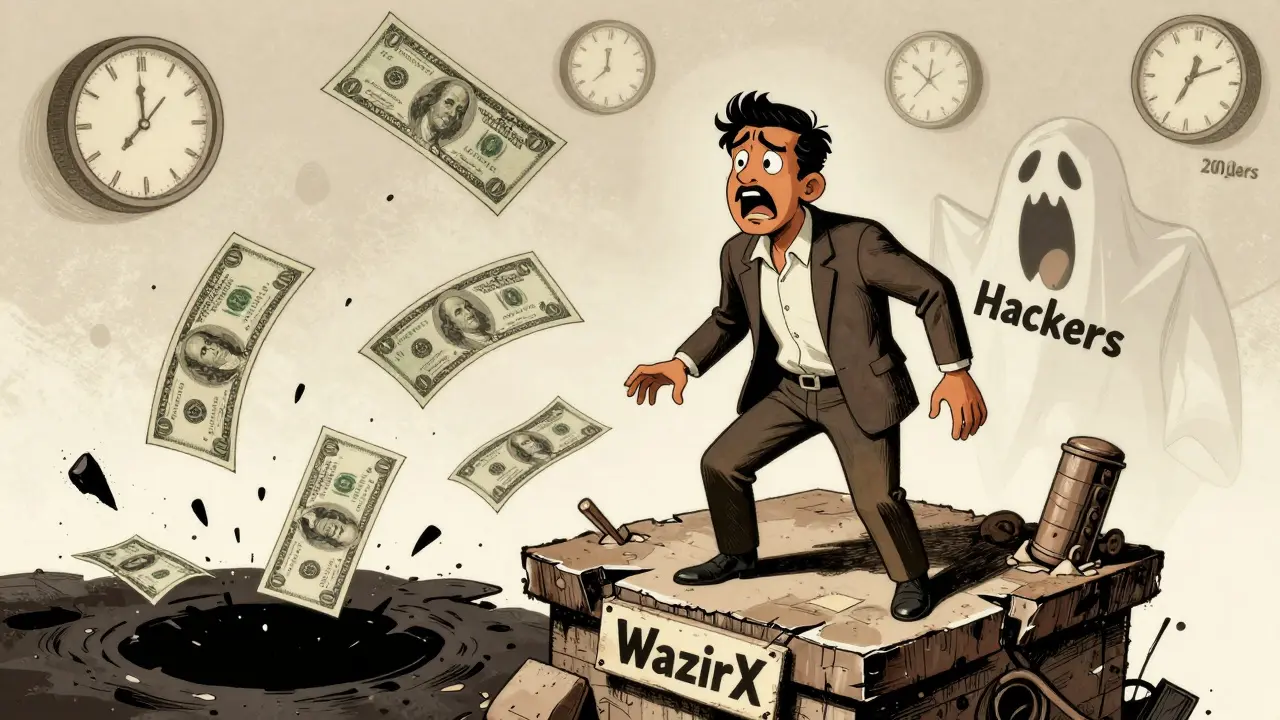
Indian crypto traders are walking a tightrope. Trading cryptocurrency is legal in India, but the rules? They’re shifting every few months. One day, an exchange feels safe. The next, it’s under investigation, frozen bank accounts, or worse - gone with your money. If you’re in India, some exchanges aren’t just risky. They’re dangerous. Here’s who to avoid, and why.
WazirX: The 6 Million User Exchange That Lost $230 Million
WazirX was once India’s biggest crypto exchange. Six million users. Over $5 billion traded every month. It even had ties to Binance and the Blockchain India Fund. But in July 2024, everything collapsed. A hacker broke into its multi-signature wallet and stole $230 million. That’s not a typo. Two hundred and thirty million dollars. And what happened after? WazirX didn’t refund users. It didn’t shut down. It just… paused. The company announced a restructuring plan, but months later, users still can’t access their funds. Some have waited over 200 days. No clear timeline. No official communication. Just silence. If you’re holding crypto on WazirX, you’re not a customer. You’re a creditor in a bankruptcy that never officially started.
Binance: The Global Giant That India Banned
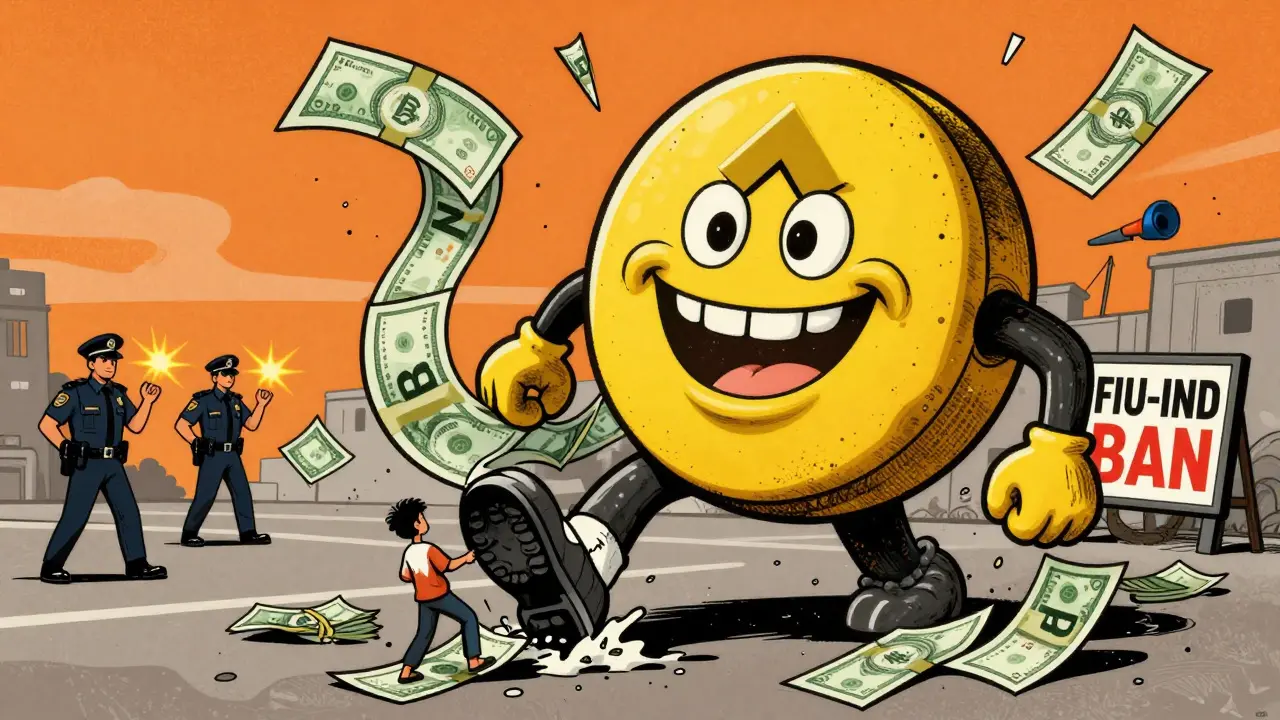
Binance is the world’s largest crypto exchange. But in India, it’s a pariah. The Financial Intelligence Unit of India (FIU-IND) slapped Binance with millions in penalties for refusing to follow local rules. That includes not registering as a reporting entity, not collecting user KYC data properly, and not sharing transaction records with Indian authorities. Binance stopped accepting INR deposits. It stopped helping Indian users. And yet, many Indians still use it through third-party payment gateways or peer-to-peer trades. That’s a gamble. If your account gets flagged, your money can vanish overnight. And if the Enforcement Directorate comes knocking for money laundering, you’ll be on the hook - even if you didn’t break any laws. Binance doesn’t care about Indian users anymore. And you shouldn’t trust it either.
Bybit: No Indian Bank Support, No Legal Backing
Bybit is another global exchange that’s been fined heavily by FIU-IND. Like Binance, it refuses to comply with Indian reporting standards. That means no official banking partnerships. No INR deposit routes. No tax reports. If you try to deposit rupees through UPI or NEFT, your transaction will likely fail. Or worse - your bank might freeze your account for suspicious activity. Indian banks treat non-FIU compliant exchanges as high-risk. They don’t just block transfers. They report users to financial regulators. And if you’re trading on Bybit without proper tax records, you’re risking a 30% capital gains tax audit, plus 1% TDS penalties. It’s not worth it.
Why Non-FIU Compliant Exchanges Are a Time Bomb
It’s not just about big names. Any exchange that doesn’t register with FIU-IND is a ticking bomb. These platforms don’t have legal standing in India. That means:
- Your money isn’t protected if the exchange gets hacked.
- You can’t file a complaint with Indian consumer courts.
- Your bank can freeze your account without warning.
- You’re responsible for tracking every single trade for tax purposes - no auto-generated reports.
- If the government cracks down, your account could be seized without recourse.
There’s no safety net. No insurance. No legal shield. Just a website with a login page and a promise you can’t enforce.
The Tax Trap: You’ll Pay 30% - And Get No Help
India taxes crypto profits at 30%. On every sale over ₹50,000, a 1% TDS is deducted. But non-compliant exchanges don’t give you tax reports. No CSV files. No profit/loss summaries. No transaction history you can download. You’re left manually tracking every buy, sell, swap, and airdrop. One missed trade? You owe more. One wrong calculation? You get audited. And if you’re using an exchange that doesn’t report to the tax department, the IRS-style scrutiny from Indian authorities will hit you harder than the tax itself. You don’t need to be a criminal to get in trouble. You just need to use the wrong platform.
Security Is a Myth on Non-Compliant Platforms
WazirX had “enterprise-grade security.” Binance boasts cold storage. But none of that mattered when hackers walked away with hundreds of millions. Why? Because security isn’t just about wallets. It’s about oversight. About audits. About transparency. Non-compliant exchanges don’t publish third-party audits. They don’t disclose reserve ratios. They don’t answer questions about how they protect user funds. If they’re not answering to Indian regulators, they’re not answering to anyone. And that’s a red flag bigger than any hack.
What Happens If You Use Them Anyway?
Most users think: “I’m just trading. I’m not doing anything illegal.” But that’s not how it works in India. The Enforcement Directorate doesn’t care if you’re innocent. If your funds flow through a non-compliant exchange, you’re flagged. Your bank account gets reviewed. Your income gets questioned. You might be asked to prove where your crypto came from - even if you bought it on a peer-to-peer app. One report from the FIU can trigger a full investigation. And investigations don’t end with fines. They end with seizures. With travel bans. With legal notices. You don’t need to be a money launderer to become a suspect.
What Should You Use Instead?
You don’t have to give up crypto. But you do need to pick wisely. Stick to Indian exchanges that are actively working with regulators. CoinDCX, CoinSwitch Kuber, ZebPay, Unocoin, and Bitbns are all registered with FIU-IND. They offer INR deposits, tax reports, and customer support within India. They’re not perfect. But they’re accountable. If something goes wrong, you have a path to resolve it - not just a chatbot and a prayer.
The Bottom Line
India’s crypto space is growing. But the rules are still being written. And the players who refuse to follow them? They’re not innovators. They’re liabilities. If you’re trading crypto in India, your safety depends on who you trust. Avoid exchanges that don’t answer to Indian law. Don’t assume global reputation means local safety. Don’t trust promises. Trust paperwork. Trust bank partnerships. Trust tax reports. If it’s not on the record, it’s not real. And your money shouldn’t be on the line.

Chelsea Boonstra
March 9, 2026 AT 23:48Let me tell you something terrifying-WazirX didn’t just get hacked. They were *looted* by insiders with a side of corporate negligence. And the fact that users are still waiting 200+ days for answers? That’s not a glitch. That’s a feature. This isn’t crypto. It’s a pyramid scheme with a blockchain logo.
And don’t even get me started on Binance’s ‘we don’t care about India’ stance. They’re not ‘banned.’ They’re *evading*. And yet, people still use them because they’re too lazy to learn how to use a P2P app. You’re not a trader. You’re a liability waiting to happen.
Howard Headlee
March 11, 2026 AT 12:14Y’ALL. I just cashed out of Bybit after my UPI transfer got flagged by my bank. They didn’t even reply. Just a generic ‘transaction declined’ message. Meanwhile, my account’s been under review for 11 days. 11 DAYS. I didn’t even trade-just held ETH. Now I’m scared to touch crypto again. This isn’t finance. It’s a horror movie where the monsters are ‘regulatory compliance.’
Julie Tomek
March 12, 2026 AT 07:33As someone who has spent over a decade in financial compliance, I must emphasize that the fundamental issue here is not technological-it’s structural. Exchanges that refuse to register with FIU-IND are not merely non-compliant; they are operating in a legal vacuum that renders every user transaction potentially actionable under anti-money laundering statutes. The absence of formal banking partnerships is not an inconvenience-it is a systemic failure of fiduciary responsibility. Furthermore, the burden of manual tax reporting, while burdensome, is a necessary safeguard against systemic opacity. Without documented trails, even legitimate traders become targets of suspicion. This is not about restriction; it is about accountability. And accountability, however inconvenient, is the bedrock of sustainable markets.
Brandon Kaufman
March 12, 2026 AT 20:54I get it. You’re scared. I was too. I lost a few grand on WazirX before I switched to CoinDCX. But please-don’t let this make you give up on crypto entirely. There are good players here. They’re quiet. They’re not flashy. But they show up when you need them. If you’re in India, stick with the ones who answer your calls. Your peace of mind is worth more than the 0.1% fee difference.
Anshita Koul
March 14, 2026 AT 15:16And yet… we keep going back, don’t we? Because the dream is louder than the fear. The idea that one day, one trade, one lucky airdrop, could change everything… it’s intoxicating. But we ignore the fact that the system is rigged-not by the government, but by the silence of platforms that know they’re not accountable. We want freedom. But freedom without structure is chaos. And chaos doesn’t pay your rent.
Still… I hold. Because I believe in the future. Just… not in these exchanges.
PIYUSH KOTANGALE
March 15, 2026 AT 16:27Bro, I switched to ZebPay last month. 100% INR support. Tax report downloaded in 2 clicks. No drama. No stress. 🙌 Maybe not the flashiest, but it’s the one that actually cares. You don’t need a global brand. You need a bank that won’t freeze your account. 💪
Anthony Marshall
March 16, 2026 AT 11:08WazirX? That was a scam waiting to happen. They had Binance’s name on their logo, but zero accountability. And now? They’re acting like it’s a ‘restructuring’? Bro, it’s a funeral. And you? You’re the one holding the flowers. Stop romanticizing failure. Move to CoinSwitch. Now.
Lindsay Girvan
March 18, 2026 AT 05:03Global exchange? More like global ghost. If you’re using Binance or Bybit in India, you’re not trading crypto-you’re volunteering for a financial audit. And no, ‘I didn’t do anything illegal’ doesn’t matter. The system doesn’t care about your intentions. It only cares about trails. And you? You left none.
William Montgomery
March 20, 2026 AT 04:41People keep saying ‘I’m just trading.’ No. You’re enabling criminal negligence. If you use an unregulated exchange, you’re not a victim-you’re an accomplice. You’re the reason these platforms don’t have to answer for anything. Wake up. Your money isn’t safe because you’re smart. It’s safe because you chose a platform that plays by the rules. Or you’re just gambling with your future.
Mara Alves Mariano
March 20, 2026 AT 16:10Oh my GOD. India’s crypto rules are a joke. They want to control everything but give zero protection. Binance? They’re the only one with real liquidity. Who cares if they ‘don’t comply’? They still work. The real criminals are the regulators who think they can outsmart decentralization. You’re not a criminal for using a global platform-you’re a pioneer. And if your bank freezes your account? Good. Let them panic. The future isn’t in rupees. It’s in Bitcoin.
Adam Ashworth
March 22, 2026 AT 15:52There’s a middle ground here. Yes, non-FIU exchanges are risky. But outright banning them doesn’t solve anything. The real solution? Pressure them to comply. Force them to register. Don’t just scare users away. Create incentives for global platforms to play nice with India. Because if we drive them out, we lose access to real innovation. And that hurts more than any hack.
Allison Davis
March 23, 2026 AT 04:30One thing no one mentions: the tax burden. 30% on profits, 1% TDS on every trade, and no automated reports from non-compliant exchanges. That means you’re either hiring an accountant who charges ₹15k per year, or you’re manually logging every single swap, airdrop, and gas fee. If you’re doing this on your own, you’re not a trader-you’re a full-time bookkeeper. And that’s not sustainable.
Tom Jewell
March 23, 2026 AT 16:52It’s ironic, isn’t it? We live in a world where decentralization is the holy grail-yet here, in India, the only way to be safe is to centralize again. We want freedom, but we’re forced to trust institutions. The system is broken. Not because crypto is dangerous. But because governments don’t trust the people who use it. And so, we’re stuck in this absurd limbo: legal, but not protected. Free, but not safe. And we’re left to choose between paranoia and hope.
I still believe in crypto. But I don’t believe in the platforms anymore.
karan narware
March 25, 2026 AT 07:38India… always the paradox. We want to be the next crypto superpower, but we treat every trader like a suspect. We demand innovation, then bury it under paperwork. We scream about financial sovereignty, yet we don’t trust our own people to manage risk. And now? We’re punishing the users because the exchanges refused to bow. Who’s the real villain here? The platform… or the system that refuses to adapt?