

The reality for Chinese citizens wanting to trade cryptocurrency is stark: it is technically illegal. The People's Bank of China (PBOC) and nine other government bodies issued a joint statement in May 2021 that banned all cryptocurrency transactions and mining activities within Mainland China. This ban remains fully in effect as of 2026. You cannot simply open an account on Coinbase or Binance using your Chinese ID and bank card. However, millions of users still find ways to access the market through offshore platforms, peer-to-peer networks, and the separate regulatory framework of Hong Kong.
If you are looking to trade, you need to understand that you are operating in a gray area with significant risks. This guide breaks down which exchanges remain accessible, how users navigate technical barriers like the Great Firewall, and the legal distinctions between Mainland China and Hong Kong. We will look at specific platforms, verification workarounds, and the tools required to maintain access.
Key Takeaways
- Mainland Ban: Cryptocurrency trading is strictly prohibited in Mainland China; domestic banks and payment apps block these transactions.
- Hong Kong Option: Hong Kong has its own regulatory regime with 11 licensed Virtual Asset Trading Platforms (VATPs) as of mid-2025.
- Access Methods: Most users rely on VPNs to bypass IP blocks and use international passports or Hong Kong IDs for KYC verification.
- Popular Exchanges: Bybit, Huobi (now HTX), and OKX are frequently used by Chinese speakers, though they require non-Chinese identification.
- Risks: Account freezes, withdrawal delays, and potential legal scrutiny are constant threats for Mainland residents.
The Regulatory Landscape: Mainland vs. Hong Kong
To understand your options, you must first distinguish between Mainland China and Hong Kong. They operate under completely different legal frameworks regarding digital assets. In Mainland China, the stance is one of "zero tolerance." The PBOC’s October 2024 Financial Stability Report reiterated this position, emphasizing that financial institutions must not provide any services related to cryptocurrency. This means Alipay, WeChat Pay, and major banks like ICBC will freeze accounts if they detect crypto-related activity.
Hong Kong, however, is a Special Administrative Region with its own financial regulations. The Securities and Futures Commission (SFC) administers a licensing regime for Virtual Asset Trading Platforms (VATPs). As of June 2025, there were 11 licensed platforms in Hong Kong. These include OSL Exchange, which was the first to receive full licensing in 2020. While these platforms are regulated, they primarily serve clients with Hong Kong residency or international identification. For a Mainland citizen, accessing these services often requires holding a Hong Kong visa or passport, creating a bifurcated market where location determines legality.
Experts warn that this bridge is fragile. Douglas Arner, a finance professor at the University of Hong Kong, noted in March 2025 that Beijing could tighten cross-border controls at any time. Until then, many Chinese citizens utilize Hong Kong-based services as a compliant pathway, provided they can meet the stricter identity requirements.
Exchanges That Accept Chinese Users (With Caveats)
No major exchange openly welcomes Mainland Chinese users without restrictions. Instead, they cater to Chinese *speakers* who hold international documentation. Here is how the top platforms stack up in 2026.
| Exchange | Accessibility for Mainland Users | KYC Requirements | Fees (Standard) | Cryptocurrencies |
|---|---|---|---|---|
| Bybit | High (via VPN) | International Passport / HK ID | 0.1% | 650+ |
| Huobi (HTX) | Medium (Legacy User Base) | Non-Chinese ID Preferred | 0.2% | 430+ |
| OKX | Medium | International Passport | 0.08% - 0.1% | 300+ |
| Binance | Low (IP Blocked) | Strict International ID | 0.1% | 356+ |
| Kraken | Very Low | No Chinese ID Accepted | 0.16% - 0.26% | 245+ |
Bybit has become a favorite among Chinese traders due to its strong Asian presence and Mandarin support. It offers over 650 cryptocurrencies and maintains low fees. However, you must use a reliable VPN to access the site, as direct connections from Mainland IPs are often throttled or blocked. Bybit submitted its application for Hong Kong licensing in June 2025, which may streamline compliance for users with proper documentation.
Huobi, now rebranded as HTX, retains a massive user base in Greater China. Founded in Beijing before moving to Seychelles, it understands the local market nuances. Its annual reports indicate that a significant portion of its active users originate from Chinese regions. Despite this, Huobi enforces strict KYC rules that reject standard Mainland Chinese ID cards. You typically need a passport or residence permit from another jurisdiction.
OKX is another key player, known for its robust technology and deep liquidity. It accepts Chinese users only if they provide international identification. The platform is popular for its decentralized exchange features, which appeal to users wary of centralized custody risks.
Binance and Kraken are much harder to access. Kraken explicitly blocks access from 179 jurisdictions, including Mainland China, according to their 2024 transparency report. Binance also restricts Chinese IPs. While some users claim success via VPNs, the risk of account suspension is high, especially during periods of heightened regulatory scrutiny.
Navigating Technical Barriers: VPNs and KYC
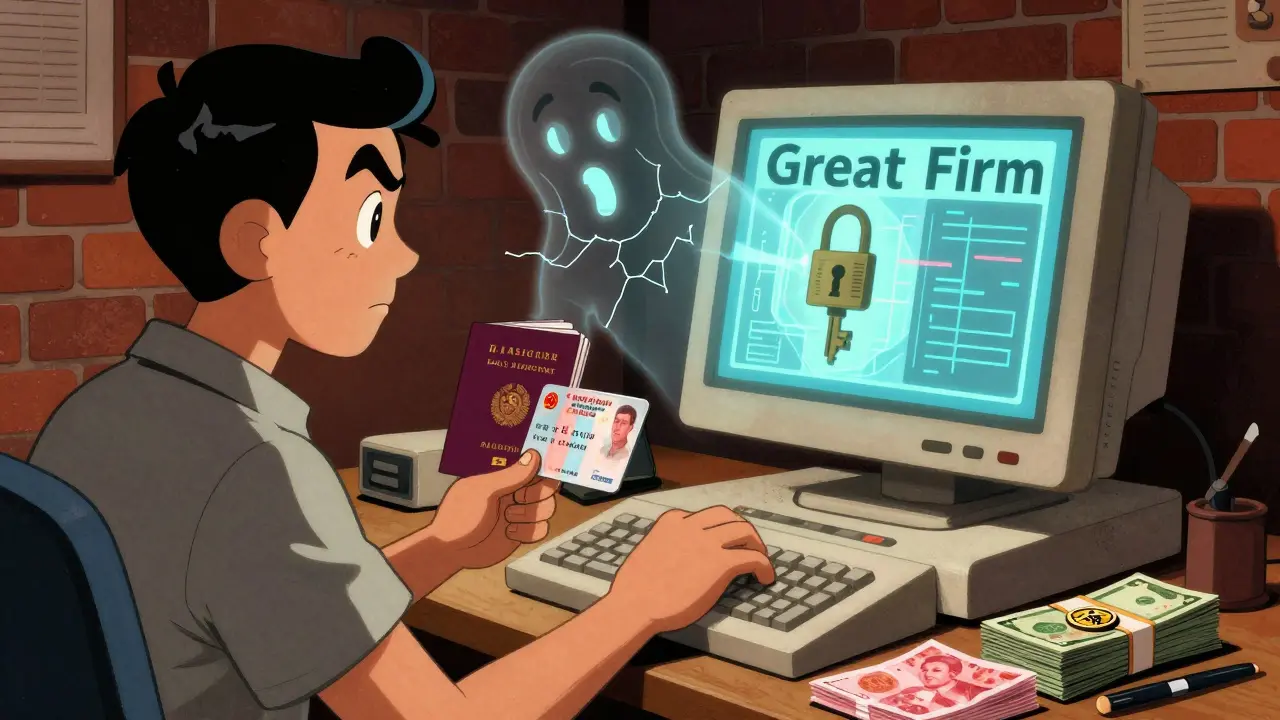
Even if you choose an exchange that doesn't explicitly ban Chinese citizens, you face two major hurdles: the Great Firewall and Know Your Customer (KYC) protocols.
The Great Firewall makes accessing foreign websites difficult. A July 2024 CoinGecko survey found that 42% of Chinese cryptocurrency users rely on Virtual Private Networks (VPNs) to trade. Services like NordVPN and ExpressVPN are commonly recommended in Chinese crypto forums because they offer stable connections to servers in Europe or Southeast Asia. Without a quality VPN, you may experience slow loading times, failed trades, or complete inability to log in.
KYC is the bigger challenge. Exchanges need to verify your identity to comply with global anti-money laundering laws. Standard Chinese national ID cards are rarely accepted. According to a February 2025 OKX compliance report, 82% of exchanges prefer Hong Kong IDs or international passports. If you do not have these documents, your options are severely limited. Some users attempt to use driver’s licenses from other countries, but this requires living abroad.
Payment processing is equally complex. You cannot use Alipay or WeChat Pay to buy crypto directly. Most users rely on Peer-to-Peer (P2P) markets built into exchanges like Bybit or OKX. In these markets, you transfer CNY (Chinese Yuan) via bank transfer to another individual, who releases USDT (Tether) to your wallet. This method avoids direct fiat-on-ramp restrictions but carries counterparty risk.
The Role of Hong Kong-Licensed Platforms
Hong Kong’s VATP regime is the most legitimate route for Chinese citizens with the right documentation. Platforms like OSL Exchange and WhaleFin offer regulated trading environments. OSL, for instance, accepts international clients and offers around 50 cryptocurrencies with 0.2% trading fees.
However, these platforms are not designed for the average Mainland resident without residency status. They enforce strict geographic and identity checks. Bernstein analysts project that Hong Kong’s VATP regime could capture 65-75% of Chinese crypto demand by 2027, but this assumes users can obtain the necessary visas or identification. For those without Hong Kong ties, offshore unregulated exchanges remain the primary choice, despite the higher risks.
P2P Trading and Decentralized Alternatives
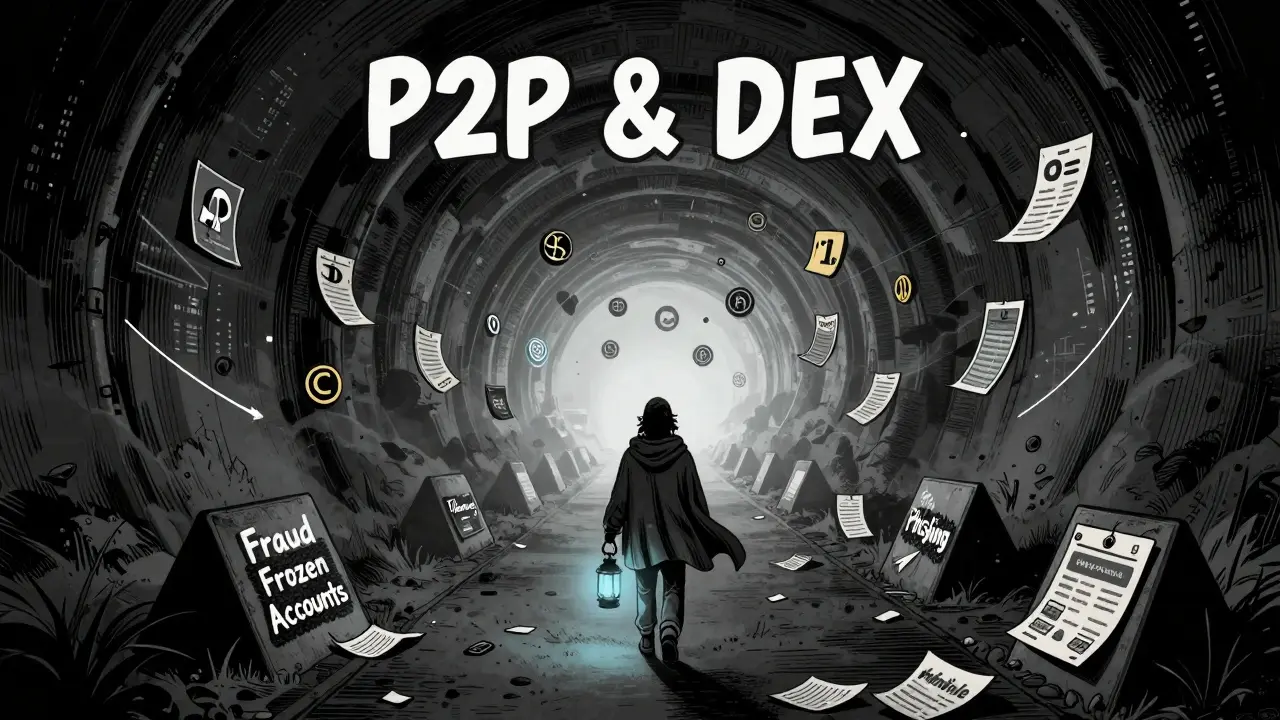
When centralized exchanges become too restrictive, many users turn to Peer-to-Peer (P2P) platforms and Decentralized Exchanges (DEXs). P2P platforms like BingX and SimpleSwap allow direct trading between individuals. These platforms often feature localized Chinese interfaces and direct CNY trading pairs. However, fees are higher (0.5-1.0%), and fraud is a real danger. A May 2025 Reddit post documented a $15,000 loss due to P2P fraud on LocalBitcoins, highlighting the lack of buyer protection.
Decentralized Exchanges (DEXs) like Uniswap or PancakeSwap offer another alternative. Since they run on blockchain protocols rather than centralized servers, they do not require KYC. Dune Analytics reported a 210% increase in DEX usage among Chinese users in 2024. To use a DEX, you need a self-custody wallet (like MetaMask) and cryptocurrency already in your possession. This means you must acquire crypto through P2P channels first, adding a layer of complexity.
Risks and Legal Considerations
You must be aware of the risks involved. While individual trading is rarely prosecuted, the financial infrastructure surrounding it is heavily monitored. Banks may freeze accounts if they suspect crypto involvement. Exchanges may freeze funds if they detect suspicious activity or if regulatory pressure mounts.
A July 2025 Kraken operational report noted that verification times for Chinese users increased by 300% during periods of regulatory announcements. This suggests that exchanges are tightening their screening processes. Additionally, Chainalysis data indicates that 78% of exchanges now use sophisticated geo-fencing technology to block Chinese IPs. Even with a VPN, detection is possible.
The underground market is estimated to be worth $18.4 billion annually, representing 8.7% of global crypto volume. This sizeable market attracts both sophisticated traders and bad actors. Scams, rug pulls, and phishing attacks target Chinese users specifically, knowing they have fewer avenues for recourse.
Practical Steps for Secure Access
If you decide to proceed, follow these steps to minimize risk:
- Obtain Alternative Identification: Secure an international passport or Hong Kong ID if possible. This is the single biggest factor in successful KYC verification.
- Use a Reliable VPN: Invest in a premium VPN service with servers outside China. Avoid free VPNs, which may sell your data or inject malware.
- Establish International Banking: If feasible, open a bank account in a crypto-friendly jurisdiction like Singapore or Hong Kong. HSBC Hong Kong and Standard Chartered are often cited as more flexible.
- Diversify Exchanges: Do not keep all your funds on one platform. Use multiple exchanges across different jurisdictions to mitigate the risk of a single point of failure.
- Use Stablecoins for Transfers: Move funds between exchanges using USDT or USDC to avoid volatility and reduce transaction times.
- Enable Two-Factor Authentication (2FA): Use an authenticator app rather than SMS, as SIM swapping is a common attack vector.
The learning curve is steep. Most users report spending 3-5 weeks establishing reliable access. Patience and discretion are essential. Never discuss your crypto activities on social media platforms like WeChat, as these can be monitored.
Future Outlook: Will Regulations Change?
As of early 2026, there is no indication that Beijing will reverse its ban. The focus remains on promoting the digital yuan (e-CNY) as the state-sanctioned digital currency. However, the enforcement landscape may evolve. Increased coordination between Mainland China and Hong Kong regulators could tighten cross-border controls, making it harder for Mainland users to access Hong Kong-licensed platforms.
JP Morgan’s April 2025 crypto report stated that regulatory uncertainty creates unsustainable risks for exchanges serving Chinese users, likely leading to consolidation and reduced access by 2027. This suggests that the current window of accessibility may narrow over time. Users should expect tighter KYC requirements and more aggressive IP blocking in the coming years.
Despite these challenges, demand persists. The combination of capital flight desires, investment opportunities, and technological sophistication ensures that Chinese citizens will continue to find ways to participate in the global crypto market. The key is to stay informed, prioritize security, and understand the legal boundaries of your specific situation.
Is it legal for Chinese citizens to trade cryptocurrency?
No, it is not legal. The People's Bank of China and nine other government bodies banned all cryptocurrency transactions and mining activities in Mainland China in May 2021. While individual users are rarely prosecuted, the activity violates current regulations, and financial institutions are prohibited from facilitating such transactions.
Which crypto exchanges accept Chinese users?
Major exchanges like Binance, Coinbase, and Kraken generally block Chinese IP addresses and reject Chinese national IDs. Exchanges like Bybit, OKX, and Huobi (HTX) are more accessible but require international passports or Hong Kong IDs for verification. They are accessible via VPN but carry higher risks of account restriction.
Can I use my Chinese ID card to verify a crypto account?
Most reputable international exchanges do not accept Mainland Chinese ID cards for KYC verification due to regulatory pressures. You typically need an international passport, a driver's license from another country, or a Hong Kong ID card. Some P2P platforms may not require strict KYC, but they come with higher fraud risks.
How do Chinese citizens buy crypto if banks block transactions?
Many users rely on Peer-to-Peer (P2P) trading platforms integrated into exchanges like Bybit or OKX. In these markets, users transfer CNY via bank transfer to another individual who releases stablecoins (like USDT) to their wallet. Others use decentralized exchanges (DEXs) after acquiring crypto through informal networks.
Are Hong Kong crypto exchanges available to Mainland residents?
Hong Kong has licensed Virtual Asset Trading Platforms (VATPs) like OSL Exchange and WhaleFin. However, these platforms primarily serve clients with Hong Kong residency or international identification. Mainland residents without Hong Kong visas or IDs usually cannot complete the rigorous KYC requirements for these regulated platforms.
Do I need a VPN to access crypto exchanges in China?
Yes, most international crypto exchanges are blocked or throttled by the Great Firewall. Using a reliable VPN is essential to access these platforms. Free VPNs are discouraged due to security risks. Premium services with servers in Europe or Southeast Asia are recommended for stability.
What are the risks of using P2P crypto platforms?
P2P platforms carry significant risks, including fraud, chargebacks, and scams. Since transactions are between individuals, there is little buyer protection. Users have reported losses ranging from hundreds to thousands of dollars due to counterfeit receipts or malicious sellers. Always use escrow services provided by the platform and never release funds until the crypto is confirmed in your wallet.
Will China legalize cryptocurrency in the future?
There is currently no indication that China will legalize cryptocurrency trading. The government is focused on developing the digital yuan (e-CNY) and maintaining strict control over financial flows. Experts predict that regulations may tighten further, particularly regarding cross-border transactions between Mainland China and Hong Kong.

Felix Eduardo Velasquez
May 5, 2026 AT 17:55The distinction between Mainland China and Hong Kong is often misunderstood by outsiders who view them as a single entity. Legally and financially, they are distinct jurisdictions with different regulatory frameworks. The PBOC’s zero-tolerance policy in the mainland creates a vacuum that offshore exchanges fill, but this comes with significant operational risk. Users must understand that using a VPN does not grant legal immunity; it merely bypasses technical restrictions. The reliance on international passports for KYC is a critical bottleneck that limits access for the average citizen. This bifurcation of the market is likely to persist until there is a fundamental shift in Beijing’s stance on digital assets, which seems unlikely given their focus on the e-CNY.
Emily A
May 7, 2026 AT 11:06It is fundamentally irresponsible to suggest that individuals should attempt to circumvent national financial regulations. The risks outlined here are not merely inconveniences; they are existential threats to one's financial stability. Account freezes are not hypothetical scenarios; they are frequent occurrences for users who fail to adhere strictly to compliance protocols. Furthermore, the use of Peer-to-Peer markets introduces a layer of counterparty risk that is entirely unmitigated by platform guarantees. One must exercise extreme caution and preferably abstain from such activities altogether.
Gabby Puche
May 8, 2026 AT 17:06I really appreciate how detailed this guide is! It’s super helpful for people trying to navigate these tricky waters 🙌 Just remember to stay safe out there and double-check everything before you transfer funds. Good luck everyone! ✨
Lynne Teperman
May 10, 2026 AT 04:10the cultural nuance here is fascinating how hong kong operates as a bridge yet remains distinct its like walking a tightrope without a net
Rachel S
May 10, 2026 AT 13:30This is absolutely terrifying to think about! 😱 The fact that banks can just freeze accounts overnight is a nightmare scenario for anyone holding crypto. I can’t imagine the stress of having your life savings locked up because of a regulatory change. It makes me realize how fragile our financial systems actually are when politics gets involved. We need better protections for everyday users!
Jan Conrad
May 10, 2026 AT 14:40I have been following the regulatory changes in Asia closely. The move by Hong Kong to license VATPs was a strategic decision to attract institutional capital while maintaining separation from the mainland ban. However, the effectiveness of this strategy depends heavily on the ability of mainland residents to obtain the necessary documentation. The reliance on VPNs is a temporary solution that will likely become less effective as geo-fencing technology improves. It is interesting to see how decentralized exchanges are filling the gap left by centralized platforms.
Rushell Perry
May 11, 2026 AT 08:44You got this! Take it one step at a time and make sure you have all your docs ready before you start trading. Its important to be patient and careful
its me
May 12, 2026 AT 00:08Why do people keep ignoring the obvious moral implications of breaking laws? It is not just about money it is about respect for societal order. You cannot simply choose which laws to follow based on convenience. This behavior undermines the entire social contract and encourages chaos. People need to stop acting like they are above the rules just because they want to speculate on digital tokens.
Ipsita Seal
May 13, 2026 AT 14:34ugh this is so much work just to buy some coins why cant we just have normal banking anymore
Carli Bates
May 15, 2026 AT 04:16oh look another article telling us how hard it is to break the law lol
Aaron Zeiler
May 15, 2026 AT 10:38most people dont realize how good the vpn tech has gotten nordvpn is pretty solid if you need it but yeah the kyc part is the real headache getting a hk id is tough unless you have family there
Kathleen Warren
May 15, 2026 AT 15:43I hear you guys saying it is scary and it is totally valid to feel that way. Please take care of yourselves and dont put too much money into something that feels risky. Your peace of mind is worth more than any potential profit.
Barbara Jones
May 16, 2026 AT 14:59i think its wild how they try to block it but people still find ways its like whackamole honestly just be careful tho
Gabrielle Danis
May 17, 2026 AT 01:10The legal framework in Hong Kong provides a structured approach to virtual asset trading that contrasts sharply with the prohibitive measures in Mainland China. This divergence highlights the complexity of operating in a region with multiple overlapping jurisdictions. Investors must carefully consider the legal implications of their actions and ensure they comply with all relevant regulations.
Abhishek Verma
May 17, 2026 AT 02:08lol typical western ignorance thinking they can just sneak past the firewall like its nothing
Brendan Thraxton
May 18, 2026 AT 15:39you can do this! just take your time and read all the warnings carefully. its easy to get overwhelmed but youll figure it out
Janis Naglis
May 20, 2026 AT 09:57This is such an important discussion!!! We need to empower ourselves with knowledge and support each other through these challenges!! Let’s stay positive and informed!!! 💪✨🚀
AP Fisher
May 21, 2026 AT 22:08it is interesting how the demand stays high even with all the bans. i guess people really want control over their own money
Wayne Gillis
May 23, 2026 AT 07:03bro seriously just use a vpn and chill 😎 its not that hard
Noel Mandotah
May 23, 2026 AT 09:18pathetic
edie rosa
May 24, 2026 AT 11:07this whole situation is just toxic and unfair to everyone involved. why do we have to deal with this mess?
Michael Repak
May 25, 2026 AT 17:05I agree completely with the points raised here!! It is crucial to understand the risks involved!!! Always prioritize safety and compliance!!! 🙌✅
Livvy Cooper
May 27, 2026 AT 02:58everyone says its risky but no one wants to admit they are doing it anyway. hypocrites.