

Imagine you are holding a wallet in your pocket. In some parts of the world, that simple act could land you in jail. It sounds extreme, but for residents of countries with strict cryptocurrency bans, it is a legal reality. The landscape is messy. While 45 nations fully embrace digital assets, about 10 countries have declared them illegal. But what does "illegal" actually mean? Does it mean fines? Prison time? Or just a warning letter from the central bank?
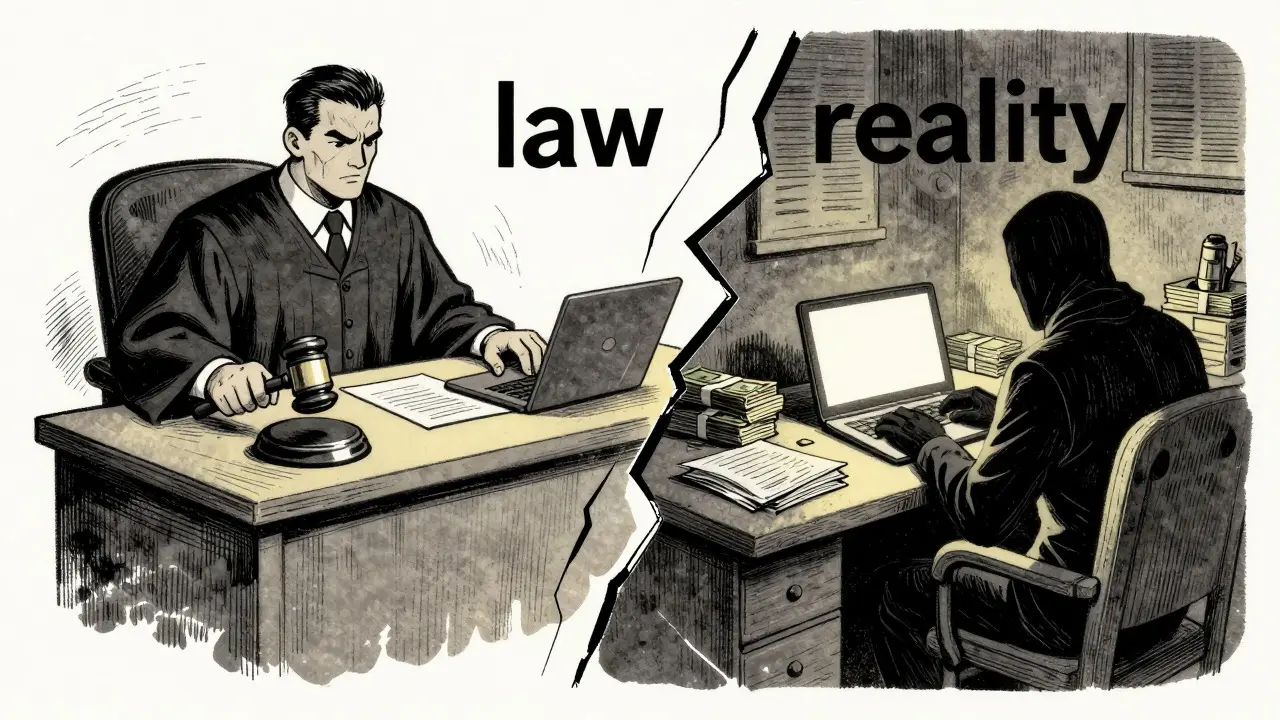
The answer depends entirely on where you live and how strictly the government enforces its rules. We are not talking about vague suggestions; we are looking at specific laws that carry criminal weight. Let's break down who is really at risk, what the penalties look like, and why the gap between law and reality is wider than most people think.
The Global Map of Prohibition
To understand the risks, you first need to know which jurisdictions are actually cracking down. According to the Atlantic Council's Cryptocurrency Regulation Tracker (2025), out of 75 countries studied, only 10 generally ban cryptocurrency. Another 20 have partial bans, usually targeting specific activities like mining or trading rather than holding.
The most notorious example is China. Since 2021, China has banned exchanges, trading, and even mining. Yet, despite these strict rules, Chainalysis estimated that $28.7 billion in peer-to-peer transactions still originated from China in 2024. This suggests that while the state wants to crush the market, individual users often find ways around it.
In North Africa, the situation is equally strict. Algeria prohibits the purchase, sale, use, and holding of virtual currency under Article 117 of its official journal dated December 28, 2017. Morocco’s Office des Changes declared in 2017 that transactions via virtual currencies infringe exchange regulations. Egypt also maintains an outright prohibition, barring individuals and banks from dealing in crypto. These three nations represent a significant portion of the "banned" category, yet enforcement remains inconsistent.
What Are the Actual Criminal Penalties?
This is where things get tricky. Many people assume that if crypto is banned, there must be a specific prison sentence attached to holding Bitcoin. Often, that is not the case. Instead, violations are punished under existing financial laws.
- Algeria: The law states that any breach is punishable in accordance with laws in force, but specific penalty amounts are rarely quantified in public documents. This creates legal ambiguity for users.
- Morocco: Violations are liable to penalties and fines provided by existing exchange laws. Bank Al-Maghrib Governor Abdellatif Jouahri clarified that bitcoin is a "financial asset" carrying significant risks, not a currency.
- China: Enforcement primarily targets business operations (exchanges, miners) rather than individual holders. Specific criminal penalty figures for individuals remain largely undocumented, though corporate leaders face severe consequences.
- Egypt: Individuals and banks are prohibited from dealing in crypto, but enforcement mechanisms are unspecified in available documentation.
The key takeaway here is that "criminal penalty" often translates to "fines for breaking exchange control laws" rather than "prison for holding a token." However, this distinction matters less when the fine is substantial or when the violation is linked to other crimes like money laundering.
Enforcement vs. Reality: The Gap
Here is the surprising part: bans are mostly ineffective. Dr. Sarah Bloom Raskin, former Deputy Secretary of the U.S. Treasury, observed in January 2025 that "the criminalization approach to cryptocurrency bans creates significant enforcement challenges, particularly when adoption rates remain high despite prohibitions."
Data supports her claim. The Atlantic Council found that even in countries with partial or general bans, adoption rates remain high. Why? Because decentralized finance (DeFi) and peer-to-peer (P2P) platforms make it hard to stop individual users. A CoinDesk survey from May 2025 revealed that only 12% of respondents in banned jurisdictions reported personal legal consequences for using crypto.
Take Reddit user u/MaghrebTrader, who reported successfully using LocalBitcoins in Morocco for 18 months without incident. Or u/CairoCrypto in Egypt, who noted frequent payment processor blocks but no personal legal action. These anecdotes highlight a pattern: governments struggle to police every individual wallet.
| Jurisdiction | Type of Ban | Primary Target | Documented Penalties | Effectiveness |
|---|---|---|---|---|
| China | Comprehensive | Exchanges & Miners | Corporate fines/jail for operators | Low (High P2P activity) |
| Algeria | Total | Individuals & Banks | Vague (under existing laws) | Medium (Limited data) |
| Morocco | Exchange Control | Transactions | Fines per exchange laws | Medium (P2P persists) |
| Egypt | Total | Individuals & Banks | Unspecified | Low (Processor blocks only) |
When Bans Turn into Sanctions
While general usage might not lead to jail, specific illicit activities do. The trend is shifting from blanket criminalization to targeted enforcement. The U.S. Department of the Treasury's Office of Foreign Assets Control (OFAC) increasingly uses sanctions designations against crypto infrastructure supporting illicit activities.
In 2024, OFAC issued 13 sanctions designations that included 86 cryptocurrency addresses. These weren't random; they targeted entities supporting Russia's illicit economy, Hamas, and Hezbollah. For example, Mustafa Ayash, founder of GazaNow, was sanctioned for raising funds for Hamas following the October 7 attack. Similarly, Tawfiq Muhammad Sa'Id al-Law, a Lebanon-based Syrian hawala operator, was designated for providing Hezbollah with digital wallets.
If you fall into this category-using crypto to evade sanctions or fund terrorism-the penalties are severe. Asset freezes, blacklisting, and international cooperation for prosecution are standard tools. This is where the real danger lies, not in simply holding Bitcoin, but in how you move it.
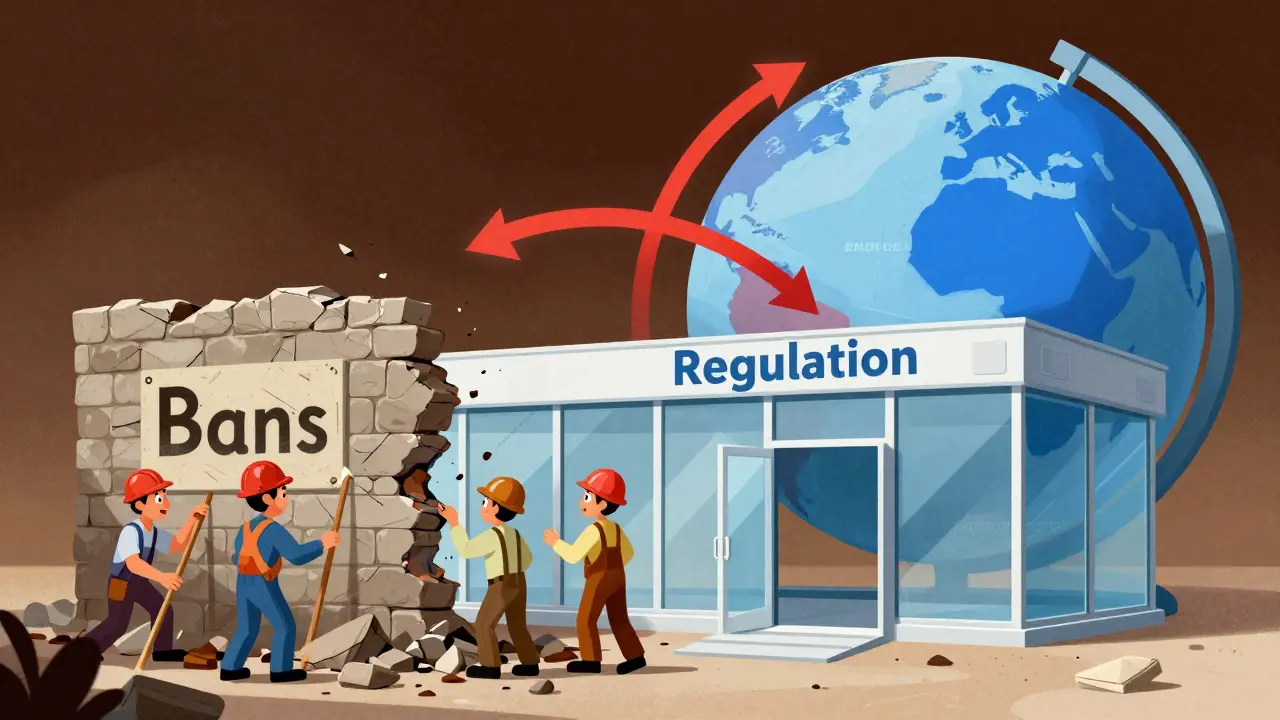
The Shift Toward Regulation Over Prohibition
Many experts believe the era of total bans is ending. The collapse of FTX in 2022 accelerated global regulatory responses, but the focus is now on protection and compliance rather than punishment. Elisabeth Svantesson, Sweden's Finance Minister, emphasized the "urgent need for imposing rules which will better protect Europeans... and prevent the misuse of the crypto industry for the purposes of money laundering."
In the U.S., the GENIUS Act, signed into law in July 2025, regulates stablecoins as payment instruments rather than banning them. It enhances the Treasury Department's ability to combat illicit stablecoin activities but stops short of criminalizing usage. Meanwhile, the EU's MiCA framework, implemented in 2024, establishes strict licensing requirements for service providers without penalizing users.
South Korea offers another model. Its Virtual Asset Users Protection Act (2023) focuses on record-keeping and transparency rather than criminal penalties. This nuanced approach acknowledges that users exist and needs to be managed, not eradicated.
Risks for Investors in Banned Jurisdictions
If you live in a country with a crypto ban, what should you worry about? Based on current trends, here are the primary risks:
- Payment Processor Blocks: Your bank or credit card issuer may block transactions to known exchanges. This is the most common immediate consequence.
- KYC Failures: Exchanges may freeze your account if their Know Your Customer (KYC) process detects a restricted jurisdiction. Trustpilot reviews show 68% of negative reviews for platforms like KuCoin cite account freezes.
- Tax Evasion Charges: If you don't report crypto gains, you risk tax evasion charges, which are easier to prosecute than "holding" charges.
- Sanctions Exposure: If you interact with sanctioned entities or addresses, you risk asset freezes and international legal issues.
Practical advice: Use local P2P markets cautiously, keep records of all transactions, and avoid interacting with known illicit addresses. While the risk of prison for merely holding crypto is low, the risk of financial friction is high.
Future Outlook: Will Bans Disappear?
The Atlantic Council predicts that both emerging-market and advanced economies will develop more sophisticated enforcement mechanisms by 2027. The focus will likely shift to targeting "sanctions evasion, fraud, and unlicensed money transmission," as prioritized by the U.S. Department of Justice's April 2025 guidance.
Over 90% of countries analyzed have active central bank digital currency (CBDC) projects. This suggests that governments want to control the digital currency space, not necessarily eliminate private ones. The long-term viability of outright criminalization models appears limited given persistent high adoption rates. Expect a future where regulation is tighter, but outright bans become rarer exceptions rather than the norm.
Is it a crime to hold Bitcoin in a banned country?
Technically, yes, in places like Algeria and Egypt. However, enforcement against individual holders is rare. Most penalties target businesses, exchanges, or those involved in money laundering. Only 12% of users in banned jurisdictions report personal legal consequences.
What are the typical fines for crypto ban violations?
Fines vary by country and are often based on existing exchange control laws rather than specific crypto statutes. In Morocco, for instance, penalties follow general financial regulations. Specific amounts are rarely published, making it difficult to predict exact costs.
Does China punish individual crypto traders?
China primarily targets exchanges, miners, and institutional players. Individual holders face less direct criminal risk, though underground P2P markets remain active. The $28.7 billion in P2P transactions in 2024 shows that individual usage continues despite the ban.
How do sanctions differ from criminal penalties?
Sanctions are administrative actions, often freezing assets and restricting access to the US financial system. Criminal penalties involve prosecution and potential prison time. Sanctions are increasingly used for crypto-related illicit finance, such as funding terrorism or evading trade restrictions.
Will crypto bans disappear in the next few years?
Likely. The trend is moving toward regulation (like the EU's MiCA or US GENIUS Act) rather than prohibition. By 2027, expect more countries to adopt frameworks that license providers and tax users, rather than criminalizing ownership.
