

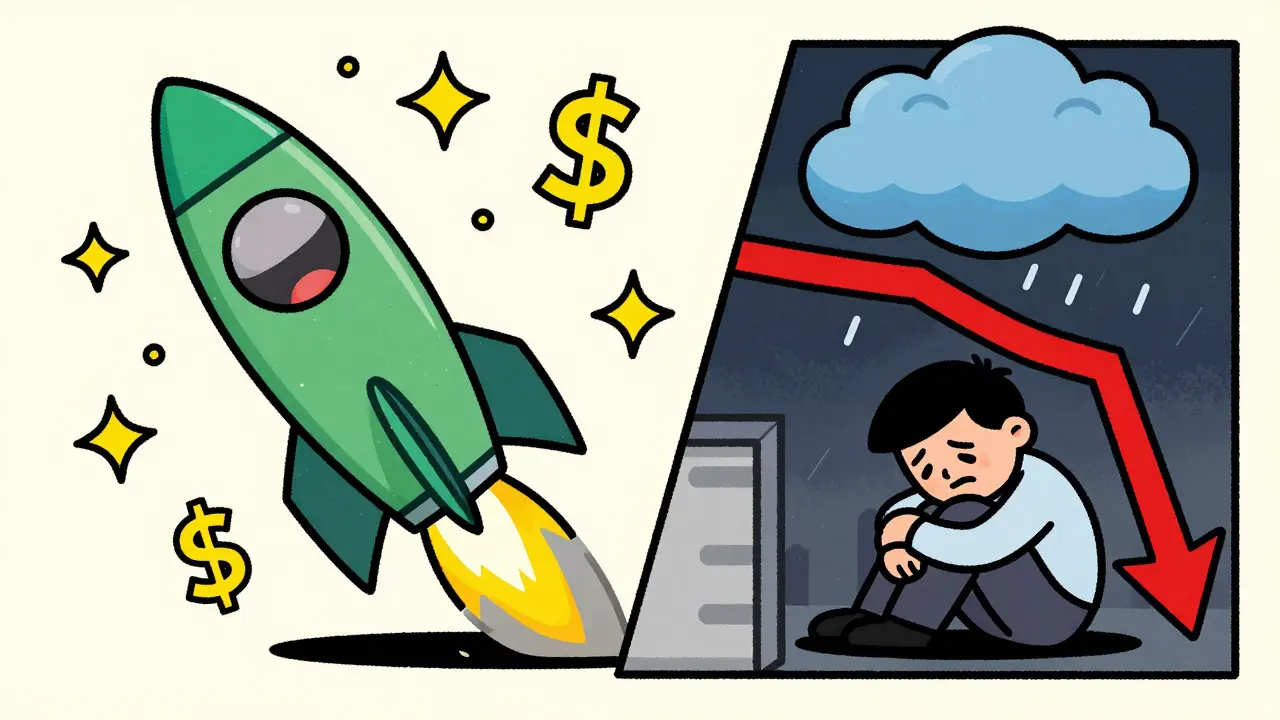
Most people buy when they're excited and sell when they're terrified. It's a natural human reaction, but in the world of investing, it's a recipe for mediocre returns. Imagine a scenario where every single person on your social media feed is screaming that a specific asset is going to zero. While the crowd is panicking, a few disciplined traders are quietly buying. This isn't gambling; it's a calculated move based on the fact that markets often overreact to bad news. By the time the panic reaches a fever pitch, the asset is usually undervalued, creating a perfect entry point for those who can keep their cool.
| Sentiment State | Common Indicators | Typical Market Phase | Contrarian Action |
|---|---|---|---|
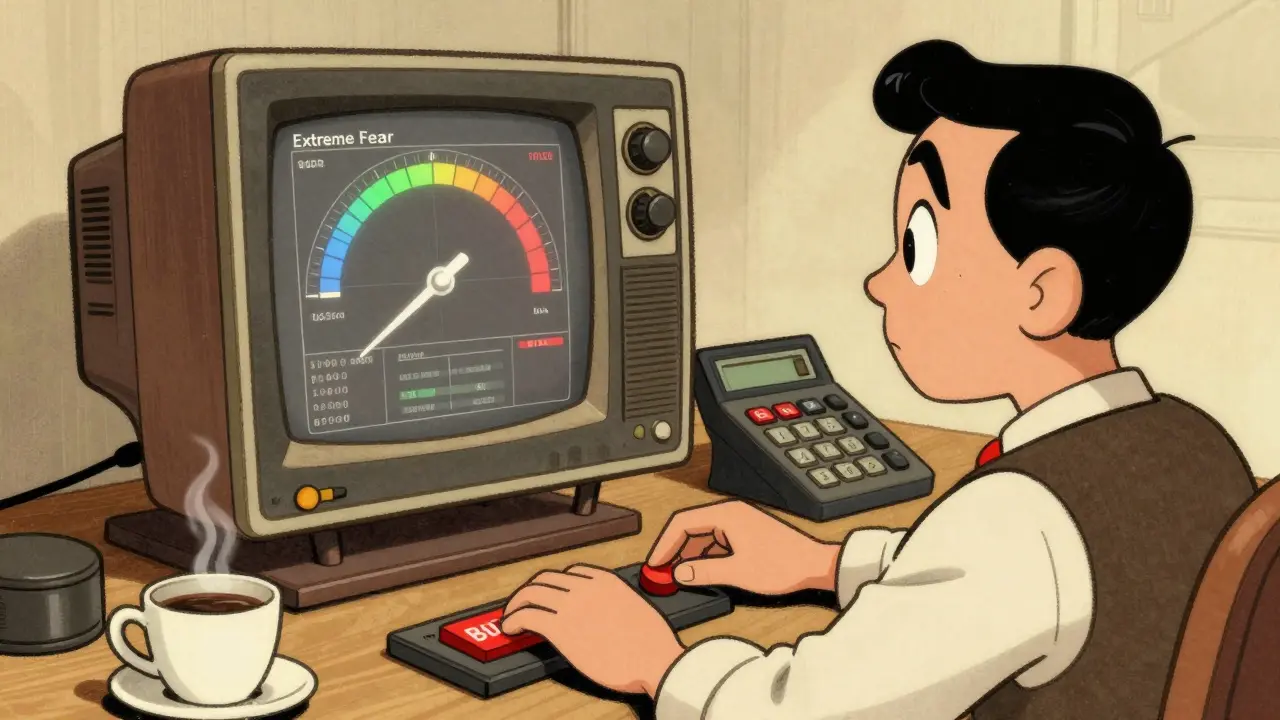
| Extreme Fear | High VIX, High Put/Call Ratio | Oversold / Panic | Accumulate / Buy |
| Extreme Greed | Low VIX, High Bullish % | Overbought / Euphoria | Trim / Sell |
What exactly is Contrarian Investing with Sentiment?
Contrarian Investing is an investment strategy that involves taking positions opposite to the prevailing market sentiment. While traditional investors follow the trend, contrarians look for the point where the trend has become exhausted. When you add sentiment analysis to this mix, you're not just guessing that the crowd is wrong; you're using data to prove it.
This approach is rooted in Behavioral Finance, a field of study that examines the psychological influences on investors and financial practitioners. It acknowledges that humans aren't rational machines. We are driven by cognitive biases, most notably Loss Aversion, the tendency to prefer avoiding losses over acquiring equivalent gains. Research from Santa Clara University suggests we feel the pain of a loss about 2.25 times more intensely than the joy of a gain. This imbalance is exactly what causes the price crashes and moon-shots that contrarians exploit.
The Toolkit: How to Measure Market Emotion
You can't just "feel" the market; you need numbers. Professional contrarians use a mix of market-based indicators and survey data to find those emotional extremes. If you want to start, look at these specific metrics:
- VIX (CBOE Volatility Index): Often called the "Fear Gauge." Generally, a reading above 30 signals extreme fear, while anything below 15 suggests the market has become complacent.
- Put/Call Ratio: This measures the number of bearish put options versus bullish call options. When this ratio exceeds 1.0, it often means the crowd is too bearish, which can be a bullish signal.
- AAII Sentiment Survey: Published weekly since 1987, this is a goldmine for contrarians. For instance, historical data shows that when bullish sentiment exceeds 57.5%, there is a 63.2% probability that the S&P 500 will see negative returns over the following month.
For those in the blockchain and crypto space, sentiment analysis often moves faster. Tools like StockTwits is a social network for traders and investors that provides real-time sentiment scores for assets allow you to track the "mood" of the retail crowd in real-time. However, the key is to use a layered approach. Don't just trust a Twitter trend; cross-reference it with a fundamental metric like a P/E ratio or a network's active address growth.
Contrarians vs. Value Investors and Trend Followers
It's easy to confuse contrarianism with value investing, but they aren't the same. A value investor looks for a stock trading below its book value. A contrarian sentiment investor looks for a stock that is hated by everyone, pushing the price even lower than a conservative intrinsic value estimate.
Then there are the trend followers-the "momentum" traders. These folks ride the wave. While they make a killing during a strong bull market, they often get caught in the crash. Contrarian strategies typically underperform during those steady climbs but shine during volatility. For example, data suggests that pure contrarian strategies outperformed trend-following by nearly 19% annually during the chaotic 2020-2022 period.
The real danger for the contrarian is the "falling knife." This happens when you buy because sentiment is low, but the asset continues to crash because the fundamentals have actually changed. The 2000 dot-com bubble is the classic example: many bought tech stocks when the VIX hit 40, only to watch them drop another 40%.
The Psychology of Trading Against the Crowd
Let's be honest: buying when everyone else is panicking is terrifying. Your brain is wired to follow the herd for survival. To succeed at contrarian investing, you need a level of discipline that borders on the robotic. You'll likely see your portfolio drop 20% in two weeks while the world tells you that you're making a mistake. This is where most retail traders fail.
The most successful practitioners don't rely on bravery; they rely on systems. They use strict position sizing-often risking only 1-3% of their total capital on a single contrarian play. They also set hard stop-loss levels, typically around 8-10%, to ensure that one "falling knife" doesn't wipe out their entire account. They don't try to time the exact bottom; they look for a "zone" of extreme sentiment and build a position gradually.
Advanced Strategies: AI and Multi-Timeframe Analysis
Modern contrarians are moving beyond simple surveys. We're seeing the rise of Natural Language Processing (NLP) is a branch of AI that helps computers understand, interpret, and manipulate human language . Tools like RavenPack provides high-end sentiment analytics that can scan millions of news articles in seconds to quantify the mood of the market. Their newer AI models claim nearly 90% accuracy in predicting market direction by analyzing the context of the news, not just the keywords.
Expert traders also use multi-timeframe analysis to avoid traps. They might see extremely negative sentiment on a daily scale (short-term), but as long as the quarterly fundamentals (long-term) remain strong, they see it as a buying opportunity. A great example of this happened in October 2022: short-term panic hit the S&P 500, driving the forward P/E ratio down to 15.2x. Those who ignored the daily noise and looked at the long-term earnings growth saw a window that delivered over 24% returns over the next year.
Is contrarian investing riskier than trend following?
In the short term, yes. You are intentionally buying assets that are losing value. However, the long-term risk is often lower because you are buying at a discount. The primary risk is a "value trap," where an asset is cheap for a legitimate reason and never recovers.
Which sentiment indicators are the most reliable?
The AAII Sentiment Survey is highly regarded for long-term equity trends. For short-term volatility and general market fear, the VIX is the industry standard. For specific assets, social media sentiment scores from platforms like StockTwits are useful, though they are more prone to manipulation.
How do I avoid "catching a falling knife"?
Never trade on sentiment alone. Always pair a sentiment extreme with a fundamental catalyst. For example, if sentiment is at a 10-year low but the company's cash flow is still growing and debt is low, the risk is mitigated. If the sentiment is low because the company is going bankrupt, it's a falling knife.
Can I use free tools for sentiment analysis?
Absolutely. CNN's Fear and Greed Index and the AAII weekly surveys are free and provide more than enough data for a retail investor to identify broad market extremes. You don't need a $24,000 Bloomberg terminal to start being a contrarian.
What is a good position size for contrarian trades?
Because contrarian trades can take a long time to play out and often involve high volatility, most pros recommend keeping these plays to 5-15% of your total portfolio, with individual trades limited to 1-3% of your total equity.
Next Steps and Troubleshooting
If you're new to this, don't throw your entire portfolio into a "hated" asset tomorrow. Start with a paper trading account or a very small amount of capital. Your first goal isn't to make money-it's to build the psychological muscle required to hold a position while everyone else is panicking.
If you find that your contrarian trades are consistently losing money, check for these common mistakes:
- Ignoring Fundamentals: Are you buying just because it's "cheap," or is there a reason it will actually go back up?
- Poor Timing: Did you buy at the first sign of fear, or did you wait for the *extreme* (the 90th percentile)?
- Lack of Patience: Contrarian plays can stay "wrong" for months or years. If you can't handle a 20% drawdown, this strategy isn't for you.

Tony Gurley-Ward
April 23, 2026 AT 05:34Buying the dip is just a fancy way of saying you like the smell of a dumpster fire before the trucks arrive. It's a wild ride, man, just dancing on the edge of a volcano while everyone else is running for the hills. I love the sheer audacity of playing the villain in a tragedy just to see if the plot twists at the end.
Robert Mosolygo
April 24, 2026 AT 00:24The VIX and AAII surveys are merely tools for the institutional architects to lure retail sheep into a false sense of security. These indicators are manipulated in real-time by algorithmic entities that operate far beyond the comprehension of the average investor. If you believe a public survey dictates market direction, you are fundamentally delusional and likely being played by the same forces that orchestrate these artificial crashes to consolidate wealth.
Sara Ellis
April 25, 2026 AT 03:01its all just energy moving around honestly
Eric Raines
April 27, 2026 AT 01:46I've been doing this for years and honestly most people just don't get that the fundamentals are a joke compared to raw sentiment. You can have a company with great cash flow and it'll still tank because some analyst on a podcast had a bad dream. I've made a killing just ignoring the 'logic' and betting on how stupid the crowd is being. It's basically just a game of who can be the most detached from reality while the price moves.
Caiaphas Konkol
April 27, 2026 AT 02:50The mention of NLP and AI in this context is laughable. These tools are designed by the very elites who profit from the volatility they create. To suggest that a RavenPack scan provides 'truth' is to ignore the systemic layering of misinformation that permeates modern financial news. Only the truly naive believe that a machine can quantify 'mood' without the programmer's bias directing the outcome toward a predetermined narrative.
jill huyo-a
April 28, 2026 AT 11:26It seems like a great way to build a disciplined mindset. I wonder if there are specific communities where beginners can practice this without risking too much capital.
Findlay Duncan Lyon
April 29, 2026 AT 18:49Quite a bold strategy, though terribly stressful.
Hannah Rubia
April 30, 2026 AT 00:06I would suggest that those attempting this strategy ensure they have a comprehensive understanding of their own risk tolerance. It is imperative to distinguish between a temporary market correction and a structural failure of the asset. Utilizing a diversified approach may mitigate the inherent risks associated with taking a contrarian position during periods of high volatility.
Lisa Camp
April 30, 2026 AT 16:16STOP BEING AFRAID! The money is made in the panic! If you're too scared to buy when the world is ending, you deserve to keep your 2% savings account interest! Get in the game or get out of the way!
Doc Coyle
May 1, 2026 AT 07:51Most people just lack the moral fortitude to stick to a plan. It's not about the tools, it's about the character. I've seen countless traders fail not because they lacked a VIX reading, but because they lacked the discipline to actually follow the rules they set for themselves. It's a failure of will, plain and simple.
Mary Tawfall
May 1, 2026 AT 23:27I really appreciate the tip about paper trading. It's such a gentle way to start and helps remove the fear of losing real money while you're still learning the ropes. Everyone has their own pace, and taking it slow is a victory in itself!
Jennifer L
May 3, 2026 AT 16:56Oh my goodness, the thoght of watching a portfolio drop 20% in two weeks is just absolutely horrifying!! I can barely handle a small dip in my stocks without feeling a complete sense of panic in my chest. It is truly a testament to those who can remain so stoic in the face of such disaster, though the risk of a value trap is simply terrifing.
Larry Yang
May 4, 2026 AT 02:58The prose here is a bit basic, but the premise is fine I guess. Though calling it 'calculated' is a stretch when you're basically betting on a coin flip of human stupidity. I've seen these 'sentiment' plays fail miserably in the mid-caps because the liquidity is too low for the contrarian bounce to actually happen. It's amateur hour for most who try this without a prime brokerage account.
Sarah Fisher
May 6, 2026 AT 01:59There's a beautiful irony in the fact that we use data to quantify emotion. It's almost like we're trying to map the soul with a spreadsheet. I think this approach works because it forces the investor to decouple their ego from the asset, which is the hardest part of any financial journey.
Gary Lingrel
May 6, 2026 AT 02:19who cares about the VIX lol just buy what everyone hates and wait it out... its the only way to actually make bank in this rigged system 🙄
Kyle Bush
May 7, 2026 AT 07:10USA ALL THE WAY!! 🇺🇸 Buy the dip and hold until the moon!! 🚀 The shorts are going to get absolutely wrecked when the patriots take over the market! 📈💰 Let them panic, we just keep stacking! 💎🙌