
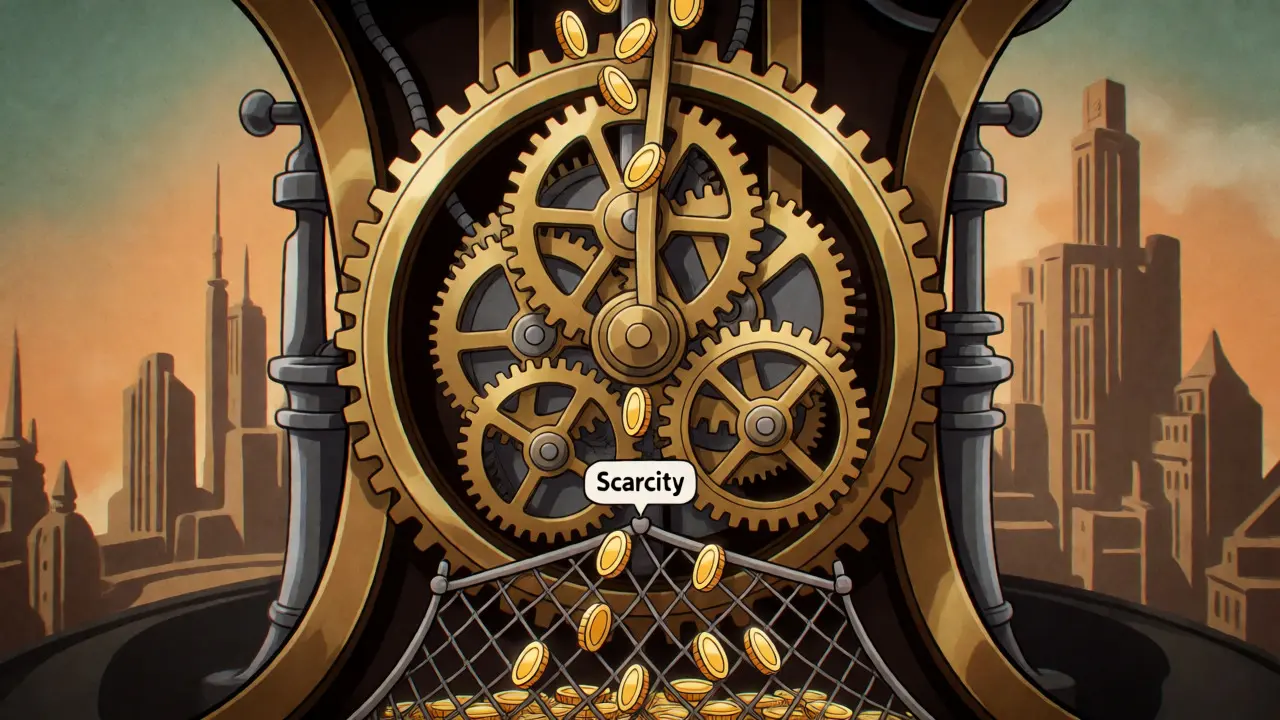
You've probably heard the hype: "Buy before the halving!" It’s a phrase that pops up every four years like clockwork. But does cutting the supply of new Bitcoin in half actually send the price skyrocketing? The short answer is yes, but the timing isn't what most people expect.
If you're trying to figure out how to position your portfolio for the next cycle, you need to look past the headlines. You need to understand the mechanics of scarcity, the pain miners feel, and why the market often moves *before* the event, not just after. Here is the real story behind the halving impact on Bitcoin price, stripped of the jargon and backed by hard data from the last decade.
What Exactly Is a Bitcoin Halving?
At its core, a halving is a programmed update to Bitcoin's code. Every time miners add 210,000 blocks to the blockchain-which takes roughly four years-the reward they get for validating transactions gets cut in half. This isn't an accident; it's Satoshi Nakamoto's way of controlling inflation.
Think of it like this: If everyone suddenly had twice as much water, water would become less valuable. By slowing down the creation of new bitcoins, the network creates artificial scarcity. As of early 2026, we have already seen four halvings. The most recent one happened in April 2024, dropping the block reward from 6.25 BTC to 3.125 BTC. The next one is scheduled for around April 2028.
This mechanism ensures that only 21 million bitcoins will ever exist. Unlike fiat currencies, which central banks can print endlessly, Bitcoin has a hard cap. This fixed supply schedule is the primary driver behind the "digital gold" narrative.
The Historical Pattern: What Happened Last Time?
History doesn't repeat itself exactly, but it often rhymes. Let's look at the numbers. They tell a clear story about supply shocks and demand.
| Halving Event | Date | Reward Change | Price Before (Approx) | Peak After (12-18 Months) | Growth Factor |
|---|---|---|---|---|---|
| First Halving | Nov 2012 | 50 → 25 BTC | $12 | $1,100+ | ~90x |
| Second Halving | July 2016 | 25 → 12.5 BTC | $640 | $20,000 | ~30x |
| Third Halving | May 2020 | 12.5 → 6.25 BTC | $8,800 | $69,000 | ~7.8x |
| Fourth Halving | April 2024 | 6.25 → 3.125 BTC | $63,000 | $73,750+ (Pre-halving ATH) | N/A (Ongoing Cycle) |
Notice the trend? The percentage gains are shrinking with each cycle. That's natural. As Bitcoin matures and its market cap grows, it takes significantly more capital to move the needle by 100% compared to when it was a tiny niche asset. However, the direction remains consistently upward over the long term.
Why Does the Price Go Up?
It comes down to basic economics: Supply vs. Demand.
When the halving hits, the amount of new Bitcoin entering the market drops instantly by 50%. Miners, who are the biggest sellers of new coins, suddenly have half as much inventory to sell to cover their electricity bills. If demand stays the same-or increases because of news, adoption, or institutional interest-there simply aren't enough new coins to go around. Sellers raise prices. Buyers pay them.
But here is the catch: The market often anticipates this. In the months leading up to a halving, investors buy in, expecting the supply shock. This is why you often see Bitcoin hit all-time highs *before* the actual halving date, as we saw in March 2024 when BTC hit $73,750. By the time the event actually occurs, some of the "buy the rumor" money has already been spent.
The Miner Squeeze: A Hidden Catalyst
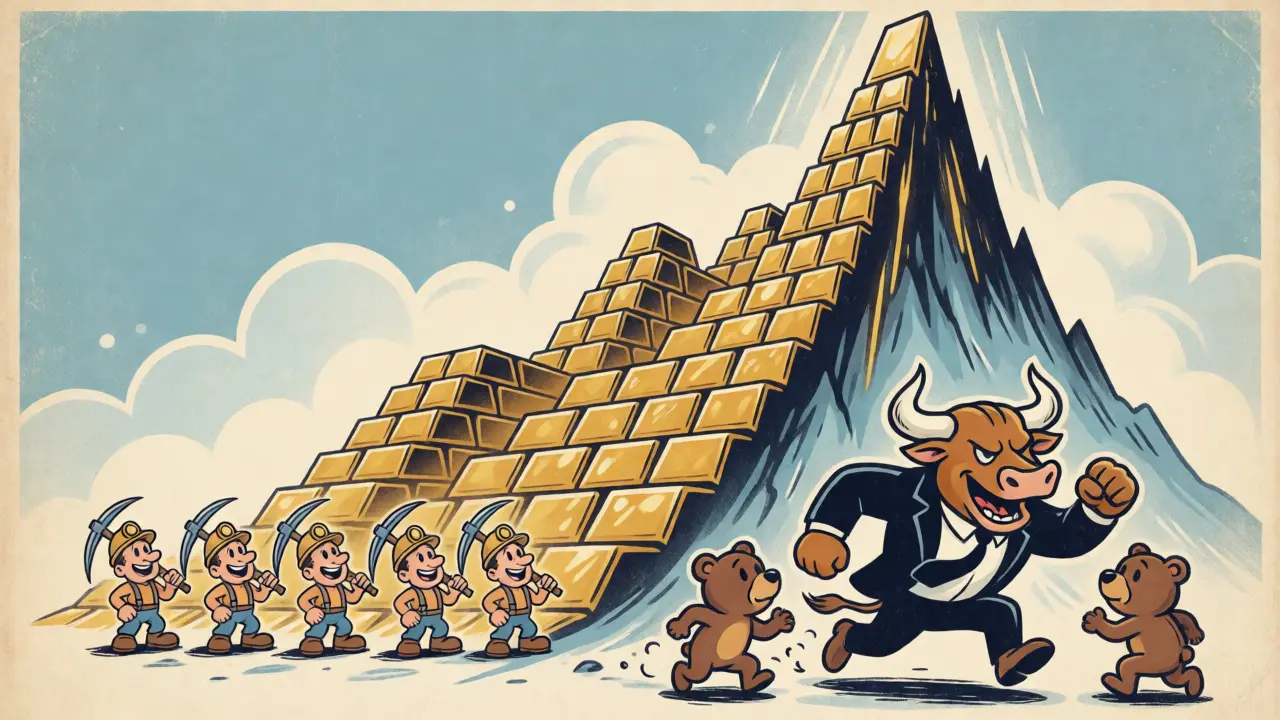
Most articles ignore the pain miners feel, but it’s crucial for understanding price stability. When rewards are cut, inefficient miners lose money. If the price doesn't rise fast enough to offset the lost revenue, these miners turn off their machines.
This leads to a temporary drop in the network's hash rate (the total computing power securing the network). Historically, this dip happens right after the halving. But don't panic-it usually recovers within weeks. Why? Because the weaker miners exit, leaving only the efficient ones. This consolidation makes the network stronger per unit of energy used. Plus, as the price eventually rises, profitability returns, bringing new capacity online.
In 2024, transaction fees played a huge role. On halving day, fees spiked to millions of dollars because users wanted to be part of history. These fees now make up a larger portion of miner income, reducing their reliance on block subsidies and making the network more secure long-term.
Is This Time Different? The Institutional Era
The 2024 halving wasn't like the others. For the first time, major financial institutions were heavily involved. Spot Bitcoin ETFs launched in the US earlier that year, allowing pension funds and hedge funds to buy Bitcoin easily.
This changes the dynamics. Retail investors tend to panic-sell during dips. Institutions hold longer. With billions of dollars flowing into ETFs, the selling pressure from miners is absorbed by steady institutional buying. This might mean we see less volatility and slower, steadier growth rather than the explosive, chaotic pumps of 2013 or 2017.
Analysts predict that following the 2024 halving, Bitcoin could target prices between $100,000 and $160,000 in the 12-18 month window post-event. This forecast assumes global interest rates stabilize and regulatory clarity improves. If macroeconomic conditions worsen, these targets might shift, but the underlying scarcity thesis holds firm.
How to Trade the Halving Cycle
If you want to capitalize on this pattern, timing matters. Here is a simple framework:
- Accumulate Early: The best risk-to-reward ratio is usually found 6-12 months before the halving. This is when fear is high, and prices are lower.
- Watch the Hash Rate: If miners capitulate and the hash rate drops sharply, it can create a local bottom. This is often a good entry point.
- Sell Into Strength: Historically, the peak of the bull run occurs 12-18 months after the halving. Don't try to catch the exact top; scale out gradually as prices surge.
- Avoid Leverage During Volatility: The weeks surrounding a halving can be choppy. High leverage can wipe you out even if you're right about the long-term direction.
Remember, correlation is not causation. While halvings coincide with bull runs, other factors like interest rate cuts, technological upgrades (like Taproot), and geopolitical events also drive prices. The halving is a powerful tailwind, but it doesn't work in a vacuum.
Key Takeaways
- Scarcity Drives Value: Halvings reduce new supply by 50%, creating a supply shock that historically boosts price.
- Diminishing Returns: Percentage gains decrease with each cycle as Bitcoin matures, but absolute dollar gains remain significant.
- Miner Economics Matter: Temporary hash rate drops occur post-halving but recover quickly, strengthening the network.
- Institutions Change the Game: ETFs and institutional buyers provide steady demand, potentially smoothing out extreme volatility.
- Timing is Tricky: Markets often price in the halving beforehand. Focus on long-term accumulation rather than short-term speculation.
Does Bitcoin always go up immediately after a halving?
No. In fact, Bitcoin often experiences sideways movement or slight declines in the immediate weeks following a halving. The major price appreciation typically begins 6 to 12 months after the event, once the market absorbs the initial supply shock and new demand enters.
What happens if miners shut down after the halving?
If unprofitable miners shut down, the network difficulty adjusts downward after two weeks. This makes it easier for remaining miners to find blocks, restoring their profitability. The network remains secure as long as there is sufficient hash rate to prevent attacks, which has always been the case historically.
When is the next Bitcoin halving?
The next Bitcoin halving is expected to occur in April 2028. At that time, the block reward will drop from 3.125 BTC to 1.5625 BTC. The exact date depends on mining speed, but it generally aligns with the 210,000-block milestone.
Can the halving cause a bear market?
While rare, external macroeconomic factors like recessions or strict regulations can override the bullish halving effect. However, historically, the halving has acted as a catalyst for ending bear markets and starting new bull cycles, not causing them.
Do altcoins benefit from Bitcoin halvings?
Yes, indirectly. When Bitcoin rises due to halving-driven scarcity, investor confidence grows across the entire crypto market. This often leads to increased liquidity flowing into altcoins, though their performance varies widely based on individual project fundamentals.

Ferdinand Friday
September 2, 2026 AT 18:59The halving is less about the immediate price action and more about the philosophical shift in how we perceive value itself. It forces us to confront the reality that scarcity is not just a marketing gimmick but a fundamental property of mathematics applied to money. When you look at the historical data, you see a pattern that mirrors the natural laws of entropy and order, where the reduction of new supply creates a vacuum that demand rushes to fill. It’s fascinating to think about Satoshi Nakamoto embedding this deflationary pressure into the code years before it became relevant, like planting a seed in winter knowing spring will come eventually. The market often misinterprets this as a simple supply shock, but it is really a psychological trigger for long-term holders who understand the inevitability of the cycle. We must remember that the network's security model relies on this predictable issuance schedule, making the halving a cornerstone of Bitcoin's monetary policy rather than just a trading event.