
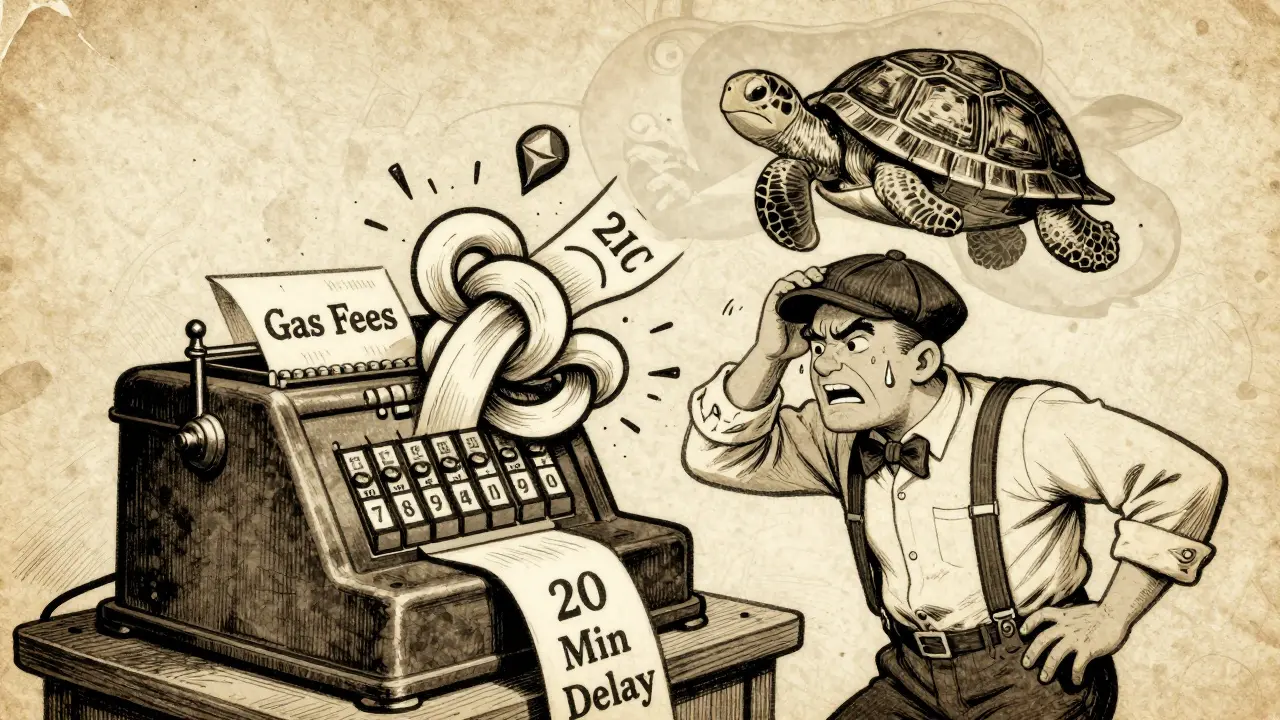
Imagine trying to trade Bitcoin during a market crash, only to have your transaction stuck in limbo for twenty minutes while gas fees skyrocket. That is the nightmare scenario that plagued Ethereum-based exchanges just a few years ago. Now picture an alternative where trades settle in one second, fees are negligible, and you never hand over your private keys to a central authority. This is the promise of Binance DEX, a decentralized cryptocurrency exchange built on Binance Chain designed for high-speed, secure peer-to-peer trading without intermediary custody. But does it actually deliver on that promise in 2026, or has it been left behind by newer competitors?
If you are looking for the next big meme coin launch or complex leverage trading options, you might be disappointed. Binance DEX is not a catch-all platform. It is a specialized tool built for a specific job: fast, secure spot trading of established assets within the Binance ecosystem. To understand if it fits your needs, we need to look past the hype and examine how it works, who it serves, and where it falls short compared to modern alternatives like Uniswap or PancakeSwap.
How Binance DEX Actually Works
Most people think of a "decentralized exchange" (DEX) as a place where liquidity pools automatically match buyers and sellers using algorithms called Automated Market Makers (AMMs). That is how Uniswap works. Binance DEX is different. It uses an order book model, similar to what you see on traditional centralized exchanges like Coinbase or the main Binance.com site.
The magic happens under the hood with the Tendermint Core a high-performance blockchain engine that enables Byzantine Fault Tolerant consensus and Proof-of-Stake validation. This technology allows the network to reach consensus incredibly fast. While Ethereum might take twelve seconds or more per block, Binance Chain aims for one-second block times. This means when you submit a buy order, it gets confirmed almost instantly. There is no waiting around, and because the network is efficient, the transaction costs (often called gas fees) remain very low.
Crucially, you retain custody of your funds at all times. You connect your wallet directly to the interface. When you trade, the swap happens on-chain between your wallet and the counterparty’s wallet. No third party holds your money. If the exchange interface goes down, your assets are still safe in your wallet. This solves the biggest risk in crypto: the fear that the exchange will get hacked or go bankrupt with your funds inside.
The Good: Speed, Security, and Simplicity
Let’s talk about why someone would choose this platform in 2026. The primary advantage is security through decentralization. Since there is no central server holding user deposits, hackers cannot drain a massive pool of funds like they did with Mt. Gox or FTX. Your security depends entirely on how well you protect your own private keys. If you lose them, you lose access. There is no "forgot password" button. This is a feature, not a bug, for those who believe in self-sovereignty.
Performance is the second major win. For traders who hate slippage caused by network congestion, Binance DEX offers a smooth experience. The one-second finality means you can execute strategies that require quick entries and exits without worrying about pending transactions. Furthermore, the integration with the broader Binance ecosystem means that many users already hold the necessary tokens. If you use the Binance Wallet app, connecting to Binance DEX is seamless.
Another benefit is transparency. Every trade is recorded on the public ledger. You can verify the history of any transaction yourself. This level of auditability is rare in centralized finance and provides peace of mind for institutional players who need proof of reserves and transaction integrity.
The Bad: Limited Tokens and Liquidity Issues
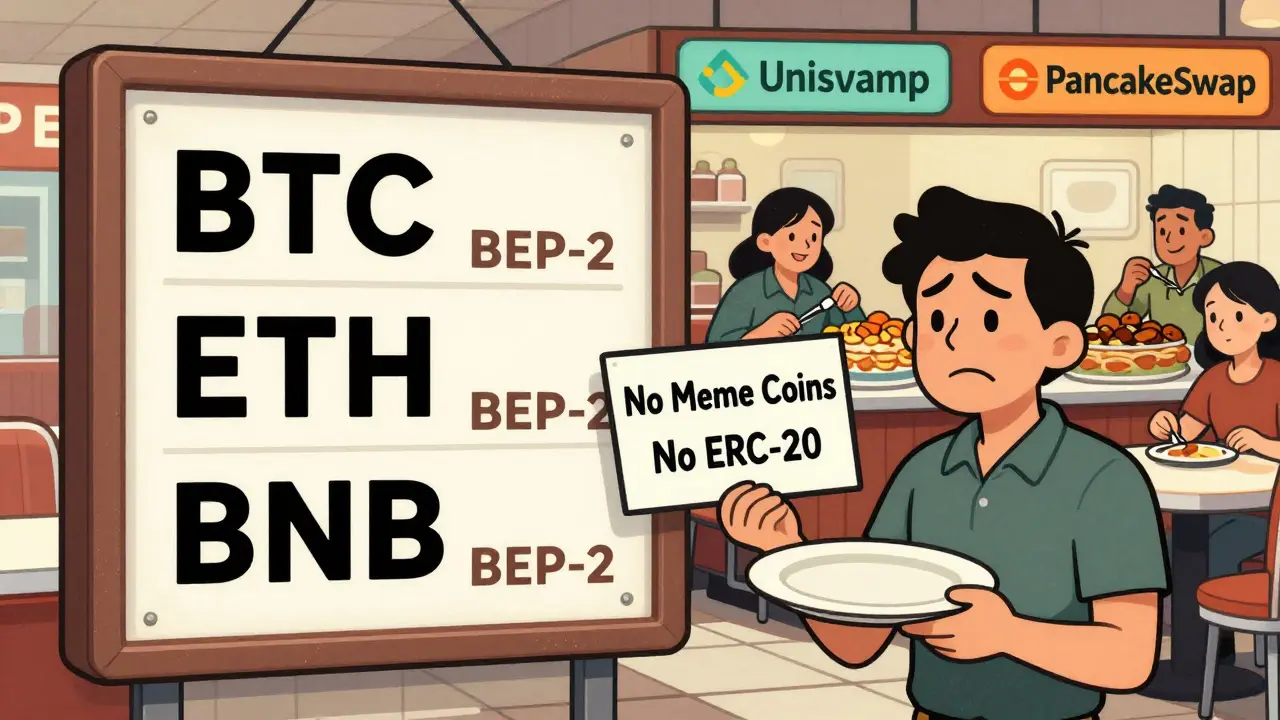
Here is where the reality check kicks in. Binance DEX only supports BEP-2 tokens cryptocurrencies issued on the Binance Chain standard, which are distinct from ERC-20 tokens on Ethereum or BEP-20 tokens on BSC. This is a significant limitation. You cannot trade Ethereum native tokens (ERC-20) or Solana tokens directly here. You have to bridge your assets into the Binance Chain format first. This adds friction and complexity for users who want a multi-chain experience.
Liquidity is another concern. Because the order book relies on real users placing bids and asks, rather than algorithmic liquidity pools, some trading pairs have thin books. If you try to move a large amount of capital, you might suffer from wide bid-ask spreads. In simple terms, you might get a worse price than expected because there aren’t enough buyers or sellers at your desired price point. For small retail trades, this is often fine. For whales moving millions, it can be costly.
Additionally, the user interface, while functional, lacks the polish and advanced charting tools found on platforms like TradingView-integrated exchanges. It is a bare-bones trading terminal. If you rely heavily on technical analysis indicators within the exchange itself, you may find yourself switching tabs constantly.
Binance DEX vs. The Competition
To make an informed decision, you need to compare Binance DEX against its rivals. Here is how it stacks up against the two dominant forces in decentralized trading today.
| Feature | Binance DEX | Uniswap | PancakeSwap |
|---|---|---|---|
| Trading Model | Order Book | Automated Market Maker (AMM) | Automated Market Maker (AMM) |
| Underlying Blockchain | Binance Chain | Ethereum (and L2s) | Binance Smart Chain (BNB Chain) |
| Token Standard | BEP-2 | ERC-20 | BEP-20 |
| Transaction Speed | ~1 Second | Varies (12s+ on Mainnet) | ~3 Seconds |
| Asset Variety | Limited (Top Coins) | Vast (Thousands) | Very High (Thousands) |
| Best For | Fast Spot Trading of Major Assets | DeFi Diversity & Long-tail Assets | Yield Farming & Low-Cost Trades |
Uniswap remains the king of variety. If you want to trade a new token that launched yesterday, it is likely on Uniswap. It is not on Binance DEX. PancakeSwap, running on the related but different Binance Smart Chain (now BNB Chain), offers a richer ecosystem including yield farming, NFTs, and games. Binance DEX is strictly a trading venue. It does not offer staking rewards or yield opportunities directly on the platform.
Who Should Use Binance DEX?
You should consider Binance DEX if:
- You prioritize speed and low fees over asset variety.
- You are trading major cryptocurrencies like BTC, ETH, or BNB in their BEP-2 form.
- You want to avoid counterparty risk associated with centralized exchanges.
- You are comfortable managing your own private keys and understand the risks of irreversible transactions.
You should probably avoid Binance DEX if:
- You want to trade obscure altcoins or new meme coins.
- You need advanced features like limit orders with complex time-in-force conditions (though basic limit orders are supported).
- You prefer the convenience of a custodial service where customer support can help recover lost access.
- You are located in a restricted jurisdiction, such as the United States, where Binance services are limited or banned.
Getting Started: A Practical Guide
Setting up Binance DEX is straightforward if you already have a compatible wallet. The most common entry point is the Trust Wallet a mobile-first non-custodial cryptocurrency wallet developed by Binance that supports multiple blockchains including Binance Chain or the official Binance Chain Wallet extension for browsers.
- Install a Compatible Wallet: Download Trust Wallet or the Binance Chain Wallet browser extension. Ensure you securely back up your seed phrase. Never share this with anyone.
- Acquire BEP-2 Tokens: If you hold tokens on other chains, you will need to bridge them to Binance Chain. Most major wallets have built-in swap or bridge features to convert ERC-20 tokens to BEP-2.
- Connect to the Interface: Visit the official Binance DEX website. Connect your wallet. You will see your balances reflected immediately.
- Place an Order: Select a trading pair. Choose between a Market Order (executes immediately at current price) or a Limit Order (sets a specific price for execution later). Confirm the transaction in your wallet.
Remember, there is no customer support to reverse a bad trade. Double-check every address and amount before signing. Once the blockchain confirms the transaction, it is final.
Regulatory Landscape and Risks
In 2026, regulatory scrutiny on decentralized finance continues to evolve. While Binance DEX operates without requiring KYC (Know Your Customer) data, regulators in major markets like the US and EU are increasingly focusing on the interfaces that provide access to these protocols. Users in restricted regions may find themselves blocked from accessing the web interface, even if the underlying blockchain remains open. Always check local regulations before engaging in decentralized trading.
Furthermore, smart contract risk exists, though it is lower on Binance DEX due to its simpler codebase compared to complex DeFi protocols. However, bugs can still occur. It is wise to start with small amounts to familiarize yourself with the process before committing significant capital.
Is Binance DEX safe to use?
Yes, Binance DEX is considered highly secure because it is non-custodial. You retain control of your private keys, meaning hackers cannot steal funds from a central exchange vault. However, your safety depends on your personal security practices. If you lose your seed phrase or fall for a phishing scam, your funds are irrecoverable.
What is the difference between Binance DEX and Binance.com?
Binance.com is a centralized exchange (CEX) where the company holds your funds and facilitates trades off-chain. Binance DEX is a decentralized exchange (DEX) where trades happen directly on the blockchain between users' wallets. Binance DEX offers greater privacy and security against exchange hacks, while Binance.com offers higher liquidity, more features, and customer support.
Can I trade Ethereum (ETH) on Binance DEX?
You can trade ETH, but it must be in the BEP-2 format (native to Binance Chain), not the ERC-20 format (native to Ethereum). You will need to bridge your ETH from the Ethereum network to the Binance Chain network before trading. The same applies to other tokens; they must be BEP-2 compliant.
Why is liquidity lower on Binance DEX compared to CEXs?
Binance DEX uses an order book model reliant on actual users placing bids and asks. Centralized exchanges often use internal matching engines and market makers to ensure deep liquidity. On Binance DEX, if few people are trading a specific pair, the spread widens, and large orders may slip significantly in price.
Are there fees for using Binance DEX?
Yes, there are trading fees, typically ranging from 0.1% to 0.25% depending on the token pair. Additionally, there are minimal network gas fees paid in BNB to process transactions on the Binance Chain. These fees are generally much lower than Ethereum-based DEXs during periods of network congestion.
Is Binance DEX available in the United States?
Access to Binance services, including the DEX interface, is restricted for users in the United States and other sanctioned jurisdictions due to regulatory compliance issues. Users from these regions may be blocked from accessing the web interface or connecting their wallets.
