

You might have stumbled upon AbstraDex while browsing for new opportunities on the X Layer blockchain. Maybe you saw it listed on a data aggregator and thought, "Hey, this is a new DEX on a major network like Polygon's L2-maybe there's an early alpha opportunity here." It sounds promising on paper. But before you connect your wallet and risk your hard-earned crypto, we need to look at what’s actually happening under the hood.
The short answer? You should probably stay away. AbstraDex is currently flagged with severe security warnings, has virtually zero trading volume, and holds a trust score of zero from major industry trackers. In a space where scams and rug pulls are common, this platform checks almost every red flag box. Let’s break down exactly why this project looks dangerous right now.
What Is AbstraDex and X Layer?
To understand the risks, you first need to know what you’re dealing with. AbstraDex is a decentralized exchange (DEX) built on the X Layer blockchain. X Layer itself is a legitimate infrastructure project. It is a Layer 2 scaling solution developed by OKX, utilizing Polygon’s Chain Development Kit (CDK). Launched in April 2024, X Layer aims to provide fast transactions and low fees, leveraging zero-knowledge technology for efficiency.
So, the underlying chain is solid. The problem isn’t necessarily the road; it’s the car driving on it. AbstraDex operates as a non-custodial trading platform, meaning you keep control of your funds via a Web3 wallet. It markets itself as privacy-focused because it doesn't require Know Your Customer (KYC) verification. While privacy is a feature many DeFi users want, in this specific case, the lack of identity verification combined with poor transparency is a massive liability.
Here is the critical distinction: Just because a DEX runs on a reputable chain like X Layer does not mean the DEX itself is safe. Anyone can deploy a smart contract. What matters is who wrote that code, whether it has been audited, and if people are actually using it.
The Hard Numbers: Why Volume Matters
In the world of cryptocurrency, liquidity is king. Without liquidity, you cannot trade efficiently, and without volume, there is no market activity. When we look at the metrics for AbstraDex as of late 2025 and into 2026, the picture is bleak.
- Daily Trading Volume: Approximately $3.35 to $5 USD per day. Yes, five dollars. For context, a single person buying a coffee costs more than the entire daily turnover of this exchange.
- Available Pairs: Only 2 trading pairs across 3 cryptocurrencies. This means you have almost no options for diversification.
- Market Share: According to Holder.io, AbstraDex holds a market share of roughly 0.0000000016%. It is statistically invisible in the broader crypto ecosystem.
- Transaction Count: Over a one-week period, AbstraDex processed only 1,017 transactions out of nearly 1.9 million total DEX transactions on the X Layer network. That is less than 0.05% of the activity.
Compare this to PotatoSwap, the leading DEX on the same X Layer network. PotatoSwap handles over 97% of the transaction volume on that chain. Or look at giants like Uniswap or PancakeSwap, which process billions in daily volume. AbstraDex isn't just small; it is effectively dead. If you try to trade on a platform with $5 in daily volume, you will face extreme slippage. You might put in $100 to buy a token and end up with significantly less value due to the thin order book, or worse, you won't be able to exit the position at all.
| Feature | AbstraDex (X Layer) | PotatoSwap (X Layer Leader) | Uniswap (Industry Standard) |
|---|---|---|---|
| 24h Volume | ~$5 | Millions+ | Billions+ |
| Trust Score (CoinGecko) | 0 / 100 | High | Very High |
| Security Warnings | Yes (Fund Withdrawal Risks) | No Major Alerts | Audited Regularly |
| Network Activity Share | 0.05% | 97.46% | Dominant Global Share |
Critical Security Red Flags
Low volume is annoying, but security issues are catastrophic. This is where AbstraDex moves from "uninteresting" to "dangerous." Multiple monitoring platforms have raised alarms about this protocol.
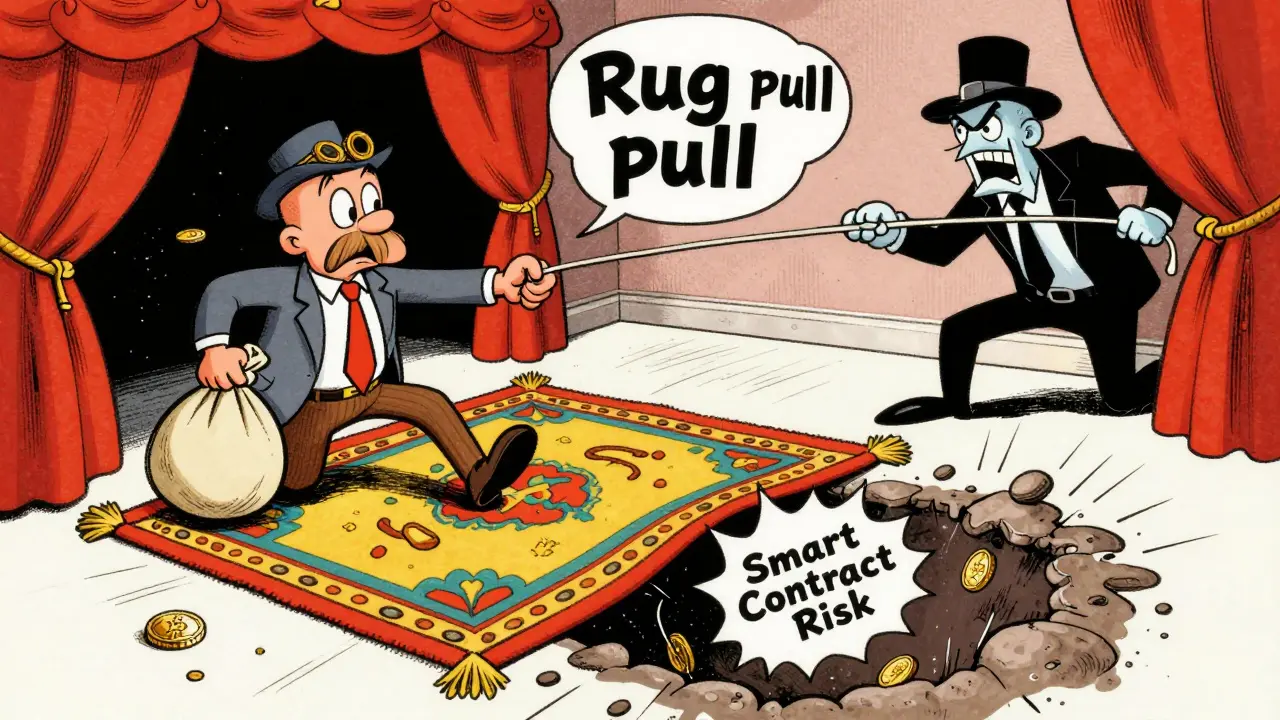
Holder.io Warnings: One of the most concerning reports comes from Holder.io, a specialized exchange monitoring service. They explicitly state: "We have received reports that this project may be manipulating smart contracts and withdrawing user funds without notice. Please proceed with caution." This is not a minor bug report. This suggests potential malicious intent by the developers, often referred to as a "rug pull" or "honeypot" scenario where users can buy tokens but cannot sell them, or where the dev team drains the liquidity pool.
CoinGecko Trust Score: CoinGecko, one of the most respected data aggregators in crypto, assigns AbstraDex a trust score of 0. This is the lowest possible rating. It indicates that the platform fails basic criteria for reliability, security, and operational stability. For comparison, established projects usually score above 80.
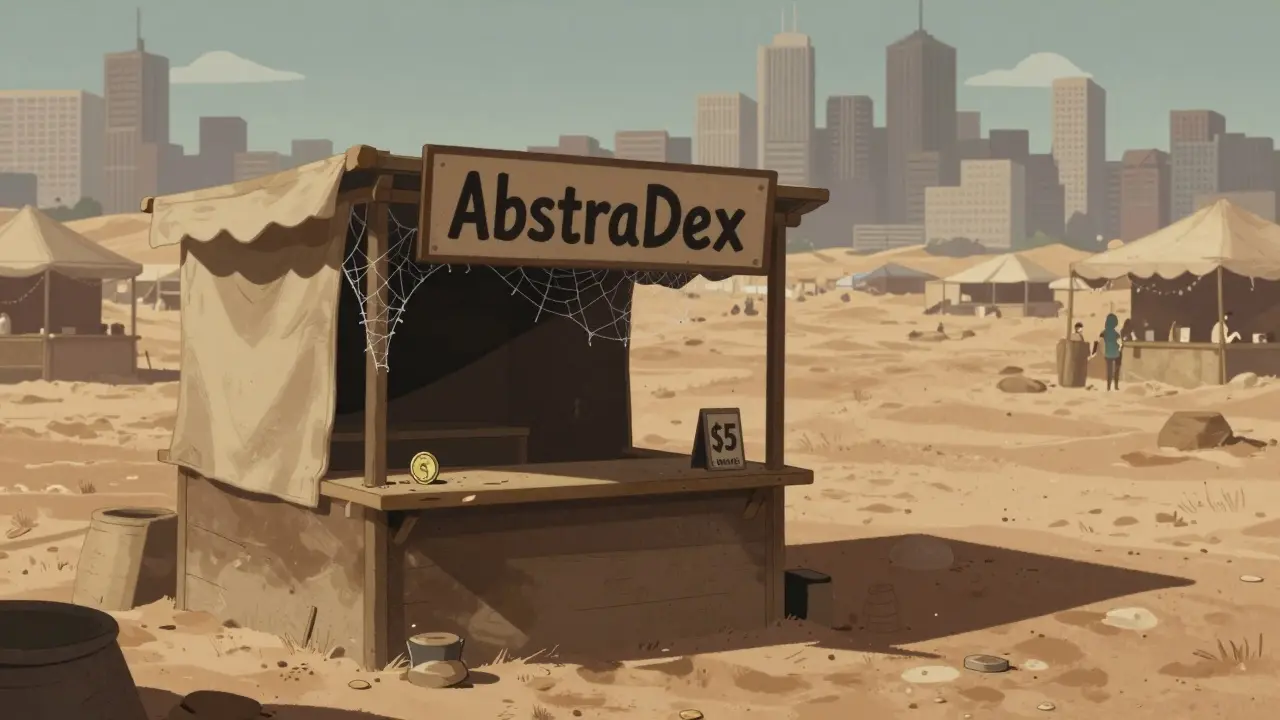
Operational Status: Monitoring platforms list AbstraDex as "Not active." This could mean the site is down, the smart contracts are paused, or the developers have abandoned the project. An inactive DEX with security warnings is a trap. If you deposit funds into a paused or manipulated contract, getting them out may be impossible.
Why Does This Exist? The Honeypot Risk
You might wonder why such a risky platform exists on a reputable chain like X Layer. The barrier to entry for deploying a smart contract is incredibly low. Scammers often create fake DEXs to lure in retail investors who see "New Listing" or "Early Opportunity" and get excited.
Here is how these scams typically work: 1. A developer deploys a simple swap contract. 2. They list it on data aggregators so it appears in search results. 3. They use social media bots or paid shills to generate buzz. 4. Early users connect their wallets and deposit funds. 5. The developer uses hidden backdoors in the code to withdraw the liquidity or manipulate prices so users cannot sell. The warning about "manipulating smart contracts" strongly points to this pattern. Since AbstraDex requires no KYC, there is no recourse if your funds are stolen. There is no customer support email that will help you, no bank to chargeback, and no legal entity to sue. In DeFi, you are on your own.
Alternatives: Where Should You Trade on X Layer?
If you are interested in the X Layer ecosystem-which is a great network with fast speeds and low fees-you do not need to use AbstraDex. There are safer, more liquid alternatives that have proven their legitimacy.
PotatoSwap: As mentioned, PotatoSwap dominates the X Layer DEX landscape. With over 97% of the transaction volume, it offers deep liquidity, meaning you can trade larger amounts without significant price impact. It has an active community and a track record of operation.
Cross-Chain Bridges: If you don't find the pair you want on X Layer, consider bridging your assets to other established Layer 2s like Arbitrum or Optimism, where DEXs like Uniswap, SushiSwap, and Camelot offer robust security and high volume. Always verify bridge contracts through official channels to avoid phishing sites.
When choosing a DEX, ask yourself three questions: 1. Is there real trading volume (not just wash trading)? 2. Has the code been audited by a reputable firm (like CertiK or OpenZeppelin)? 3. Do major data aggregators (CoinGecko, CoinMarketCap) give it a positive trust score? AbstraDex fails all three. PotatoSwap passes them.
How to Protect Yourself in DeFi
This review serves as a case study in due diligence. Whether you are looking at AbstraDex or any other new project, follow these steps to protect your capital:
- Check the Trust Score: Before connecting your wallet, look up the project on CoinGecko or CoinMarketCap. A score below 50 should make you pause. A score of 0 means run.
- Verify Liquidity: Look at the 24-hour volume. If it’s under $10,000, you are likely dealing with a micro-cap or a scam. Low liquidity means you can’t exit when things go wrong.
- Read the Warnings: Sites like Holder.io and DeFiLlama often display security alerts. Never ignore these. If a monitor says "fund withdrawal risk," believe them.
- Use a Burner Wallet: If you must interact with unverified protocols, never use your main wallet holding your long-term savings. Use a separate wallet with minimal funds.
- Revoke Permissions: After interacting with any DEX, use tools like Revoke.cash to check if you’ve given the contract unlimited spending access to your tokens. Revoke any unnecessary permissions immediately.
Final Verdict: Avoid AbstraDex
AbstraDex on X Layer is not a viable option for traders. It combines negligible utility (only 2 pairs, $5 volume) with severe security risks (smart contract manipulation warnings, 0 trust score). The platform appears to be either abandoned or actively malicious. There is no strategic advantage to using it, and the downside risk is total loss of funds.
The X Layer blockchain itself is a promising technology backed by OKX and Polygon. However, the ecosystem contains both gems and traps. Stick to the established leaders like PotatoSwap for X Layer trading, or move to larger networks with deeper liquidity. Don't let the allure of "newness" blind you to the basics of security. In crypto, preserving your capital is more important than chasing nonexistent alpha.
Is AbstraDex a scam?
While we cannot legally declare a project a "scam" without a court ruling, AbstraDex exhibits all the hallmarks of a fraudulent or failed project. It has a 0 trust score, explicit warnings about fund withdrawal manipulation, and virtually no organic trading volume. These factors make it extremely high-risk and likely unsafe for users.
What is the best DEX on X Layer?
Currently, PotatoSwap is the dominant decentralized exchange on the X Layer network. It processes over 97% of the DEX transactions on the chain, offering superior liquidity and security compared to smaller competitors like AbstraDex.
Why does AbstraDex have a 0 trust score?
CoinGecko assigns a 0 trust score based on multiple negative indicators, including lack of transparency, absence of security audits, reports of suspicious smart contract behavior, and negligible market activity. It is the lowest possible rating, indicating the platform is not reliable.
Can I recover funds if AbstraDex steals my crypto?
In most cases, no. Decentralized exchanges operate via smart contracts. If the code allows developers to withdraw funds (a backdoor), or if the liquidity pool is drained, those transactions are irreversible on the blockchain. Because AbstraDex does not require KYC, there is no central authority to contact for recovery.
Is X Layer itself safe?
Yes, X Layer is a legitimate Layer 2 blockchain developed by OKX and powered by Polygon technology. The safety issue lies specifically with the AbstraDex application running on top of it, not the underlying blockchain infrastructure. Many safe apps operate on X Layer.

Eric Braddock
July 8, 2026 AT 19:53The entire narrative of 'security warnings' is a manufactured consensus designed to suppress innovation and maintain the hegemony of centralized entities like OKX. You are being fed a sanitized version of reality by data aggregators who have vested interests in keeping you compliant. The so-called 'rug pull' indicators are merely artifacts of early-stage liquidity bootstrapping, which the uninitiated mistake for malice. We must question why the establishment wants you to fear decentralized protocols that operate outside their surveillance net. It is not about safety; it is about control.
Guy Davis
July 9, 2026 AT 15:06its obvious trash dont waste ur time
KEITH WONG
July 10, 2026 AT 11:25lol look at this guy trying to sound smart 🤡 its a scam period. stop making excuses for dev teams who cant even code a basic swap contract without backdoors. just stick to potato swap or uniswap. simple as that. no need for deep dive analysis when the trust score is literally zero. 📉🚫
Johan Otto
July 11, 2026 AT 17:11I feel attacked by this article honestly. Why do we always have to be so negative? Maybe they are just building. But yeah probably a scam lol. Drama everywhere.
Anuj Kashyap
July 12, 2026 AT 23:18One must consider the philosophical implications of a market with zero volume. Is it truly dead, or is it merely waiting for the right consciousness to awaken it? 🧘♂️ However, practically speaking, if Holder.io says run, then perhaps we should heed the warning. The irony of seeking privacy on a platform that openly signals danger is not lost on me. 😂
Tracy Marshall
July 14, 2026 AT 09:42i knew it all along these crypto scammers are everywhere hiding in plain sight using fancy words like layer 2 to trick poor people :-( you have to watch out for yourself because no one else will. the system is rigged against us from the start. stay safe everyone but really just avoid this stuff entirely
Ruth Williams
July 14, 2026 AT 15:32It is quite amusing how many individuals fail to grasp the most rudimentary principles of financial due diligence. A trust score of zero is not a suggestion; it is an indictment. To engage with such a protocol displays a profound lack of intellectual rigor and respect for one's own capital. One simply does not trade on platforms that have been explicitly flagged for manipulation. It is elementary.
John Harman
July 15, 2026 AT 03:50Look, I've been in crypto since 2013. I've seen a thousand DEXs come and go. AbstraDex is just another ghost town. If there's no volume, there's no game. Don't overthink it. PotatoSwap has the liquidity, use it. End of story.
Alicia Hull
July 17, 2026 AT 02:16This is exactly the kind of information that needs to be circulated more aggressively. How can anyone justify connecting a wallet to a contract with known withdrawal risks? It is negligent. We must hold these projects accountable and educate our communities. Ignorance is not bliss in DeFi; it is bankruptcy.
Korn Arrieta
July 19, 2026 AT 00:29The metrics don't lie. $5 daily volume is not a business model, it is a hobby for bots. The security warnings from Holder.io are critical indicators of malicious intent, likely a honeypot structure where buying is enabled but selling is disabled. Analyzing the smart contract bytecode would reveal hidden functions allowing the owner to drain liquidity. This is not speculation; it is standard scam architecture.
Jackie D
July 20, 2026 AT 12:18so true guys! i was actually thinking about trying it out cause it looked new and shiny. glad i read this first. its scary how easy it is to get tricked. thanks for the heads up! lets keep each other safe out there in the wild west of crypto. 💖
Kristy Morrow
July 20, 2026 AT 14:27people always chase the new thing until it burns them. classic human behavior. abstradex is nothing special just another failed experiment. why bother analyzing it at all? it is irrelevant. move on to the next distraction. life is too short for bad dexes
Nick G
July 22, 2026 AT 03:41It is indeed a rather sobering realization that within the robust infrastructure of X Layer, such precarious applications can exist. While the underlying technology developed by OKX is commendable, the ecosystem remains vulnerable to opportunistic actors. It is crucial that we approach these new listings with a degree of skepticism, ensuring that our participation supports sustainable and transparent projects rather than those that may compromise our financial security.
Sophie Nakasako
July 23, 2026 AT 07:11What a fantastic breakdown! It really highlights the importance of community vigilance. When we share these insights, we empower others to make better decisions. Let’s continue to support the legitimate projects like PotatoSwap that are building real value. Together, we can foster a healthier DeFi environment!
Nick Wengel
July 25, 2026 AT 03:36Good info here. I just stick to the big ones. Less headache.